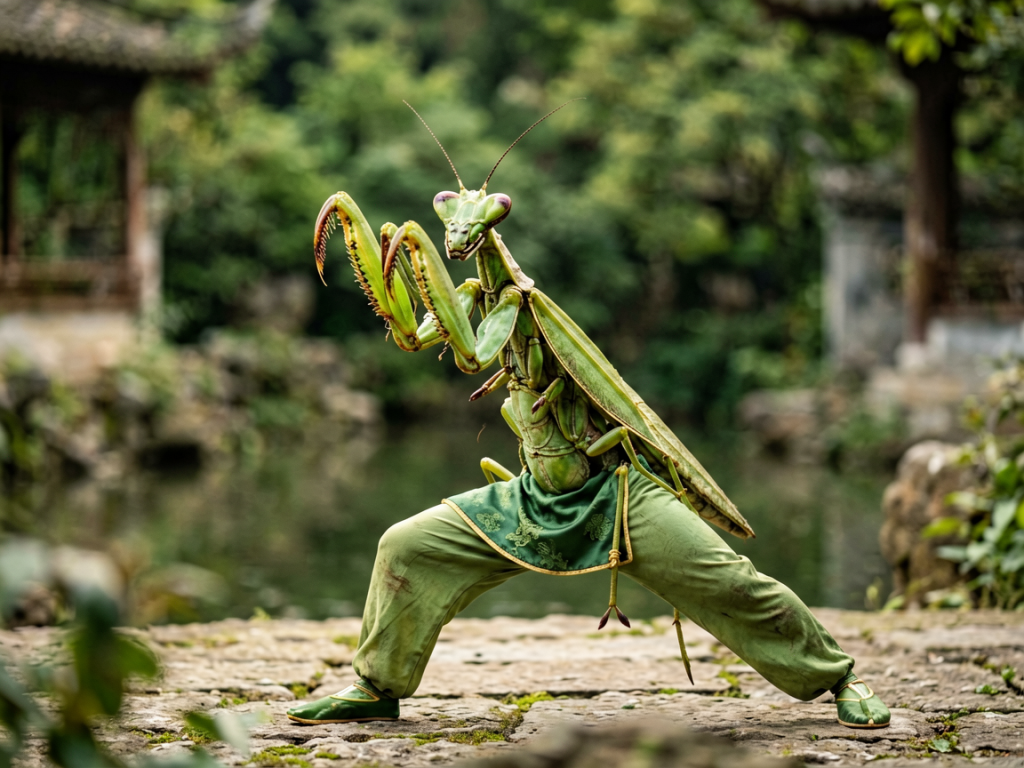
Look, I’ll be honest. When I first saw Praying Mantis Kung Fu in action, I thought the instructor was having a seizure. His arms were twitching, his fingers were curling and extending like crazy, and he was making sounds that ranged from a squeak to a grunt. It didn’t look graceful. It didn’t look like the flowing water movements of Tai Chi or the powerful kicks of Taekwondo.
But then he hit the bag. And when I say hit, I mean he didn’t just strike it. He seemed to vibrate through it. The sound wasn’t a single thud. It was a rapid-fire *tat-tat-tat-tat* that stopped my heart for a second. That’s when I realized I was watching something special. Something terrifyingly fast.
I’m not a martial arts master. I’m just a guy who’s lived in China for eight years and loved every minute of stumbling into strange traditions. But after years of watching, practicing, and getting beaten up (lightly) by masters of this style, I’ve come to understand why Praying Mantis is widely considered to have the fastest hands in Northern Chinese martial arts.
The Hook That Changed Everything
Most people think kung fu is about big, dramatic strikes. You know, the ones you see in movies where the hero jumps ten feet in the air and kicks a villain through a wooden door. Real combat, especially in the Northern styles, is often much grittier. It’s about close-quarters chaos.
Praying Mantis, or *Tang Lang Quan*, was born out of this need for efficiency. The story goes back to the Ming Dynasty, but let’s focus on the mechanics. The core concept is the “hook.” You grab an opponent’s wrist or arm, twist it, and pull them off balance while simultaneously striking their centerline with your free hand.
It’s deceptive. Your hands look slow because they’re preparing to grab. But once that connection is made, the speed is explosive. I remember asking a sifu in Yantai about this. He laughed and said, “The tree does not chase the wind. The wind hits the tree. But Mantis? Mantis catches the wind and twists it.”
Sound confusing? It is. But it works. The style emphasizes six harmonies: body, mind, breath, intent, force, and technique. If you aren’t aligned in all six, you’re just flailing. But if you get it right, your hands become a blur. You’re not throwing punches; you’re sending vibrations through the target.
Why Northern China Needs Speed
You might wonder why this style developed in the North. Geography matters more than you’d think. In Northern China, the winters are brutal. The ground is hard, often frozen. If you try to do high, sweeping kicks in heavy boots on ice, you’re going to fall on your ass. Literally.
So, Northern martial artists adapted. They kept their stances low and stable. They focused on upper body techniques. And since they couldn’t rely on distance-killing kicks, they had to close the gap quickly and neutralize threats before the opponent could react.
Praying Mantis is the ultimate answer to that problem. It’s designed for tight spaces. I’ve seen practitioners train in narrow alleyways where there’s barely enough room to turn around. The hooks and traps allow you to control an opponent’s limbs without needing much space to swing.
This isn’t just theory. I spent a weekend with a small group of practitioners in Shandong. We trained on a concrete courtyard that cracked under our feet if we stomped too hard. The instructor made us practice the “Mantis Step,” a quick, shuffling movement that keeps your center of gravity low. It felt awkward at first. My calves burned within twenty minutes.
But then we paired up. The speed of the hand techniques became apparent. One moment, the opponent is standing still. The next, their arms are pinned, and they’re receiving a series of short, sharp strikes to the ribs and throat area. There’s no telegraphing. No wind-up. Just contact and response.
It’s like being hit by a whip made of steel cables. That’s the feeling. It’s not brute force; it’s kinetic energy delivered in milliseconds.
The Anatomy of the Fastest Hands
Let’s break down what makes these hands so fast. It’s not just genetics. Although, some masters are born with flexible joints that lend themselves well to this. But mostly, it’s about structure and intent.
The first element is the “Cicada Shell” technique. This refers to the way the practitioner sheds their old posture to reveal a new one instantly. Imagine you’re holding a branch. You grip it tightly. Then, suddenly, you release and snap forward. The transition is invisible to the eye.
In Praying Mantis, this happens during the exchange. You hook the opponent’s arm. As they try to pull back, you don’t resist. You go with their motion, using their own momentum to pull them closer. In that split second of closeness, you unleash a flurry of strikes. Palm heels, finger jabs, elbow jams. It’s overwhelming.
I tried to replicate this with a local boxer I knew. He was fast, yeah. But he relied on straight lines. Jab, cross, hook. Predictable. Mantis is about angles. When you hook, you change the angle of attack entirely. The boxer couldn’t guard against it because his brain wasn’t wired for lateral, twisting movements.
“It’s like trying to punch smoke,” he told me afterward. “Every time I threw a punch, his hands were already gone, wrapping mine, and then *bam*, I got hit from a direction I didn’t expect.”
That’s the secret. The speed isn’t just about how fast your muscles contract. It’s about how quickly you can redirect energy. A normal punch stops when it hits the target. A Mantis strike continues *through* the target because the hooking mechanism keeps the body connected. You’re driving force into the opponent, not just hitting them.
Training Is Painful (And Weird)
If you think you can walk into a gym and start doing Praying Mantis, think again. The training is repetitive. Some might call it boring. I call it necessary.
We spent weeks just practicing the “Mantis Hand” shape. You know the look? Fingers curled like a mantis’s forelegs. Thumb tucked, index and middle fingers extended. It looks silly at first. I felt like an idiot waving my weird hands around in public. But that shape is crucial for generating power.
The thumb provides stability. The curled fingers protect the tips during strikes. And the extended fingers act as spikes for penetrating attacks. Simple, right? Wrong. Holding that shape while moving at speed requires immense forearm strength. My hands cramped after ten minutes of solo forms.
Then there’s the partner drills. The “Push Hands” variation in Mantis is intense. You stand face-to-face, arms locked. You’re not pushing away; you’re sensing. You’re waiting for the slightest shift in the other person’s weight. Once you feel it, you strike.
I remember one session where I got lucky. I felt my partner’s left shoulder drop. I hooked his right arm, spun, and landed a palm strike to his chest. He didn’t even blink. He just smiled and said, “Good. Now do it ten times faster.” I did. I was gasping for air by number five.
This is where the “fastest hands” reputation comes from. It’s not just speed. It’s reaction time. Mantis trains you to see the intention before the action. By the time your opponent decides to punch, you’ve already hooked and countered. You’re three steps ahead, but it only takes a fraction of a second to execute.
Is It Still Relevant Today?
Some folks ask if this old-style kung fu has a place in modern self-defense. With MMA becoming so popular, why bother with ancient hooks and grunts?
I’m no expert on fighting, but I’ve watched plenty of sparring matches. Mantis techniques translate surprisingly well to mixed martial arts, particularly in the clinch. The hooks control the opponent’s balance. The close-range strikes work in tight quarters where long punches fail.
However, it’s not a silver bullet. You can’t just learn the hand shapes and expect to beat a kickboxer. The footwork needs to be integrated with the hands. The stance needs to be solid. And the conditioning must be rigorous.
I’ve seen practitioners who looked great in forms but crumbled in a spar. Why? Because they prioritized aesthetics over application. Praying Mantis, at its core, is ugly. It’s not pretty. It’s efficient. The moves are cramped, the sounds are loud, and the body looks twisted. But it works.
If you want to look cool, go with Wushu. If you want to survive a chaotic brawl, learn Praying Mantis. Well, at least the principles behind it.
My Final Thoughts on the Mantis
I still remember that first day in the courtyard. I was sweating, bruised, and completely confused. My arms felt like jelly. But there was a moment, just a fleeting second, when everything clicked. I hooked my partner’s arm, felt his balance shift, and struck.
He went down. Not hard. But he fell. And in that instant, I understood the philosophy. It wasn’t about being stronger. It was about being smarter. Faster. Connected.
Praying Mantis isn’t just a style of kung fu. It’s a way of moving through the world. It teaches you to listen, to adapt, and to strike with precision. You don’t need to be a grandmaster to appreciate it. You just need to be willing to try something weird.
So, if you’re ever in Northern China, look for the old temples or the small community gyms. Ask for the Mantis teachers. They might laugh at your stiff posture. They might make you practice the hook until your fingers bleed. But if you stick with it, you’ll find a speed you didn’t know you had.
And trust me, once you feel that rush, you won’t want to stop. It’s addictive. It’s exhilarating. And it’s definitely faster than anything else I’ve tried.