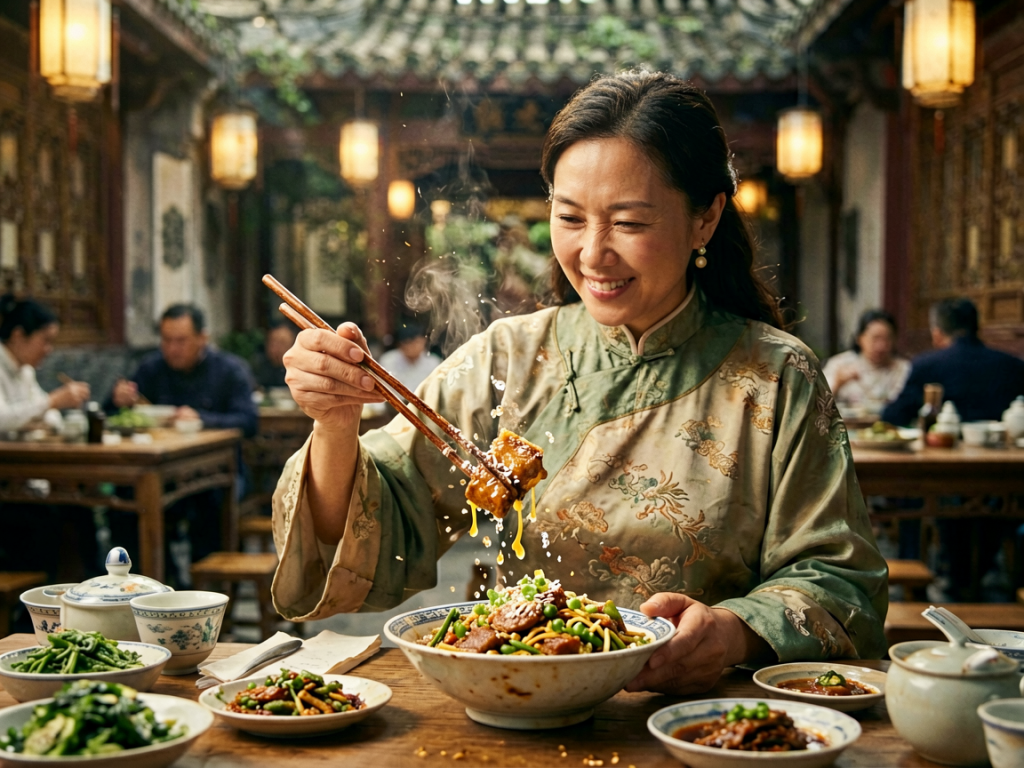
Look, I’ve been living in China for eight years now, and if there’s one thing I’ve learned, it’s that the locals love to argue about food. But there’s one topic that consistently sets off fireworks at dinner tables from Guangzhou to Beijing: MSG.
I remember my first week here. I walked into a small noodle shop in Chengdu, ordering the spicy beef noodles everyone recommended. The broth was dark, rich, and hit my tongue with an intensity I’d never experienced in New York or London. It wasn’t just salty. It was *more*. Deeper. Umami bomb. I asked the owner what magic herb he’d added. He laughed, pointed to a shaker on the counter labeled with those three letters: M-S-G.
I froze. I had grown up hearing that MSG caused headaches, heart palpitations, and a condition known as “Chinese Restaurant Syndrome.” It was the boogeyman of Asian cuisine. So, I didn’t add it. I ate my noodles without it, missing out on that crucial layer of flavor.
The Ghost of Headaches Past
Let’s get the elephant in the room out of the way immediately. That myth about MSG making your head throb? It’s pretty much busted. I’m no scientist, but I’ve read enough studies to know that the original report from 1968 was anecdotal at best. It was a letter to the editor describing vague symptoms after eating at a specific restaurant.
Since then, major health organizations like the FDA and the World Health Organization have classified MSG as safe. Double safe. In fact, it’s safer than a lot of common spices we throw into our pots without a second thought.
I tested this theory myself during a three-month stay in Shanghai. I started adding MSG to my home cooking. At first, I felt guilty. I’d catch myself glancing around the kitchen like I was committing a crime. But within a week, the guilt vanished. I hadn’t lost a hair, my heart wasn’t racing, and my neighbors didn’t call the police. The only thing changing was how good my stir-fries tasted.
So, why does the rumor persist? Part of it is cultural baggage. Western audiences in the late 20th century were obsessed with the idea that Eastern food was “chemical-laden” or inferior. MSG became a scapegoat for xenophobia disguised as health concerns. It’s unfortunate, really, because it prevented millions of people from experiencing the true depth of Chinese flavors.
Think about it. If you eat tomatoes, mushrooms, or parmesan cheese, you’re already consuming glutamates. These are natural amino acids found in many foods. MSG is just the crystallized form of glutamate. It’s not a synthetic poison; it’s nature in a shaker.
Umami: The Fifth Taste
To understand MSG, you have to understand umami. This Japanese term roughly translates to “pleasant savory taste.” It’s distinct from sweet, sour, salty, and bitter. When you bite into a ripe tomato or sip a slow-simmered bone broth, that mouth-watering sensation is umami.
Chinese cuisine has mastered umami long before it became a trendy buzzword in Western restaurants. Chefs here don’t just rely on salt to enhance flavor. They layer it. They use soy sauce, fermented bean paste, dried shrimp, and yes, monosodium glutamate.
I once watched a grandmother in a village near Guilin make a simple dish of steamed egg with minced pork. She didn’t use fancy ingredients. Just eggs, pork, ginger, and a pinch of white powder from a blue tin. The result was silky, savory, and incredibly satisfying. It reminded me of the best ramen broths I’d ever had, but simpler.
MSG acts as a flavor enhancer. It amplifies the existing tastes in a dish without imposing its own distinct flavor. It makes the garlic smell more garlicky and the meat taste meatier. It’s subtle. If you use too much, sure, it can be overwhelming. But used correctly, it’s invisible.
This is why Chinese takeout tastes so good compared to homemade versions. It’s not just the wok hei–the breath of the wok–that matters. It’s the balance of sodium and glutamate working together. Salt alone feels flat. Salt plus MSG creates harmony.
The Sodium Secret
Here’s the twist that surprises most people: MSG actually contains less sodium than table salt. Table salt is roughly 39% sodium by weight. MSG is about 12%.
So, when you use MSG, you can use less salt overall while still getting a salty taste. This is huge for people watching their blood pressure. I’ve talked to many chefs who argue that MSG allows them to reduce sodium content by up to 40% without sacrificing flavor.
Imagine cutting back on salt but keeping the same deliciousness. That’s the power of the crystal. It’s not just about taste; it’s about healthier cooking practices when used wisely.
I remember trying a low-sodium diet in my earlier years here. The food tasted bland. Disappointing. My friends laughed at me and handed me a small packet of MSG. “Just a pinch,” they said. I was skeptical. But I added it to my vegetable soup. Suddenly, the carrots tasted sweeter. The greens tasted fresher. The broth had body. I realized I had been under-seasoning all along, masking the lack of flavor with excessive salt.
Why Chinese Restaurants Use It
You might wonder why some Western restaurants hide the use of MSG or refuse to list it. It’s often due to consumer perception, not safety. Owners worry about complaints from customers who believe they are sensitive to it.
In China, though, it’s open secret. You’ll see MSG sold alongside salt and pepper on every street corner. It’s affordable, effective, and trusted. Many home cooks buy it in bulk tins that last for months.
Professional kitchens use it because consistency is key. In a busy restaurant, you can’t rely on every batch of chicken stock being perfectly reduced. MSG provides a reliable baseline of savory flavor. It ensures that the Kung Pao chicken tastes the same on Tuesday night as it did on Friday morning.
I’ve worked briefly in a commercial kitchen in Xi’an. The head chef showed me his spice station. There were jars of five-spice, chili flakes, Sichuan peppercorns, and rows of small containers with white powder. He explained that for large batches, measuring precise amounts of natural umami-rich ingredients is difficult. MSG offers precision. It’s a tool, like a knife or a wok.
Using it doesn’t make the food cheap or low-quality. On the contrary, it elevates simple ingredients. A stir-fry with fresh vegetables and a touch of MSG will always beat a dish loaded with heavy cream and butter, nutritionally speaking.
How to Cook With It
If you’re ready to try MSG, start small. It’s potent. I usually add half a teaspoon for a family-sized stir-fry. Don’t dump it in like salt. Sprinkle it evenly over the ingredients as they cook.
Add it early in the process, not at the end. Heat helps activate the glutamate. If you’re making a soup, add it when the broth is simmering. If you’re stir-frying, add it when the vegetables are nearly done.
Pair it with other aromatics. Ginger, garlic, and scallions work beautifully with MSG. They create a complex flavor profile that feels whole and rounded.
Try it in a simple dish like scrambled eggs. Beat the eggs, add a tiny pinch of MSG, and cook them low and slow. The texture will be softer, and the flavor more pronounced. It’s a revelation for breakfast.
Or mix it into rice. When cooking rice, add a few grains of MSG along with the water. The result is fluffier, tastier rice that pairs perfectly with spicy dishes.
Remember, balance is everything. Too much MSG can leave a metallic aftertaste. But used correctly, it enhances rather than dominates. It’s the difference between shouting and singing.
Taking the Leap
I know it’s hard to unlearn decades of misinformation. The fear of MSG is deeply ingrained in many cultures. But I urge you to give it a chance. Treat it like any other ingredient. Experiment. Observe. Judge by taste, not by fear.
My journey from skeptic to believer changed how I cook and how I experience Chinese culture. It opened my eyes to the subtleties of flavor that define this cuisine. It taught me that tradition and science aren’t mutually exclusive. They often reinforce each other.
Next time you order Chinese food, ask yourself: what am I missing out on? Is it worth avoiding a pinch of safe, legal, delicious seasoning because of a rumor from fifty years ago?
I doubt it. Trust me, your palate will thank you. And your head? It’ll stay perfectly fine.