Honestly, I used to hate congee. Or at least, I hated the sad, watery versions I stumbled upon in my early days in Shanghai. It looked like dishwater with rice floating in it. The texture was either gluey paste or distinct, hard grains. There was no middle ground.
I remember standing in a cramped alleyway near Xintiandi, shivering in the damp November cold. The vendor handed me a styrofoam cup of white rice porridge. It tasted like nothing. Just hot, bland water. I stared at it, wondering how this could possibly be the national breakfast of comfort.
That changed completely three years later in Guangzhou. I sat down in a dimly lit restaurant with a local friend named Wei. He ordered the traditional *jook*. When it arrived, it wasn’t watery. It wasn’t a solid block of starch either.
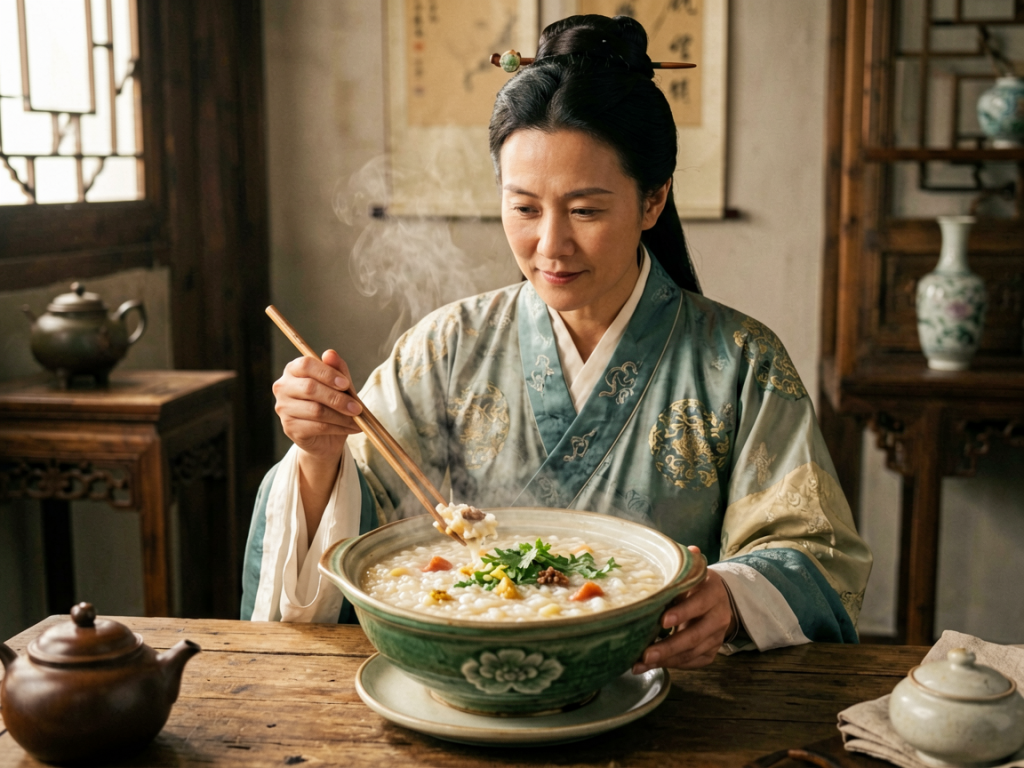
It was silky. Creamy. The rice grains had completely dissolved into the broth, creating a luxurious mouthfeel that coated your tongue. It smelled of ginger and dark soy sauce, with hints of pork and century egg. I took one spoonful and nearly cried. It felt like a hug in a bowl.
So, what’s the trick? Why is there such a massive gap between bad congee and the holy grail? It’s not magic. It’s chemistry. And it’s a secret that every Chinese grandmother knows but rarely writes down. Let me show you how to get it right.
Forget the Instant Pot: The Freezer Trick Is Non-Negotiable
Here’s the thing about modern convenience gadgets. They’re great for stews, soups, and roasts. But for congee? An Instant Pot often leaves you with uneven textures. You get a pot of mush at the bottom and hard, uncooked grains at the top. It’s frustrating.
The old-school method relies on ice crystals. I know, it sounds weird. But trust me. When you freeze raw rice, the water inside the grain expands. This expansion creates microscopic fissures in the starch structure. Think of it like pre-cracking the shell before you try to get the nut out.
When those frozen grains hit boiling water, they don’t just cook. They explode. Well, metaphorically. The starch releases rapidly and uniformly. This is the key to that velvety texture without hours of stirring.
I started doing this about five years ago after watching a cooking video from a Cantonese chef in San Francisco. I was skeptical. Frozen rice for hot soup? Really? But I washed a cup of jasmine rice, spread it on a baking sheet, and threw it in the freezer for six hours.
When I dropped those icy clumps into boiling salted water, the transformation was instant. Within twenty minutes, the rice had disintegrated into a creamy base. I didn’t have to stir it once. The result was smoother than anything I’d made on the stove previously.
Is it easier than you’d expect? Absolutely. You just need to plan ahead. Wash your rice, drain it well, and freeze it in portions. It keeps in the freezer for months. That’s the first secret: time management meets physics.
Rice Selection Matters More Than You Think
You might think any rice works. After all, it’s just rice, right? Wrong. If you use long-grain basmati or sushi rice, you’re fighting a losing battle. Basmati stays separate. Sushi rice gets gummy and sticky in a way that feels unpleasant, not creamy.
Short-grain or medium-grain glutinous rice is the gold standard in Southern China. In Guangdong, they call it *nuomi*. It’s high in amylopectin, which is the starch responsible for that thick, cohesive texture. But you don’t necessarily need pure glutinous rice.
A mix works best. I usually grab a bag of standard short-grain white rice, like the kind you’d use for risotto but cheaper. Then, I add about ten percent glutinous rice to the mix. This gives you body and creaminess without turning the whole bowl into a solid lump.
In Beijing, where I lived for two years, the style is different. They prefer longer grains and a thinner consistency. It’s called *zhou* there. It’s lighter, often served with pickled vegetables and fried dough sticks (*youtiao*). But for that deep, comforting creaminess we’re chasing, stick to short grains.
Pro tip: Buy rice in small quantities. Fresh rice has more moisture and breaks down better. Old, stale rice will never achieve that silky texture no matter how long you boil it. I always check the harvest date on the package if I can. If it’s been sitting on a shelf for eighteen months, put it back.
The Ratio Is Your Best Friend
This is where most home cooks fail. They eyeball it. They guess. And then they end up with either soup with rice in it, or a brick of starch.
The golden ratio for creamy congee is 1:8. One cup of rice to eight cups of water. Yes, it seems like a lot of liquid. But since you’re using frozen rice, the water loss is minimal because the ice melts quickly and integrates immediately.
If you want a thinner, soupier congee–like the kind you drink when you’re sick–go with 1:10. If you like it thicker, more like a soft porridge, stick to 1:6. But start with 1:8. It’s the safest bet for beginners.
I remember trying to make congee for my mother-in-law when I first moved to China. She watched me pour the water. “Too much,” she said. I ignored her. I wanted it light. When it came out, it was literally rice water. She laughed, shook her head, and poured out half the pot before adding more rice to thicken it.
Don’t be afraid of the water volume. The rice shrinks as it cooks. The starch expands. By the time you’re done, that eight cups of water will transform into a rich, dense bowl of comfort. Stirring helps, but it’s not strictly necessary if you use the freezing trick. Just give it a gentle stir every ten minutes to prevent sticking to the bottom of the pot.
Flavor Comes From the Toppings, Not Just the Base
The base of good congee should be neutral. It’s a canvas. If you season the rice water too heavily while it boils, you lose the subtle sweetness of the grain. The real magic happens when you add toppings.
In Guangzhou, they have entire menus dedicated to congee toppings. You order the plain white congee first. Then, you add what you want. Chicken, pork liver, preserved eggs, salted fish, ginger strips, scallions, cilantro, sesame oil, and white pepper.
Ginger is non-negotiable. It cuts through the heaviness of the starch and adds a warming heat that is perfect for cold mornings. I always grate fresh ginger directly into the bowl. Don’t skip this step. It makes the dish feel alive.
Sesame oil is another game-changer. Just a few drops at the end adds a nutty aroma that elevates the whole experience. And white pepper? It adds a sharp, clean heat that black pepper just can’t match. Black pepper is too woody. White pepper is spicy and floral.
I also love adding a fried egg. Sunny side up. The runny yolk mixes with the congee, creating a richer, creamier texture without adding any extra ingredients. It’s simple, cheap, and deeply satisfying.
Why This Routine Changed My Mornings
Living in China taught me that breakfast isn’t just fuel. It’s a ritual. It’s a moment to slow down before the chaos of the day begins. Making congee takes time, but the prep is minimal thanks to the freezer trick.
I used to rush through toast or cereal. Now, I spend twenty minutes waiting for the pot to simmer. I read. I listen to Chinese podcasts. I breathe. By the time the rice is creamy and the ginger is fragrant, I’m already calmer.
There’s something primal about eating warm, soft food in the morning. It settles the stomach. It warms the bones. In TCM terms, it supports your *qi* and harmonizes your digestion. Whether you believe in that or not, the physiological effect is real. You feel grounded.
I’ve tried making congee in New York, in London, and even in Tokyo. It’s never quite the same. Maybe it’s the water quality. Maybe it’s the rice variety available in Western supermarkets. Or maybe it’s just the mindset. In China, congee is treated with respect. Here, it’s an afterthought.
So, next time you’re feeling under the weather, or just want a quiet morning, try this method. Freeze your rice. Use the 1:8 ratio. Add plenty of ginger. Taste it. If it’s not creamy enough, boil it longer. If it’s too thick, add hot water.
It’s forgiving. It’s humble. And once you get it right, you’ll never go back to dry toast again. That’s my promise to you. Trust me, your stomach will thank you.