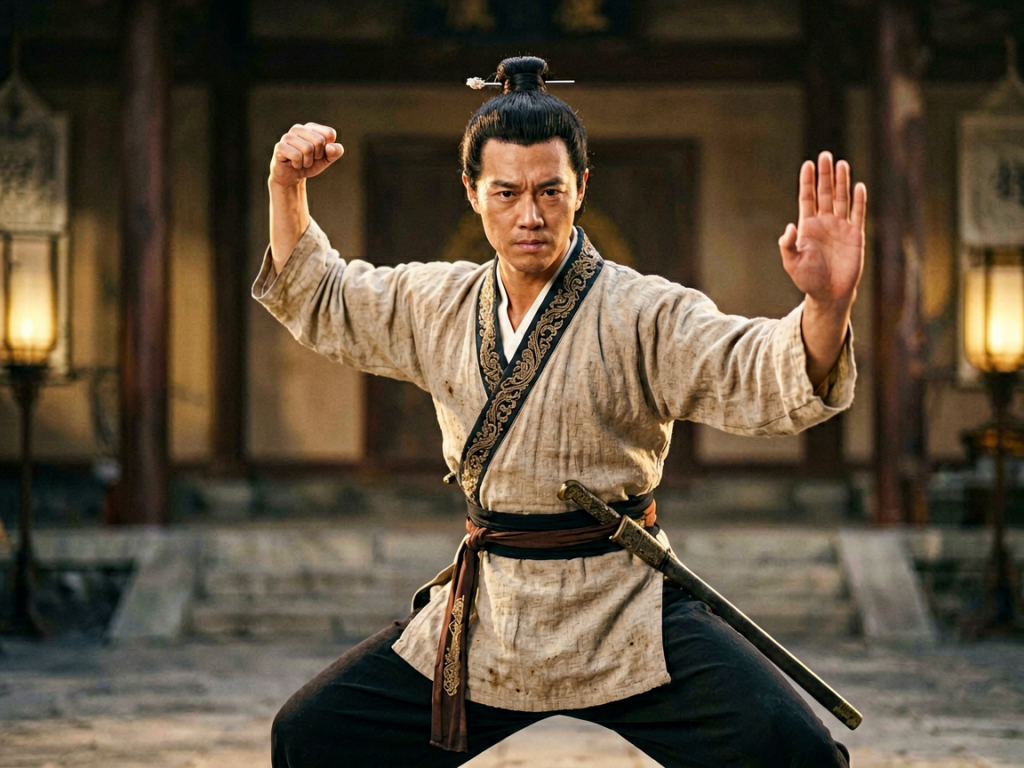
The Legend Before the Legend
Here’s the thing about kung fu movies. You’ve likely seen them. Maybe you watched Donnie Yen in a dark theater, sweating through the air conditioning, completely captivated by the choreography. It’s easy to get swept up in the spectacle. The slow-motion punches, the dramatic pauses, the sheer coolness of it all.
But strip away the Hollywood gloss, and you’re left with a man who never cared for cameras. Ip Man wasn’t a movie star. He was a teacher. A quiet, unassuming guy who just wanted to keep his art alive in a world that didn’t always make sense.
I spent an afternoon in Foshan last year. Not for the tourist traps, but to walk the streets where he actually lived. The city feels different now. Much quieter than the cinematic version we see. But if you listen closely, you can still hear the echo of his footsteps. He’s not just a character in a film. He’s the backbone of modern Wing Chun.
Sound interesting? Well, grab a cup of tea. We need to talk about the man behind the myth.
Foshan: Where the Real Magic Happened
If you want to understand Ip Man, you have to start in Foshan. It’s not the flashiest city in China. It doesn’t have the skyline of Shanghai or the beach vibes of Sanya. But culturally? It’s huge. It’s widely considered the birthplace of modern Chinese martial arts.
I remember walking down Hungry Ghost Street with a local instructor named Master Chen. He pointed out a small, nondescript building. “That’s where they trained,” he said, almost casually. I looked around. There were no gold plaques, no grand statues. Just old brick and fading paint.
Ip Man learned Wing Chun from Leung Jan there. Leung Jan was the big shot, the master of masters. Ip Man was just one of many students. But he was special. Why? Because he had patience. And unlike his peers, he didn’t care about showing off.
You’d think being a martial artist in 1930s Foshan would be all about glory. It wasn’t. It was about survival. The streets were rough. Gangs controlled the neighborhoods. Ip Man knew how to handle himself, but he preferred to stay out of trouble. That’s a key detail people often miss.
He wasn’t trying to be a hero. He was trying to be a good student. This humility stuck with him for decades. Even when he moved to Hong Kong later, he kept that same low-profile attitude. It’s why he survived the political storms that washed away so many others.
From Gentleman to Refugee
Let’s fast forward a bit. Ip Man wasn’t always a fighter in the traditional sense. He was from a wealthy family. They were gentry. Rich landowners, educated, refined. He grew up drinking tea and practicing forms, not running from warlords.
Then came World War II. Japan invaded China. Foshan fell. Ip Man lost everything. His wealth, his home, his status. Overnight, he went from a gentleman scholar to a refugee. It’s a harsh reality check that defines so much of his story.
I asked a historian about this period once. He told me Ip Man worked as a factory worker. He wore simple clothes. He ate cheap meals. He didn’t complain. He just kept teaching. But he couldn’t do it openly anymore. The Japanese banned Chinese martial arts. It was against the law.
So, Ip Man taught in secret. In backrooms. In parks at dawn. He trained his close friends and family. This underground network of students became crucial. They preserved the art when the rest of the country was under siege. It’s pretty incredible when you think about it.
You might wonder how hard it was to practice in such conditions. Imagine trying to perfect a complex form while listening for police sirens. While your stomach rumbles from hunger. That was Ip Man’s daily life. And yet, his technique never wavered. If anything, it got sharper.
Enter Bruce Lee
Now, we have to talk about the elephant in the room. Bruce Lee. Everyone knows Bruce. He’s the global icon. The philosopher. The actor. But without Ip Man, Bruce Lee is just a guy doing pushups in Oakland.
Ip Man was Bruce’s teacher. Strictly speaking, he was one of several, but he was the primary influence. Bruce trained under Ip Man in Hong Kong. They bonded over their shared love of martial arts. But more importantly, they connected on a personal level.
I read some old interviews. Bruce described Ip Man as a man of integrity. He respected him deeply. Ip Man saw potential in Bruce that no one else did. He encouraged him to innovate. To break away from traditional constraints.
This is where things get interesting. Ip Man didn’t just teach Wing Chun. He taught mindset. He taught Bruce that martial arts isn’t about rigid forms. It’s about efficiency. About adaptability. About flow.
When you watch Bruce Lee’s early films, you can see Ip Man’s influence. The economy of motion. The direct strikes. The focus on center line theory. It’s all there. Ip Man laid the foundation. Bruce built the skyscraper.
Did Bruce ever say he missed his master? Yes. He traveled to Hong Kong specifically to visit him. To bow. To show gratitude. Those moments were sacred. They weren’t filmed for the cameras. They were private rituals between teacher and student.
The Hong Kong Years and the Move to America
After the war, Ip Man moved to Hong Kong. The city was chaotic. Overcrowded. Full of opportunity and danger. He set up his school in the Sham Shui Po district. It was humble. A small room. A few mats. That was it.
But word spread. Fast. People came from all over. Soldiers. Businessmen. Students. They wanted to learn from the master. Ip Man taught them all. He didn’t pick favorites based on money or status. He picked them based on dedication.
His students included Cheung Ngai-sang and Wong Shun-leung. These guys weren’t amateurs. They were tough. Some were even better fighters than Ip Man himself. But they respected him. They understood that his value wasn’t in brute strength. It was in knowledge.
In the late 1950s, Ip Man moved to America. With his wife Sim. For a brief stint. It wasn’t successful. The cultural barrier was too thick. The students weren’t committed. He returned to Hong Kong within a year. Disappointed, but not defeated.
Back in Hong Kong, he continued teaching. He focused on his inner circle. The guys who really cared. Bruce Lee was part of that group. So were the other famous students. This tight-knit community kept the art pure. It prevented it from becoming diluted or commercialized too quickly.
A Quiet Death, A Loud Legacy
Ip Man died in 1972. From throat cancer. He was 60 years old. Not a particularly old age for the time. His death was relatively quiet. There were no massive public funerals. No global headlines.
But his students didn’t let his legacy fade. They took his teachings. They opened their own schools. They spread the word. Wing Chun started to grow. Slowly at first. Then exponentially.
Today, Wing Chun is one of the most recognized styles of kung fu worldwide. You see it in movies. In gyms. In street fights. The influence of Ip Man is everywhere. Yet, few people know the man himself.
I find this ironic. The man who valued silence and humility is now associated with some of the loudest action movies ever made. The movies exaggerate. They add magic powers. They create superhuman feats. But at the core, they tell the truth about Ip Man’s impact.
The recent films starring Donnie Yen have done a lot to reintroduce Ip Man to new generations. I’ll admit, I was skeptical at first. I didn’t think a biopic could capture the essence of a real person. But somehow, it did. The fight scenes were grounded. The character felt human.
It wasn’t about making Ip Man a superhero. It was about showing him as a protector. A father. A teacher. A man trying to hold onto his dignity in a broken world. That resonates. That’s why people connect with him.
Why Ip Man Matters Today
So, why should you care about Ip Man? Is he just a historical figure? A footnote in martial arts history?
No. He represents something deeper. He shows us that true strength comes from within. It’s not about how hard you can hit. It’s about how well you can endure. How gracefully you can handle loss.
His story is one of resilience. He lost his wealth. He lost his home. He lost his health. But he never lost his spirit. He kept teaching. He kept believing. He kept flowing like water, just like Bruce Lee later would.
If you practice Wing Chun, you’re part of this lineage. You’re connecting with a tradition that spans centuries. It’s a living history. Every time you drill the chain punch, you’re honoring Ip Man. Every time you stand in the stance, you’re feeling his presence.
Even if you don’t practice martial arts, there’s a lesson here. Life will knock you down. You might lose everything. But you can choose how to respond. You can stay angry. Or you can stay calm. You can fight back blindly. Or you can adapt.
Ip Man chose adaptation. He chose calm. And that’s why he’s remembered. Not because he was the strongest. But because he was the wisest.
Final Thoughts
I’m wrapping up this little journey. But the story doesn’t end here. It continues every time someone steps onto a mat. Every time a student bows to their teacher. Every time a fan watches a movie and feels inspired.
Ip Man’s legacy is alive. It’s breathing. It’s moving. It’s evolving. And it’s beautiful.
Next time you see a Wing Chun practitioner, take a closer look. See the precision. See the power. See the history. You’re looking at the ghost of a man who changed the world, quietly and humbly. Just the way he liked it.
That’s the beauty of Ip Man. He’s everywhere, yet nowhere. He’s a legend, yet a man. And that’s exactly why we love him.