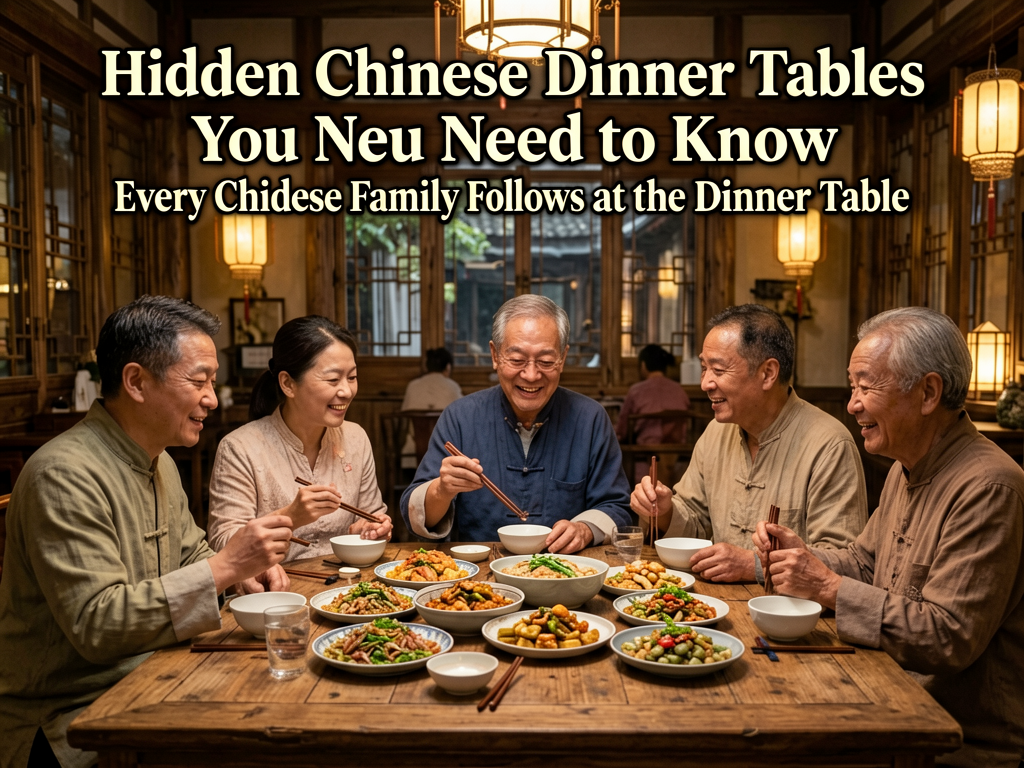
Honestly, I still get nervous before I sit down at a round table in a restaurant in Beijing. It’s not because the food is scary. I’ve eaten scorpion skewers without blinking. It’s because I know I’m one wrong move away from being the awkward foreigner who doesn’t understand the unspoken script.
You think knowing how to chopsticks is the hardest part? Please. You can master the grip in a week. But the social choreography of a Chinese dinner? That takes years to learn. And even then, you’ll probably mess it up once or twice. That’s fine. Most people laugh it off. But if you want to truly blend in, you need to know the hidden rules.
I’m going to share the ones that actually matter. Not the stuff you find in a etiquette book from 1990, but the real, living rules my Chinese friends and colleagues follow every single night. These aren’t just traditions. They’re the glue holding the relationship together.
The Seat of Honor Isn’t What You Think
When you walk into a private dining room, don’t just pick your favorite chair near the air vent. That’s a rookie mistake. In Chinese culture, seating isn’t random. It’s a hierarchy, and it’s strict. The seat facing the door is the host’s seat. Or sometimes, the guest of honor’s seat, depending on the formality.
I remember my first proper dinner with a client in Shanghai. I was exhausted. I just wanted to sit anywhere. I picked a seat next to the bathroom. Big mistake. My host looked uncomfortable but didn’t say anything. I felt silly when he gently guided me to the main seat. It wasn’t about power. It was about respect. By letting me take the head, he was honoring our business relationship.
If you’re not sure where to sit, wait. Let the eldest person or the highest-ranking person sit first. Then look for the empty chair nearest them. That’s usually the safest bet. Don’t rush. Silence is better than the wrong seat. Once everyone is seated, the host will often order the dishes. This is huge. It signals that they are taking responsibility for the meal. Don’t try to order for the whole table unless invited to do so. Just tell them what you like or dislike, and let them handle the rest.
Soup Comes Last, Not First
In the West, soup is often an appetizer. In China, it’s usually the finale. I used to be confused by this. At a hotpot place in Chengdu, I waited for a bowl of noodle soup after the spicy broth. It never came. Instead, I got steamed buns and tea. I thought I’d been forgotten. Turns out, the rice and simple carbs are the standard way to end a heavy, flavorful meal.
This rule applies to home cooking too. You don’t start with a clear broth unless it’s specifically a medicinal tonic. The progression is usually cold dishes, then stir-fries, then the main meat dish, and finally, something light or starchy to fill you up. A clear vegetable soup might appear mid-meal to cut the grease, but the final course is almost always about comfort. Rice, congee, or noodles. Something gentle on the stomach after hours of spicy, salty, savory hits.
I learned this the hard way during a family dinner in Xi’an. My host served a thick, rich lamb stew. I eagerly asked for soup to go with it. My aunt laughed and handed me a small bowl of warm water with lemon. “Drink that,” she said. “To wash down the richness.” It wasn’t a formal soup. It was a palate cleanser. The actual soup, a simple tofu and seaweed broth, came much later, alongside the dumplings. It shifted my entire approach to dining. Now, I look for the heavy proteins first and save the liquids for last.
Never Stick Chopsticks Upright in Rice
This one is non-negotiable. If you stick your chopsticks vertically into a bowl of rice, you’re inviting bad vibes. Literally. It looks like incense sticks burning at a funeral altar. It’s associated with death and offerings to the dead. I saw a tourist do this once at a casual noodle shop. The owner stopped cleaning his counter and stared. The tension in the room was thicker than the chili oil.
Put your chopsticks on the rest. Or lay them parallel across your bowl. If you don’t have a rest, just lay them down on the table edge. It’s a small detail, but it shows you respect the cultural context of the meal. Food in China isn’t just fuel. It’s ritual. And rituals have taboos.
Another big chopstick no-no? Don’t tap your bowl with them. In ancient times, beggars tapped their bowls with sticks to attract attention. Doing it at the dinner table makes you look like a beggar asking for scraps. I’ve seen foreigners do this playfully. Their Chinese friends usually freeze up. It’s embarrassing for everyone involved. Keep your chopsticks still unless you’re picking up food. Even then, don’t spear your dumplings. That’s rude. Pick them up gently with two fingers if you have to.
The Art of Pouring Tea for Others
When you’re in China, someone is almost always pouring tea for you. But here’s the trick: you should be pouring tea for others, too. It’s a sign of mutual respect. I noticed this pattern early on. At every business lunch, there was a constant flow of green tea from pot to cup. No one was allowed to finish their cup without someone else topping it off.
If you’re the guest, watch the person next to you. When their cup gets low, pour for them. Then they’ll pour for you. It’s a dance. If you let your cup go empty while others are drinking, it implies you’re not paying attention or that you don’t value the company. It’s a subtle rejection of their care.
There’s also a finger gesture you need to know. If someone pours tea for you, and you don’t want to interrupt the conversation to say thank you, tap your index and middle fingers on the table three times. This mimics the kowtow. Two fingers mean you’re equal in status. One finger means you’re younger or lower status and are showing extra respect. I’ve used the two-finger tap so many times I didn’t even realize I was doing it. It’s become muscle memory now.
Don’t refill your own cup unless absolutely necessary. It breaks the flow of interaction. Let the person next to you handle it. It keeps the conversation moving. I remember a long dinner in Guangzhou where we talked for three hours straight. I didn’t touch the teapot once. My buddy next to me kept refilling us both. It felt intimate and connected. When I tried to reach for it myself, he gently pushed my hand back. “Let me,” he said. “I’ve got you.” That’s the spirit.
Leaving a Little Bit of Food is Polite
In the West, cleaning your plate is good manners. It shows appreciation for the cook. In China, it’s complicated. If you finish everything, the host might feel they haven’t provided enough. They might worry you’re still hungry. So, leaving a tiny bit on your rice bowl or plate can actually be a compliment. It says, “I am full, and you fed me well.”
I struggled with this initially. I grew up thinking waste was bad. So I’d scrape my bowl clean. My Chinese friend would then order another round of dishes. “You didn’t eat enough!” she’d insist. I was stuffed. But her hospitality was demanding more. Eventually, I learned to leave a few grains of rice. It was weird at first, but it saved us from over-ordering and made the host feel successful.
Of course, this depends on the setting. At a fancy hotel buffet, don’t leave a mountain of food. That’s just wasteful. But at a family gathering or a restaurant meal with a host, aim for 90% empty. It’s a balance. You don’t want to look greedy, but you don’t want to look like you’re starving them out of their generosity. Read the room. If the host is frantically filling your bowl, slow down. Push the bowl away slightly. Smile. Say you’re full. They won’t believe you immediately, but they’ll stop pushing eventually.
Clinking Glasses Requires Lowering Yours
When you toast, especially with elders or superiors, never let your glass be higher than theirs. It’s a sign of humility. I learned this during a team dinner in Shenzhen. Our boss raised his glass for a toast. I was eager to show respect, so I reached out quickly. My glass went up higher than his by accident. He paused. The room went quiet for a split second. I quickly lowered my glass, but the moment was lost. It wasn’t angry. It was just awkward. I felt like a child who forgot her manners.
If you’re drinking with someone older or higher status, tilt your glass down. Make sure the rim of your glass is below theirs. It’s a small physical gesture that carries a lot of weight. It says, “I respect your position.” It’s not about submission. It’s about acknowledging the social structure. In China, relationships are hierarchical. Respecting the hierarchy makes interactions smoother.
Also, don’t just clink glasses and drink. Look at the person. Eye contact is crucial. If you look away while clinking, it looks dismissive. Hold their gaze. Take a sip, but don’t drain your glass unless they do. Match their pace. If they take a small sip, you take a small sip. If they chug, you chug. Matching the energy shows you’re in sync with them.
And never refuse a toast outright. If you can’t drink alcohol, say so politely in advance. Offer juice or tea instead. But even then, raise your glass. Participate in the ritual. Refusing to join the toast circle isolates you. It breaks the bond. I’ve seen business deals fall apart because one guy refused to drink with the group. It wasn’t about the alcohol. It was about trust. By participating, even with water, you show you’re part of the team.
Understanding these rules doesn’t make you a culture expert. It just makes you a respectful guest. The goal isn’t to memorize a list of dos and don’ts. It’s to show that you care about the people sitting across from you. Food is love in China. When you follow the table rules, you’re accepting that love. You’re saying, “I see you. I respect you. Let’s eat together.”
I’m still learning. Every trip back to China, I catch myself making a new mistake. I put my chopsticks down wrong. I poured my own tea. I left too much rice on my plate. But my friends laugh now. They don’t judge. They teach. And that’s the real beauty of Chinese dining. It’s forgiving. As long as you’re trying, you’re welcome at the table. Just don’t stick those chopsticks in the rice. Please.