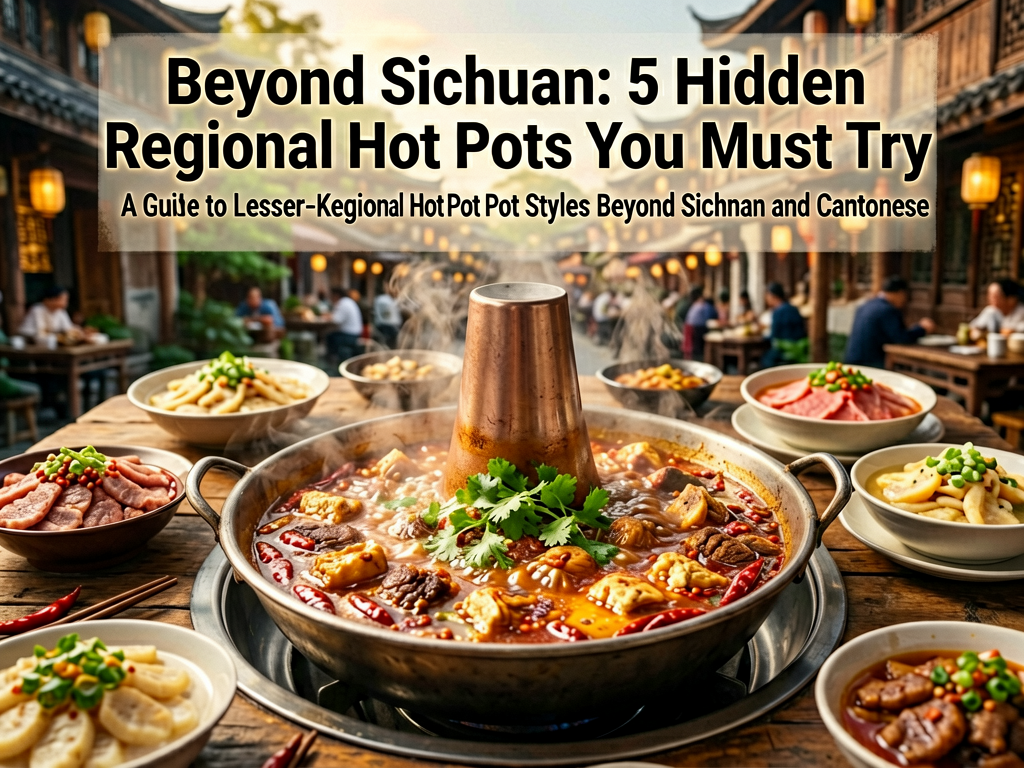
I’ll be honest, I’ve been eating hot pot in China for eight years now. And no, I haven’t seen them all. If you ask the average tourist, they’ll tell you there are two kinds of hot pot: Sichuan (spicy) and Cantonese (light). That’s like saying there are only two kinds of pizza in Italy. It’s technically true, but it misses the entire point of the experience.
Most folks stick to the beef tallow and chili peppers of Chengdu. It’s delicious, sure. But it’s also loud, aggressive, and often leaves you sweating through your shirt within twenty minutes. There’s a whole other world out there. A quieter, more nuanced, and frankly, more interesting world of regional broths.
I spent last month traveling specifically to find these lesser-known styles. I wanted to see what happens when you strip away the numbing spice and look at the local ingredients. What I found blew me away. From mushroom forests in Yunnan to mineral springs in Beijing, here’s what you need to know about the hot pots that rarely make the guidebooks.
The Earthy Complexity of Yunnan Mushroom Hot Pot
If you think hot pot is just meat and broth, Yunnan is going to humble you quickly. This region is the mushroom capital of China. The air smells like pine needles and damp earth. And the hot pot? It’s basically liquid forest.
I went to a small place in Kunming called Wild Mushroom Paradise during the rainy season. The menu didn’t have photos. It just had handwritten notes on different types of wild fungi. I tried the “Sanxian” broth, which translates to three fresh ones. It sounds simple, but it’s anything but.
The base is usually a light chicken stock, sometimes clear enough to see the bottom of the pot. Then they bring out the basket. We’re talking matsutake, morel, and various chanterelles that locals harvest from the mountains before dawn. You don’t boil these. You barely dip them.
The taste is incredibly umami-rich. It’s earthy, nutty, and deeply savory without being salty. I dipped a slice of matsutake in some light soy sauce and vinegar. It tasted like the ground itself. My local friend laughed when I tried to order spicy dip. She said, “You’d be insulting the mushroom.” Fair point.
This style of hot pot changes how you think about dining. It’s not about masking the ingredient with heat. It’s about letting the ingredient shine. The vegetables are just as important. I ate bamboo shoots and lotus root that were so crisp, they snapped between my teeth.
One thing to watch out for is timing. Some of these mushrooms need to be cooked longer than others. Don’t rush it. Sit back. Drink the broth first. It’s warming and comforting in a way that Sichuan pepper never quite manages.
The Mineral Magic of Beijing Copper Pot
Let’s talk about Beijing. When you visit the capital, people expect you to eat Peking Duck. But if it’s winter, the real move is the Tongyi Jiuyang Ge–copper hot pot. It’s old-school. It’s traditional. And it’s surprisingly minimalist.
I remember my first time sitting around a brass pot in a hutong restaurant near Drum Tower. The pot was tall and narrow, with a chimney in the middle. Coal burned inside, keeping the center boiling while the edges stayed warm. There were no fancy ladles. Just a round copper vessel and a tray of fresh lamb.
The broth is just water. Maybe some ginger slices. Maybe a few dates. That’s it. No oil. No paste. No chilies. It sounds bland if you’ve only ever eaten spicy hot pot. But trust me, it’s not.
The quality of the lamb makes or breaks this dish. In Beijing, they serve “hand-cut” lamb. You watch the butcher slice the meat right in front of you. It’s paper-thin. When you drop it into the boiling water, it turns grey almost instantly. You pull it out after three seconds.
Dipping it in sesame paste (majiang) is the standard move. The paste is rich, garlicky, and slightly tangy. It coats the tender meat perfectly. I tried adding a bit of fermented tofu once, thinking it would add depth. My tablemates looked at me like I’d added dirt. Stick to the basics.
This style is about precision. If you overcook the meat, it gets tough. If you undercook it, it’s risky. There’s a rhythm to it. Dip, stir, remove, dip again. It’s meditative. And honestly, it’s much lighter on the stomach than a heavy Sichuan meal.
Winter in Beijing is brutal. The wind cuts through your coat. Sitting around a glowing coal fire, watching the steam rise from that copper pot, feels like finding warmth in the middle of nowhere. It’s a very specific kind of comfort that you can’t replicate elsewhere.
The Sweet Surprise of Shunde Beef Hot Pot
We’ve heard about Cantonese dim sum. We’ve heard about roast goose. But Shunde, a district in Foshan, has a beef hot pot culture that rivals even Sichuan. The difference? It’s all about the cut and the broth.
Sichuan uses tough cuts because they simmer for hours. Shunde uses prime cuts because they barely cook at all. I visited a famous spot in Shunde called “Old Shunde Beef.” The sign was faded, but the line was out the door.
The star here is the bone broth. They boil beef bones for twelve hours until the liquid is milky white. It’s creamy without being dairy-based. The flavor is sweet, mild, and incredibly clean. It highlights the natural sweetness of the beef.
You get a huge platter of raw beef. It’s sliced thin, but not as thin as Beijing style. The textures vary. There’s tenderloin, brisket, tendon, and skin. Each part has a different mouthfeel. The tendon is chewy. The skin is slippery. The lean meat is soft.
I loved the “foolish beef” (shazi niurou). It’s marinated lightly with baking soda to keep it tender, then dipped in the boiling soup. It stays juicy even if you leave it in too long. My friend called it forgiving. I call it genius.
The dipping sauce is usually simple. Minced garlic, cilantro, and a splash of soy sauce. Sometimes they add a bit of peanut powder. It adds a nutty crunch to the smooth broth. It’s a texture contrast that works surprisingly well.
What surprised me most was how social this meal felt. In Sichuan, everyone is fighting for the last piece of tripe in the spicy oil. In Shunde, you take your time. You try different cuts. You share the broth. It’s a slower pace. A more relaxed vibe.
Head north to Harbin or Changchun, and the weather drops below freezing. The food gets bigger. The pots get bigger. This is where you find Tielu Dun–iron pot stew. It’s less of a hot pot and more of a communal feast.
I was invited to a home in Heilongjiang during New Year’s Eve. The kitchen had a massive iron wok set over an open wood fire. The smell of burning pine was everywhere. It smelled like a campfire, which is exactly what it felt like.
The base is usually pork belly, potatoes, and beans. Sometimes they add cabbage or corn. The liquid is savory and thick. They pour water or stock into the wok and let it simmer for hours. The meat falls off the bone. The potatoes melt in your mouth.
But here’s the kicker: they stick cornbread dough onto the side of the hot pan. As the stew cooks, the cornbread absorbs the steam and gets crispy on the outside, soft on the inside. It’s the best bread you’ll ever eat.
You don’t use chopsticks here. You use spoons and forks. Or you tear off chunks of the cornbread to scoop up the stew. It’s messy. It’s hands-on. It’s perfect for sharing with a group of friends who know each other well.
I tried a version in a restaurant once. It was clean, efficient, but lacked the soul of the wood-fired version. The charcoal flavor can’t be faked. If you go, insist on the traditional method. Watch the flames lick the sides of the pot. Listen to the bubbling. Eat until you can’t move.
Finally, let’s head south to Chaoshan, the region behind Shunde but with its own identity. Here, the hot pot revolves around beef balls. Not just any beef balls. Hand-pounded beef balls that bounce like rubber.
I watched the chef pound the beef with a wooden mallet for thirty minutes straight. He didn’t use a machine. He said machines break the muscle fibers. This manual process creates a bouncy texture that machines can’t match. It’s labor-intensive, but worth every second.
The broth is light, often made with radish or kelp. It doesn’t compete with the meat. Instead, it complements it. You drop the beef balls in, wait five minutes, and they puff up. Cut one open, and it’s steaming hot, juicy, and incredibly springy.
I paired these with slices of razor clam and fish maw. The seafood added a briny depth that balanced the richness of the beef. It’s a luxurious combination. Expensive ingredients, simple preparation. That’s the Chaoshan way.
The dipping sauce here is unique. They use a mix of soy sauce, sesame oil, and chopped chilies. Some add a bit of vinegar. It cuts through the fat of the beef balls nicely. I found myself making multiple dips, changing the ratios each time.
It’s a playful meal. You’re experimenting with textures and flavors. One bite is chewy, the next is tender, the next is crisp. It keeps your palate interested throughout the entire dinner. No boredom allowed.
There’s a tendency in Western media to reduce Chinese cuisine to just spicy. It’s easy to grab the nearest Sichuan option. It’s familiar. It’s intense. But it’s limiting.
By exploring these regional styles, you’re not just eating different food. You’re understanding different cultures. Yunnan teaches you about nature and patience. Beijing shows you history and simplicity. Shunde highlights craftsmanship. The Northeast reminds us of community and warmth. Chaoshan emphasizes texture and luxury.
Each bowl tells a story. Each pot reflects the landscape around it. In Yunnan, you’re eating the forest. In Beijing, you’re tasting the winter. In Shunde, you’re savoring the river.
So next time you sit down for hot pot, don’t default to the spicy oil. Ask your friends where they want to go. Challenge yourself to try a new style. You might find a new favorite. Or at least, you’ll avoid the dreaded heartburn.
I’m still recovering from my trip. My stomach is happy, but my wallet is lighter. Totally worth it. Have you tried any of these? Let me know in the comments. I want to hear about your experiences. And if you haven’t, start planning your next meal. Your taste buds will thank you.