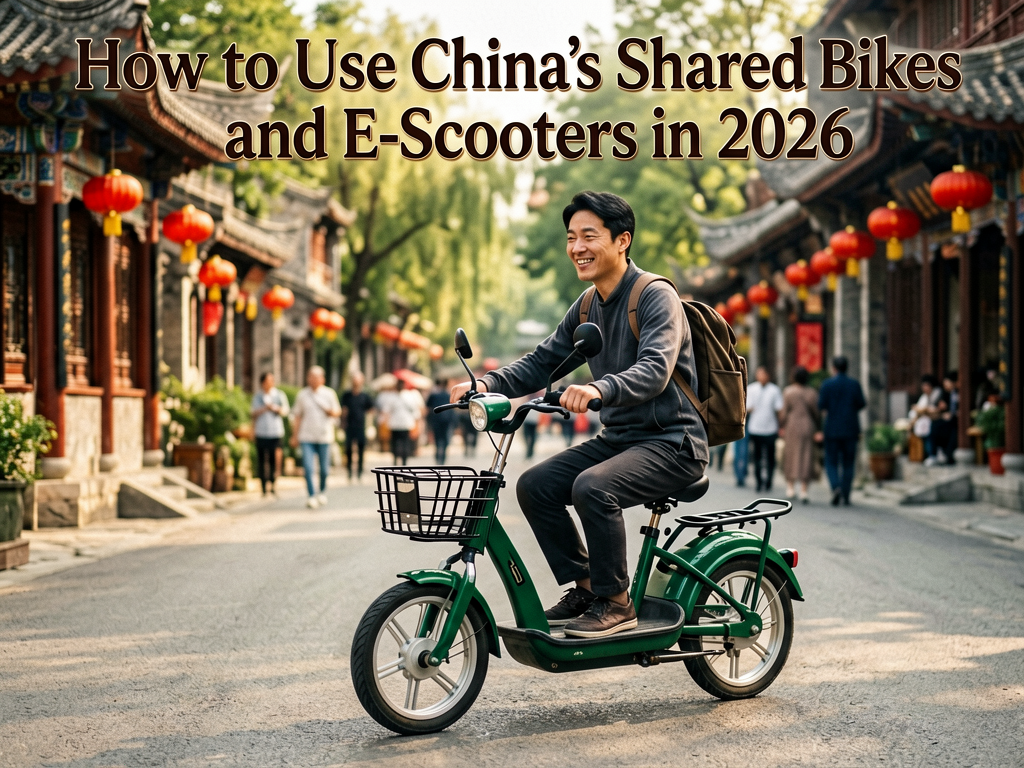
It’s 7:30 AM on a Tuesday in Shanghai. The air is crisp, smelling faintly of roasted sweet potatoes from the street vendor down the block. I’m standing on the sidewalk, phone in hand, scanning a QR code on a bright yellow bike. It unlocks with a satisfying *click*. I hop on, join the river of commuters, and pedal past skyscrapers that seem to touch the clouds.
If you’ve ever tried to get around a major Chinese city without this, you’re missing out. Shared bikes and e-scooters aren’t just convenient; they’re the circulatory system of modern China. They connect metro stations to offices, restaurants to apartments, and yes, they save you from the dreaded summer heatwave sweat.
I still remember my first week here in 2018. I tried to hail a Didi ride during rush hour. The app said “no cars available.” I watched hundreds of people zip past me on those orange and yellow bicycles. I felt left behind. Fast forward to 2026, and I can’t imagine living here without them. They’re cheaper than public transit for short trips, faster than walking, and way less stressful than driving in traffic.
But here’s the catch. The ecosystem has changed. It’s not just Meituan and HelloBike anymore. There are new apps, stricter regulations, and different payment methods. If you’re a foreigner planning to stay long-term, you need to know how this works now. Don’t worry, though. I’ve got you covered.
The Apps You Actually Need to Download
Forget the old guides you might have found online. The landscape in 2026 is dominated by three main players, but their integration into super-apps is what matters. You don’t necessarily need to download three separate apps for bikes. Most of the time, you’ll access them through Alipay or WeChat.
Alipay is still my go-to. It’s surprisingly robust for foreigners. If you’ve linked your international credit card–which is easier now thanks to recent policy updates–you can pay directly within the mini-programs inside Alipay. I usually search for “Hello Bike” or “Meituan Bike” in the Alipay search bar. It pops right up. No need to install anything extra. This is huge because it keeps all your transport history in one place.
WeChat works similarly but feels a bit more cluttered. You’ll find the mini-programs under the “Services” tab or by searching. The interface is slightly less intuitive for non-Chinese speakers, so stick with Alipay if you want a smoother experience. Just make sure your location services are on. Both apps rely heavily on GPS to find nearby bikes.
Then there’s the standalone app for Didi, which now includes its own scooter rental service in many cities. It’s decent, but I rarely use it unless I’m already booking a car. Why juggle apps? Stick to the super-apps. They’re stable, support English, and handle payments seamlessly.
Bikes vs. E-Scooters: What’s the Difference?
This is where things get tricky. In China, “shared bike” usually refers to the pedal-only versions. These are the classic bicycles. They’re great for short distances, under 3 kilometers. You get some light exercise, and you can’t really crash at high speeds. They’re everywhere.
E-scooters, or electric bicycles, are different. They look similar but have a motor and a battery. They’re faster, reaching up to 25 km/h legally. But here’s the deal: you can’t just hop on any e-bike. In 2026, strict rules apply. You need a license plate, and you often need to verify your identity more thoroughly than for a regular bike.
I prefer regular bikes for my morning commute. It wakes me up. Plus, e-bikes have a tendency to run out of battery in random spots. I’ve seen plenty of dead e-scooters littering sidewalks, making them useless. Regular bikes are always maintained better because the cost of repair is lower for the companies. An e-bike battery degradation is a headache for the provider, so they rotate them frequently. You end up with a weak battery half the time.
However, if you’re going uphill or in a sprawling city like Chengdu, an e-scooter is a lifesaver. Just remember: no helmets are provided anymore. Companies stopped including them due to hygiene concerns and theft. You need to bring your own. I keep a foldable one in my bag. It’s annoying, I know, but safety first. Or at least, avoiding fines first.
Pricing and Payment Hacks
Let’s talk money. Prices vary by city, but generally, a 30-minute ride costs between 1.5 and 3 RMB for a regular bike. E-scooters are pricier, usually starting at 2 RMB for the first 15 minutes, then adding up quickly. If you ride an e-scooter for an hour, you could easily pay 15 to 20 RMB. That’s pricey compared to the metro.
Here’s a pro tip: look for monthly passes. Most apps offer them via Alipay. For regular bikes, a monthly pass might cost around 99 RMB. If you ride daily, it pays for itself in two weeks. For e-scooters, the passes are more expensive, but some cities offer discount bundles during off-peak hours.
You don’t need cash. Everyone uses digital payment. But ensure your bank card is linked correctly. International cards now work smoothly with UnionPay QuickPass. If you encounter a payment error, check your transaction limit. Some banks flag small recurring transactions as suspicious. Call your bank beforehand if you’re traveling. It saves hours of frustration.
I once paid 50 RMB for a bike ride because I forgot to lock it properly. The app charged me an overtime penalty. Locking the bike is crucial. You have to park it in designated zones marked on the map. If you park outside, you’ll get fined, and the bike won’t unlock again until you move it. It’s frustrating, but the companies are strict about it to keep sidewalks clear.
Navigating the Roads Safely
Riding in China is… intense. Cars don’t always yield. Scooters zip through pedestrian crosswalks. It’s chaotic. As a foreigner, you stand out. Drivers see you coming and sometimes slow down out of curiosity. Don’t let it distract you.
Always ride in the bike lane. If there isn’t one, hug the right side of the road. Never ride against traffic. I made that mistake once in Beijing. A taxi honked at me so loudly I nearly fell off. The driver wasn’t angry; he was just shocked I was going the wrong way. Locals think it’s illegal. And technically, it is.
Watch out for pedestrians. They don’t always look before crossing. In busy areas, like the night markets in Guangzhou, I walk my bike. It’s slower, but it shows respect. I’ve seen too many accidents where a rider didn’t stop for a child chasing a ball. Be vigilant. Headphones are a big no-no. You need to hear the horns.
Weather matters. Rain makes roads slippery, and visibility drops. In summer, the heat is brutal. Hydrate. E-scooters lose battery life faster in extreme cold or heat. If it’s snowing, avoid riding. The roads become ice rinks, and the bikes are poorly maintained for winter conditions. Stick to the metro when the weather turns bad.
My Honest Take After Eight Years
Am I perfect? No. I’ve gotten lost. I’ve locked my bike in the wrong zone twice. I’ve nearly collided with a delivery scooter three times. But I love it. There’s a freedom to riding a shared bike that you just don’t get from sitting in a car or subway.
You feel the city. You smell the street food. You see the old alleyways next to the glass towers. It’s a sensory experience. In 2026, the infrastructure has improved. New bike lanes are being built in Tier 2 and Tier 3 cities. The apps are more reliable. Payment is seamless.
Don’t overthink it. Download Alipay. Link your card. Find a yellow bike. Hop on. Ride slowly. Look around. Enjoy the ride. It’s the best way to explore China, one pedal stroke at a time. Trust me, you’ll wonder how you ever survived without it.