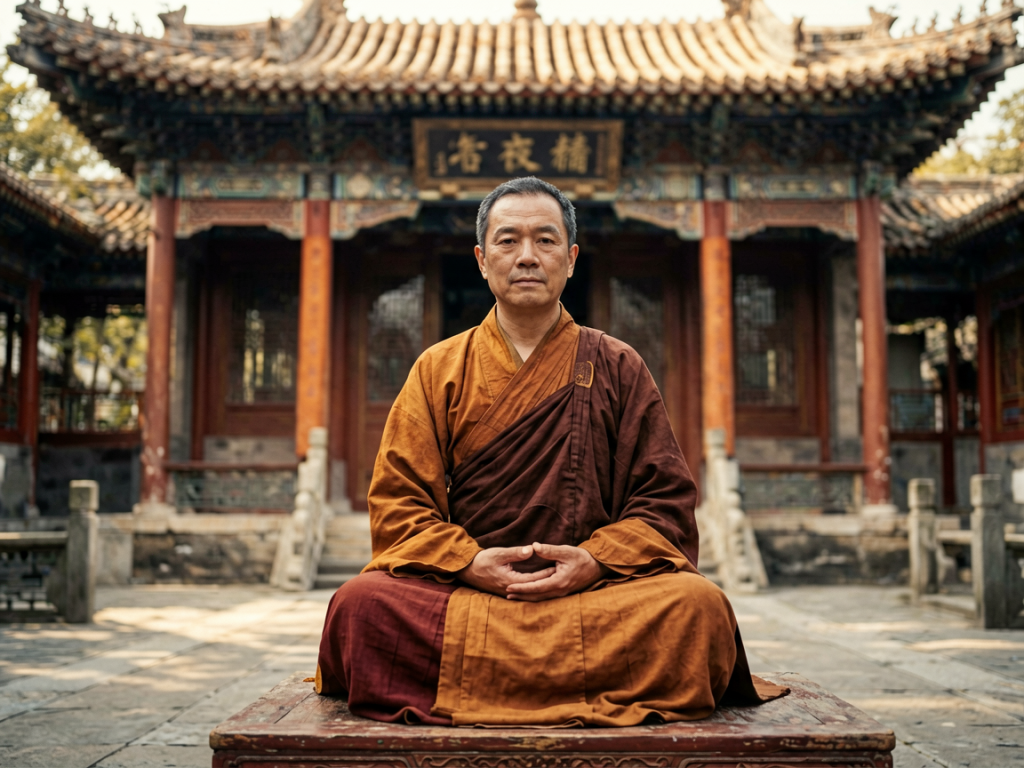
I’ll be honest, I was skeptical when my friend Dave first told me he quit his tech job in San Francisco to move to Henan Province. He said he wanted to learn “real” Kung Fu. He wanted the magic.
He also wanted to find himself. Or something equally vague and spiritually convenient.
When Dave arrived at the Temple House, I visited him after two weeks. I expected to see him meditating under a waterfall or sparring with monks who moved like liquid smoke. Instead, I found him in the mud, vomiting after a three-hour sprint up a mountain path.
That’s the gap. That massive, painful chasm between the Hollywood myth and the daily grind. It’s where most foreign students crash and burn before they even tie their belts correctly.
If you’re thinking about heading to China to train, listen close. The stuff you think matters? It doesn’t. The stuff you ignore? It will break you. Here’s what you’re getting wrong on day one.
You Think This Is A Vacation With A Gym Membership
The first mistake everyone makes is treating the temple like a retreat center. You pack your yoga mat, bring your organic snacks, and plan to spend four hours a day in the morning classes and the rest of the time exploring ancient architecture.
Wrong. Dead wrong.
A real Shaolin school isn’t a gym. It’s a boot camp disguised as a monastery. The schedule starts at 5:30 AM. Not 6:00 AM. 5:30. When your alarm goes off, the sun is still asleep, and so are you.
The morning session is typically an hour of basic stretching and Qi Gong. Then comes the breakfast. And then, the real work begins.
We’re talking five to six hours of physical training every single day. Basic horse stances. Leg swings. Push-ups. Running. It’s repetitive, brutal, and utterly exhausting. There are no cool moves in the beginning. Just suffering.
Most foreigners quit within the first week because they can’t handle the boredom. They want to be doing backflips in the first month. But you can’t do a backflip if you can’t stand on one leg for ten minutes without shaking.
I watched a guy from Germany throw his towel in the air during a basic stance drill. He yelled that it was “wasting his potential.” The abbot just looked at him, sighed, and pointed to the courtyard. “Go run,” he said. “Until you understand patience.”
This isn’t a vacation. It’s a rehabilitation for your ego. You have to leave your expectations at the gate.
You’re Trying To Be Special
Here’s the thing about being a foreigner in China. People stare. They’re curious. They ask weird questions. It feels good. You feel unique.
In the temple, however, you are nobody. You are Wai Guo Ren. Foreigner. An outsider.
Your nationality doesn’t get you special treatment. Your passport doesn’t excuse you from doing extra laps if you fall behind. In fact, the monks sometimes hold you to *higher* standards because they want to prove that foreigners aren’t soft.
I saw a student from California try to negotiate his way out of a cold shower. He reasoned that his muscles needed warmth to recover. The senior monk didn’t even look up from his book. “Cold water makes the spirit sharp,” he grunted. “Your muscles are fine. Your mind is weak.”
You have to suppress that urge to stand out. You join the line. You eat the same bland cabbage and rice as everyone else. You sleep in the same crowded dorm room that smells like sweat and old socks.
Respect is earned through conformity, not individuality. The moment you try to impose your Western need for self-expression on the tradition, you become a problem to be managed, not a student to be taught.
It’s humbling. Really humbling. You go there thinking you’re bringing something new to the table. Turns out, you’re just bringing baggage. Leave it at the airport.
You Misunderstand The Role Of Silence
Kung Fu movies are loud. There’s screaming, yelling, crashing sounds, and dramatic music. In reality, the training hall is often terrifyingly quiet.
New students are shocked by this. They think they’re supposed to grunt or shout to generate power. But the masters teach us to breathe quietly. To move silently.
For the first month, you might not hear a single word spoken during training. It’s just the sound of hundreds of shoes slapping against the concrete floor. Slap, slap, slap.
This silence forces you inward. Without chatter to distract you, you start hearing your own thoughts. And those thoughts? They’re usually complaining.
“My legs hurt.” “I’m hungry.” “This is stupid.” “I miss Wi-Fi.”
Learning to sit with that discomfort is part of the curriculum. It’s mindfulness, but with your quads burning.
One afternoon, I asked a senior disciple why they never celebrated small victories. He laughed, a dry, raspy sound. “If you celebrate every step, you forget the path,” he said. “Keep moving. Don’t stop to look at your feet.”
So, don’t expect high-fives. Don’t expect praise. You will get nods. Maybe a slight tilt of the head. That’s it. You have to find your own validation in the work itself.
You Don’t Respect The Food
This sounds silly, but it’s huge. Chinese temple food is… simple. Boiled vegetables. Steamed buns. Plain congee. Sometimes tofu. Rarely meat.
Western stomachs rebel against this. They crave flavor. They crave fat. They crave salt.
I remember sitting down to my first meal. A bowl of grayish porridge and a side of wilted greens. I tried to ask if they had any soy sauce. The cook just stared at me. “Eat,” he said. “Taste the rice.”
It took me two weeks to appreciate the food. Actually, it took three weeks. But once it clicked, I realized how light I felt. No bloating. No sugar crashes. Just steady energy for training.
If you go in demanding spicy hotpot or dim sum, you’ll starve. Or worse, you’ll make a scene. And making a scene is the fastest way to lose respect.
Embrace the blandness. It’s detoxing you. Physically and mentally. The simplicity of the diet mirrors the simplicity of the practice. Clean food, clean mind, clear body.
Plus, the price is unbeatable. I ate better than most people eating out in Beijing for less than five dollars a day. Not gourmet, but nourishing.
You Forget That Language Is A Barrier To Ego
In the West, we rely heavily on verbal instruction. “Do this. Feel that. Imagine the energy flowing here.” We talk a lot.
At Shaolin, language fails you. Most monks speak limited English. And frankly, they don’t care to explain the philosophy in detail to beginners.
You have to learn through observation. Mimicry. Mirroring.
Watch the older students. Copy their form. Adjust your posture until someone taps your shoulder and corrects your elbow angle. That’s the communication loop.
It strips away your ability to argue or debate. You can’t intellectualize your way out of a bad stance. You either look like them, or you don’t.
I struggled with this at first. I kept trying to ask “why” behind my master’s back. Why is this stance so low? Why do we kick so much?
Eventually, I stopped asking. I just did. And after months of doing it, I finally understood why. The answer wasn’t in a textbook. It was in my knees.
This silence forces you to be present. You can’t plan your next sentence while you’re trying to balance on one leg. You have to be there. Now. Here.
You Treat It As A Phase
Many foreigners arrive with a mindset of “I’ll stay for three months, get fit, learn some moves, and come home.” They treat it like a semester abroad.
But martial arts isn’t about the destination. It’s about the daily ritual. If you treat it as a temporary excursion, you’ll never dig deep enough to find anything real.
The techniques you learn in three months are superficial. You might learn a few cool kicks, but you won’t have built the foundation to support them safely later on.
I’ve seen students return home after two months and get injured within a year because they tried to perform advanced moves without the underlying structural integrity they should have built over years.
Commitment changes the chemistry of the experience. When you decide you’re staying for a year, or longer, your mindset shifts. You stop looking for shortcuts. You start building habits that last a lifetime.
Even if you only stay for a few months, you have to act like you’re staying forever. Put in the work. Earn the respect. Build the foundation.
Don’t count the days. Make the days count.
So, Should You Go?
If you’re looking for a party, a photo op, or a quick fix for your back pain, stay home. Buy a yoga mat. Netflix is waiting.
But if you’re willing to suffer? If you’re ready to be bored, hungry, tired, and humble? If you want to learn something that can’t be taught in a classroom or a gym?
Then yes. Go. Pack light. Speak little. Listen hard.
And when you finally get that stance right, and the instructor nods at you, it won’t feel like a victory. It’ll feel like coming home.
That’s the secret they don’t tell you in the brochures. It’s not about becoming a warrior. It’s about becoming a person. A steady, solid, unshakeable person.
Good luck. You’ll need it.