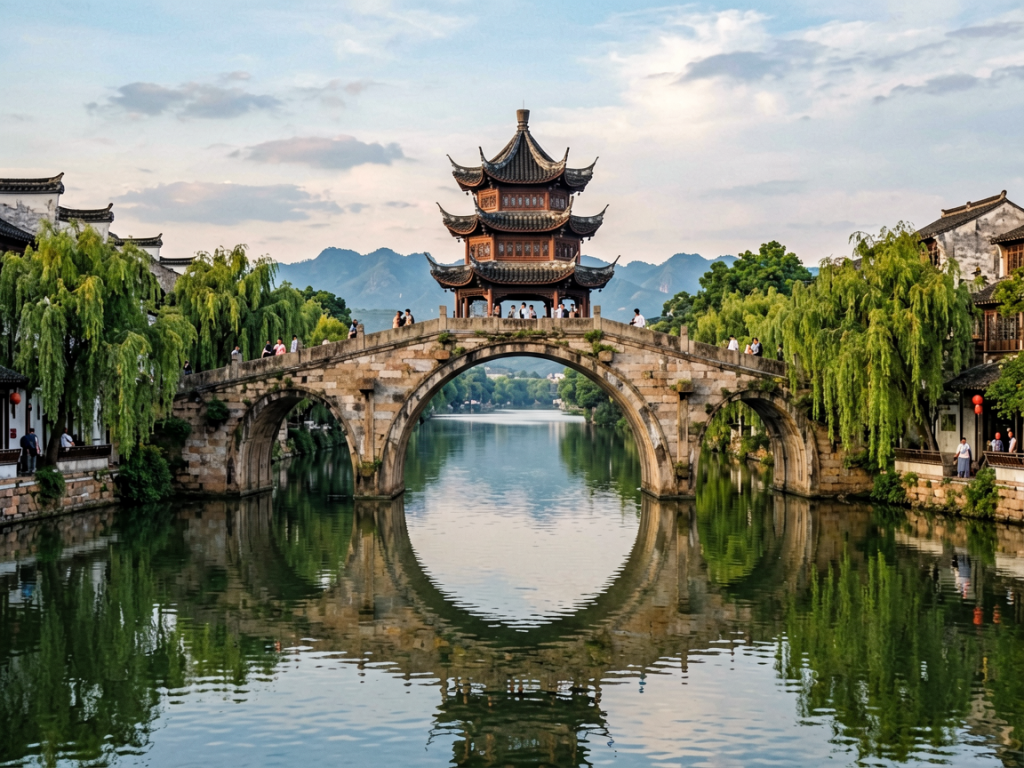
Honestly, I used to think Hangzhou was just another pretty face in China’s crowded tourism industry. You know the type. Postcard-perfect, overly curated, and stuffed with tour buses so big they look like they’re crushing the ancient stone bridges underneath them.
I was wrong. Dead wrong.
I’ve lived in China for eight years now. I’ve eaten street skewers in Chengdu until my stomach gave up. I’ve hiked the Great Wall in bad weather. But nothing in this country has caught me off guard quite like Hangzhou. Specifically, West Lake.
It’s not just a lake. It’s a mood. A philosophy. A way of life that refuses to speed up even when the rest of the world is screaming at you to go faster.
If you’re planning a trip here, or if you’re just scrolling through photos and dreaming, listen up. You might think one weekend is enough. Trust me, it isn’t. Here is why I’m already packing my bags for trip number ten.
The Lake Lies to You
West Lake looks calm. It really does. The water is usually glass-still in the morning, reflecting the willow trees and the pagodas. It screams tranquility. But don’t be fooled by the surface.
I remember my third visit. I rented a bicycle, thinking I’d circle the entire lake in an hour. Classic rookie mistake.
The path around the main lake is paved and flat, sure. But the magic happens when you turn your back on the water and head inland. Or worse, head into the hills.
The “lake” is actually a series of interconnected bodies of water, islands, and causeways built by poets and politicians centuries ago. Su Causeway and Bai Causeway aren’t just walkways. They’re historical artifacts disguised as parks.
You’ll see locals practicing Tai Chi on the causeways at dawn. Not the performance kind you see in movies, but the real, slow, breathing kind. They aren’t posing for cameras. They’re talking to each other. It’s humbling.
I stopped trying to “see everything” and started letting the place happen to me. That’s when the city clicked into focus. The water reflects the sky, but the sky reflects the people. It’s a loop. And it’s beautiful.
Your Morning Ritual Isn’t Coffee, It’s Longjing
In Shanghai or Beijing, coffee is king. You see Starbucks on every corner. But in Hangzhou? You’re in the heart of the Longjing tea region.
Pre-Qingming Longjing is gold dust. Literally. The leaves harvested before early April are so rare and delicate that a single kilogram can cost more than some people’s monthly rent. But you don’t need the expensive stuff to get hooked.
I found this tiny, unmarked tea house near Meijiawu Tea Village. No sign, just a bamboo gate. An old lady was sitting outside shelling beans.
“Sit,” she said. Or at least, that’s how I interpreted her grunt. She poured hot water over green buds in a glass cup. No milk. No sugar. Just water and leaves.
The smell hit me before I even took a sip. It was nutty. Roasted chestnuts. Fresh grass. Sweetness without sugar.
I sat there for two hours watching the steam rise. I didn’t check my phone. I didn’t work. I just drank tea with my eyes closed and listened to the wind in the bamboo forests nearby.
That’s the Hangzhou fix. Most travelers rush to drink their tea and move on. I stayed. And because I stayed, I learned that Chinese tea culture isn’t about the caffeine hit. It’s about the pause button.
Go to a teahouse in the hills. Order a pot of Dragon Well tea. Let the heat of the day melt away. It’s cheaper than a latte in New York and infinitely more satisfying.
Eat Like You Don’t Have to Go Home
Let’s talk food. Because if you think Hangzhou cuisine is bland, you haven’t been paying attention.
Su Dongpo Pork is famous for a reason. It’s braised pork belly, cooked slowly with soy sauce, sugar, and yellow wine until it falls apart. The fat melts in your mouth, but it doesn’t feel greasy. It feels rich. Complex. Like eating a cloud made of savory goodness.
I had it at a small restaurant near Leifeng Pagoda. The owner shouted out orders in dialect while flipping woks in the kitchen. The meat was so tender I couldn’t even cut it with my chopsticks. I just scooped it up.
But here’s the insider tip: skip the fancy restaurants near the main tourist spots. Walk five minutes inland.
Try Dongpo Pork at home-style eateries. Look for signs that say “Nongjiale” (farmer’s home). The food is fresher, the portions are bigger, and the price is a fraction of what you’d pay in the city center.
And you have to try Beggar’s Chicken. Yes, it sounds weird. A whole chicken, stuffed with mushrooms and spices, wrapped in lotus leaves, then encased in clay mud. Baked in an oven for hours.
When they crack open the mud crust, the steam carries the scent of earth and herbs. The chicken inside is falling-off-the-bone soft. The lotus leaf adds a subtle floral note that balances the richness of the meat.
It’s messy. It’s loud. It’s delicious. I got mud on my shirt that first time. Didn’t care. I was too busy picking bones out of my teeth with a toothpick.
Hangzhou food is about balance. Salty, sweet, sour, umami. It’s not heavy on spice like Sichuan, but it’s not light like Cantonese. It’s perfectly in the middle, just like the city itself.
The Night Shift Changes Everything
Everyone goes to West Lake during the day. The sun is bright. The crowds are thick. The noise level is… well, it’s peak tourist season.
Come back at night. Around 9 PM, when the tour buses leave and the day-trippers go back to their hotels.
The lake transforms. The lights come on along the causeways. They’re not garish neon. They’re warm, golden glows that reflect on the dark water. It’s romantic, mysterious, and quiet.
I love taking a boat ride at night. Not the big motorized ferries. The smaller, rowed boats or the electric sampan rides along the edges.
The water laps against the hull. The city skyline in the distance is a blur of light. For a few hours, Hangzhou feels like a dream you don’t want to wake up from.
There’s a sound show called “Impression West Lake” directed by Zhang Yimou. It’s flashy. Some people hate it. I’m not here to judge taste. But sitting on the actual lake, watching the performances projected onto the water and the hills behind you? It’s surreal.
Just don’t book the expensive tickets if you’re on a budget. Walk around the perimeter instead. Find a bench near Nanshan Road. Watch the couples stroll. Listen to the distant music. It’s free, and it’s arguably more authentic.
Why I Keep Going Back
So, why is Hangzhou worth ten trips?
Because it’s not static. It changes with the seasons. Spring brings the peach blossoms along the Broken Bridge. Summer offers the lotus flowers blooming in the midday heat. Autumn paints the ginkgo trees gold. Winter brings a rare, misty gray silence that feels almost poetic.
Each visit reveals a new layer. Last year, I went back specifically to find the tea mountains without the crowds. I hiked up into the hills near Lingyin Temple. I got lost. Actually lost. My GPS died.
But that’s when I found it. A small temple tucked away in the rocks. No tourists. Just monks chanting. The air smelled of incense and pine.
I sat there for an hour. I realized that Hangzhou rewards the curious. It punishes the rushed.
Most cities in China are moving forward at 100 miles per hour. They’re building upwards, expanding outwards, competing fiercely. Hangzhou is different. It’s looking inward. It’s about harmony between nature and urban life.
You can see this in the way the city is planned. High-rises are kept low near the lake. Trees are preserved wherever possible. Even the subway stations have art installations inspired by local history.
It’s a city that respects its past while embracing the future. Alibaba is headquartered here, after all. But you wouldn’t know it if you just walked by West Lake.
I’m no historian. I’m just a traveler who fell in love with a city that refuses to let go. So, pack your bags. Leave the itinerary at home. Rent a bike. Buy a pot of tea. Get lost.
You’ll find yourself coming back for more. And when you do, you’ll realize it wasn’t just the scenery that kept you there. It was the feeling. The peace. The taste of Longjing on a crisp autumn morning.
Hangzhou isn’t a destination. It’s a reset button. And I’m hitting it again soon.