It was 2 a.m. in a small gym in Chengdu, and the air smelled like old sweat and stale tea. I was sitting on a folding chair, watching a young American fighter named Dave train. Dave had competed in three major regional MMA bouts. He was fast, strong, and technically sound in wrestling and boxing. But he looked frustrated. He kept missing the angle on his opponent’s guard.
Then, an older master named Master Li stepped onto the mat. Li didn’t look like much. He wore faded gray pants and a white t-shirt that had seen better days. He didn’t shout commands. He just moved. With a slight shift of his hips and a subtle twist of his wrist, he redirected Dave’s force completely. Dave stumbled back, eyes wide.
That moment changed everything for me. For years, I’ve written about how Western sports science is eating traditional martial arts alive. We thought Jeet Kune Do was enough. We thought Brazilian Jiu-Jitsu solved all grappling puzzles. But lately, I’m seeing a shift. A quiet, steady return to the roots.
MMA fighters aren’t just studying Shaolin Kung Fu for show anymore. They’re studying it for survival. And honestly, it makes total sense.
The Gap in Modern Striking
Let’s be real for a second. Modern kickboxing and Muay Thai are incredible. They’re efficient, brutal, and effective. But they rely heavily on linear power. You step in, you strike, you pull back. It’s a straight line. In a cage, a straight line is easy to block or counter.
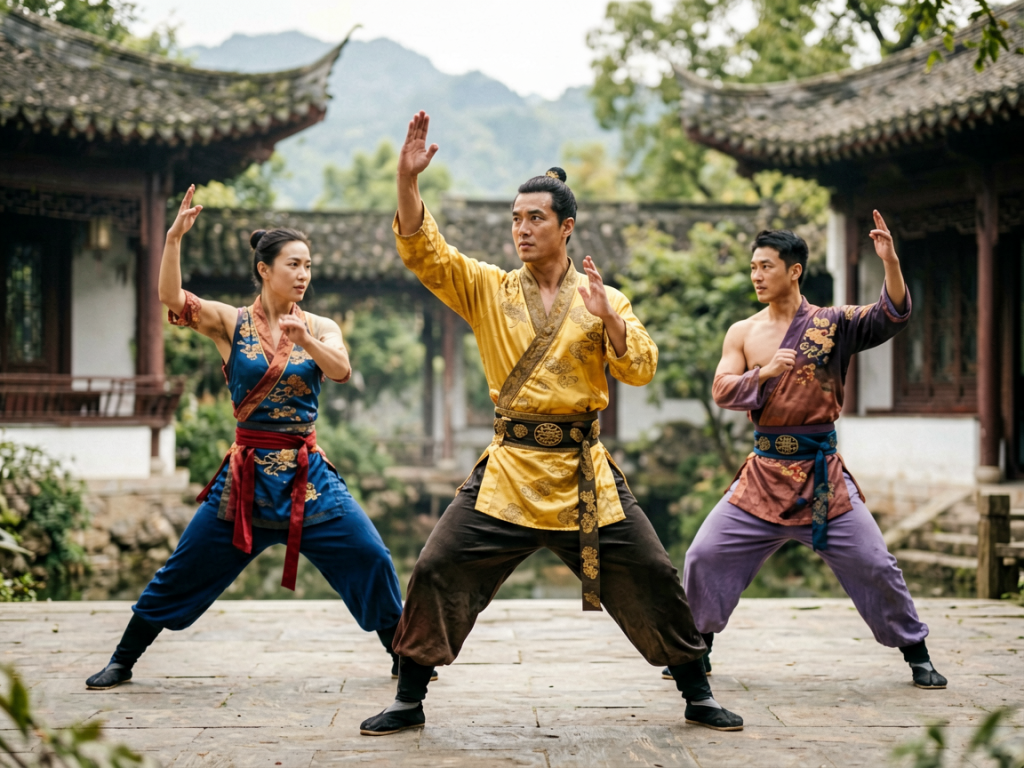
Traditional Chinese martial arts, particularly styles like Bagua Zhang and Xing Yi Quan, operate differently. They don’t fight in straight lines. They fight in circles. They use angles that feel unnatural to someone trained in Western boxing.
I remember sparring with a guy who trained under a Bagua master in Beijing. Every time I threw a jab, he wasn’t there. He had pivoted away before my fist even left my shoulder. It wasn’t magic. It was geometry. He used circular footwork to place himself on the outside of my stance. From there, his strikes came from directions I couldn’t protect.
This is what’s attracting fighters now. They want that unpredictability. They want to break the rhythm of their opponents. When you mix Muay Thai knees with the spiraling energy of Bagua, you create a striking style that’s hard to read. It’s not about throwing harder. It’s about throwing from where nobody expects.
Sound interesting? It should. Because this isn’t just theory. I’ve seen coaches in Guangdong start integrating these movements into their daily drills. They call it “circular footwork for cage control.” It’s a mouthful, but the effect is simple. You control the space around you, not just the person in front of you.
Internal Power vs. External Strength
There’s a misconception that traditional martial arts are all soft. People think Tai Chi is just for grandmas in parks. They’re wrong. There’s a whole branch of Chinese martial arts focused on “internal” power. This isn’t spiritual mumbo-jumbo. It’s biomechanics.
In the West, we lift weights. We build big muscles. Big muscles are great for generating force, but they’re also heavy. They tire you out. They require more oxygen. Internal training focuses on structure, alignment, and relaxed speed. It’s about connecting your feet to your hands through your core.
I tried a basic Xing Yi drill last month. It’s called the “Three Body Stance.” You stand with your feet shoulder-width apart, knees bent, arms held close to your chest. It looks boring. It feels awkward. But then you explode forward with a punch. The power doesn’t come from your arm. It comes from snapping your hips and driving through the floor.
The difference is night and day. A muscular punch relies on tension. An internally powered punch relies on relaxation until the moment of impact. This saves energy. Over five rounds in a championship fight, saving energy is everything.
Several elite fighters have started working with internal masters because they’re burnt out. They’ve trained so hard on external strength that their joints are shot. Internal training is gentler on the body. It builds resilience without the wear and tear of heavy bag work. It’s smarter training. And in a sport where longevity is money, smart wins.
Grappling Secrets from the Ground Up
Now, let’s talk about grappling. Everyone knows BJJ dominates ground fighting. But Chinese martial arts have a rich history of Chin Na, or joint locking and throwing techniques. These aren’t new. They’re ancient. And they’re being rediscovered.
Brazilian Jiu-Jitsu is fantastic for submissions. But it can struggle against sprawls and takedown defenses if you’re not careful. Chin Na offers different entries. It focuses on controlling the limbs to set up throws. It’s about disrupting balance before you even touch the body.
I watched a demo in Shanghai where a Chin Na practitioner took down a much larger wrestler. He didn’t wrestle him. He grabbed the wrestler’s wrist, twisted it slightly off-center, and used the man’s own momentum to flip him. It was fluid. It was fast. And it happened in less than two seconds.
Fighters are realizing that having Chin Na in their toolkit adds a layer of complexity. It forces opponents to worry about more than just their back or their neck. They have to worry about their wrists, elbows, and shoulders. It spreads their defense thin.
Is it easier than learning BJJ? No. Absolutely not. BJJ is a marathon. Chin Na is a sprint. But as a supplement? It’s deadly. Coaches are now blending BJJ positional control with Chin Na disruption. The result is a grappling style that’s harder to escape. It’s tighter. It’s more suffocating.
Respect for the Culture
Here’s the thing that surprises people. It’s not just about technique. It’s about respect. Many fighters are drawn to the philosophy behind the moves. Chinese martial arts aren’t just about hitting things. They’re about harmony. They’re about understanding your opponent’s intent before they act.
I spent an evening with a fighter named Sarah. She’s a tough competitor, but she’s also deeply spiritual. She told me that training traditional arts helped her calm her mind before fights. In a sport filled with rage and adrenaline, finding stillness is a superpower.
Traditional masters teach meditation alongside movement. They teach breathing. They teach patience. These mental tools are invaluable. When you’re in a fight, panic kills. Clarity wins. The philosophical side of Chinese martial arts provides that clarity.
It’s also about cultural humility. Learning these arts means acknowledging that the West doesn’t have all the answers. It means listening to elders. It means respecting lineage. For a generation of fighters raised on internet videos and quick fixes, this slow, deep approach is refreshing.
Do I think this will replace modern MMA? No. The cage is the cage. Rules are rules. But it’s enriching the art form. It’s adding depth to a sport that sometimes feels shallow. It’s bringing back the soul of combat.
The Future is Hybrid
We’re entering a new era of mixed martial arts. Not just mixed styles, but mixed philosophies. The best fighters of the next decade won’t just be strong or fast. They’ll be adaptable. They’ll understand the geometry of circular motion. They’ll know how to generate power from stillness. They’ll respect the history of what they’re doing.
I’m seeing gyms in Beijing, Shanghai, and Chengdu transform. They’re no longer just training kids to throw punches. They’re teaching them to move like water, strike like thunder, and fall like leaves. It’s poetic, yes. But it’s also practical.
If you go watch a local tournament in China now, you’ll see fighters incorporating these elements. It’s not obvious at first glance. But look closer. Watch their footwork. Watch their breathing. Watch how they handle pressure.
You’ll see the influence. You’ll see the revival. And you’ll realize that the past hasn’t been left behind. It’s been integrated. It’s evolved.
I was skeptical at first. I’ve seen too many “secret techniques” fizzle out. But this time feels different. The data supports it. The performance improvements are measurable. The fighters themselves believe in it.
So, are MMA fighters studying traditional Chinese martial arts again? Yes. And they’re studying it seriously. It’s not a trend. It’s a return to wisdom. And honestly, it’s about time we listened.
Next time you watch a fight, look for the circle. Look for the stillness. Look for the power that comes from within. That’s where the future lies.
I love seeing this evolution. It keeps the art alive. It keeps the spirit alive. And it makes for some damn good entertainment.