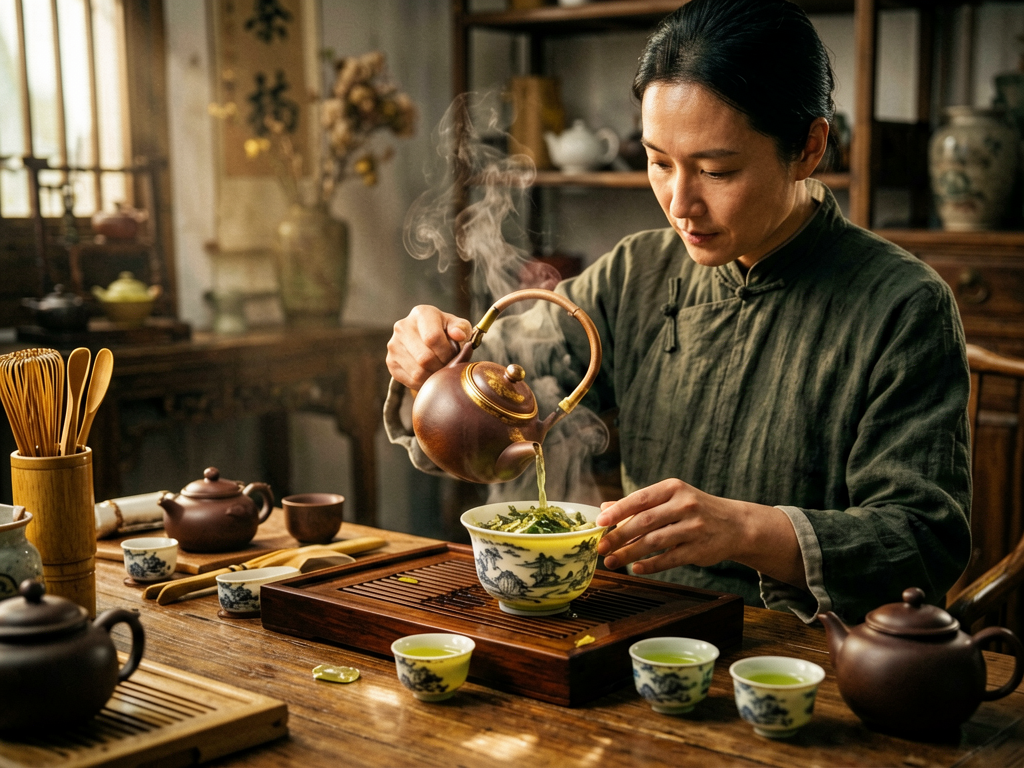
I’ll be honest, I used to hate tea ceremonies. Or at least, I hated what they looked like from the outside. Back when I first landed in Beijing, I thought they were stiff, pretentious affairs reserved for old men in silk jackets who took themselves way too seriously. I expected a lot of nodding, some ancient poetry recited in a monotone voice, and absolutely zero fun.
That was eight years ago. I was young, impatient, and obsessed with getting my next meal ordered before the waiter even realized I was hungry. I wanted the fuel, not the ritual. But life in China has a way of slowing you down if you let it. And tea? Well, tea is the anchor.
Now, when I sit down for a Gongfu Cha session, I don’t see a performance. I see a reset button. And if you’re looking for the secret to understanding modern Chinese social dynamics, forget the business meetings. Start with the teapot.
The Art of Doing Nothing at Speed
Gongfu Cha is often translated as “brewing with skill,” but that’s a bit of a lie. It’s really about brewing with time. The whole setup usually involves a small Yixing clay pot, a gaiwan, or a glass brewer, along with a dozen tiny cups that look more like thimbles than proper drinking vessels.
I remember my first proper lesson in Hangzhou. My teacher, Uncle Lin, handed me a gaiwan filled with Longjing green tea. He watched me pour the water with intense, almost scary focus. Then he said, “Don’t burn the leaves.”
I didn’t know what he meant. I was so worried about the technique, the angle of the wrist, the speed of the pour, that I forgot to check the temperature. The tea turned bitter almost instantly. Uncle Lin just smiled, poured out my mistake, and started over. “The tea tells you when it’s ready,” he said. “You just have to listen.”
That’s the first thing you learn. In China, rushing is rude. Especially when you’re hosting. When someone invites you for tea, they aren’t just offering you a beverage. They’re offering you their attention. And in a country where everyone is glued to their phones, scrolling through Douyin or WeChat, giving someone your full presence is a rare gift.
The process forces you to slow down. You heat the water. You warm the pot. You rinse the leaves. You wait five seconds. You pour. You smell. You sip. There’s no room for multitasking here. You can’t reply to an email while your tea is steeping. You have to be there. And surprisingly, that lack of distraction feels less like a chore and more like a vacation for your brain.
It’s Not What You Drink, It’s Who You’re With
In the West, coffee is king. It’s grab-and-go. It’s fuel for the hustle. You grab a cup, you run to work, you grind through the day. Tea in China operates differently. It’s static. It’s a destination.
I’ve sat in tea houses in Chengdu that are so loud they rival a subway station during rush hour. People are playing mahjong, eating sunflower seeds, and arguing about politics. But when the tea master starts the ceremony, the noise doesn’t stop. Instead, it becomes background hum. The tea ceremony creates a pocket of calm inside the chaos.
This is crucial for understanding guanxi, or relationships. Business deals in China aren’t signed in conference rooms. They’re sealed over three or four hours of tea drinking. You might spend the first hour talking about the weather, the second hour talking about family, and the third hour actually discussing the contract.
If you try to skip ahead, you fail. You’ll seem aggressive, cold, or inexperienced. The tea ceremony is the social lubricant. It allows people to read each other. It builds trust. When you share a pot of Pu’er, you’re sharing something intimate. That tea has been aged for years. It has history. Serving it to someone is a sign of respect.
I saw this firsthand in a small teahouse in Guilin. Two businessmen were negotiating a merger. They looked tense. Their faces were grim. But then the tea master brought out a pot of aged white tea. The aroma hit the table before the liquid did. Suddenly, shoulders relaxed. Smiles appeared. By the time the fifth infusion came around, they were laughing. The deal was signed an hour later.
The tea didn’t make the deal happen. But it created the space for it to happen. Without that ritual pause, we might have missed the human connection underneath the transaction.
The Flavor Profile of Patience
Let’s talk about the actual drink for a second. Because yes, the tea tastes different when you pay attention. Most Westerners drink tea like it’s juice. Steep it, drink it, repeat. Or they drown it in sugar and milk. Both approaches miss the point.
Chinese tea is complex. A single leaf from a high-mountain Oolong can taste like honey, orchids, stone fruit, and roasted nuts, depending on how many times you brew it. But you only get those notes if you respect the process.
I tried making oolong at home once. I used a big mug. I threw in a handful of leaves. The result? A muddy, weak mess. It tasted like wet cardboard. Then I went back to the teahouse and watched the masters. They use tiny pots. They use lots of leaves. They pour quickly. The ratio is precise. The result is a concentrate of flavor that hits your palate all at once.
It’s like the difference between watching a movie on a phone versus seeing it on IMAX. The content is the same, but the impact is totally different. When you do it right, you start to notice the “hui gan,” or returning sweetness. You drink the tea, swallow, and then minutes later, your throat feels sweet and moist. It’s a subtle sensation, but once you taste it, you never forget it.
This sensory awareness extends beyond the mouth. It’s about the sound of the boiling water, which locals call “frog bubbles.” It’s about the color of the liquor, ranging from pale gold to deep amber. It’s about the steam rising off the pot. All of these elements engage your senses in a way that normal drinking doesn’t.
And honestly? It’s healthier, too. Not just because of the antioxidants, but because you drink less of it, but you savor more of it. You’re mindful. You’re present. That mental shift is worth more than any supplement.
Breaking the Rules Is Part of the Tradition
Here’s a secret: Chinese tea culture isn’t as rigid as it seems. Yes, there are rules. But they’re guidelines, not laws. The goal isn’t perfection. The goal is harmony.
I once visited a friend in Shanghai who brewed his tea in a chipped mug while watching football. It wasn’t elegant. It wasn’t traditional. But he served it to me with warmth and genuine interest. We talked for hours. The tea was just the vehicle. If I had complained about his lack of etiquette, I would have ruined the moment.
True mastery isn’t about following every step of the Gongfu Cha manual. It’s about knowing when to break them. It’s about reading the room. If your guests are thirsty, pour quickly. If they want to chat, let the tea sit. If you’re alone, drink straight from the pot if that’s what makes you happy.
I’ve seen strict traditionalists get annoyed by casual drinkers. And I’ve seen casual drinkers feel intimidated by the experts. Don’t fall into that trap. Tea is for everyone. The hierarchy in a tea ceremony is flat. Everyone sits equal. Everyone serves. Everyone drinks.
There’s a concept called “cha dao,” or the Way of Tea. It’s not a religion. It’s a mindset. It’s about finding peace in simplicity. In a world that’s constantly screaming for your attention, tea asks for your quiet cooperation. It asks you to stop, breathe, and taste.
Your Next Cup Is Waiting
So, why do Chinese tea ceremonies matter? They aren’t about showing off your knowledge of Yixing clay or memorizing the names of twenty different teas. They’re about reconnecting with yourself and the people around you.
They remind us that some things can’t be rushed. That quality matters more than quantity. That silence can be comforting, not awkward.
I still prefer my instant coffee in the morning. I’m lazy, and I have deadlines. But by the afternoon, I switch to tea. I buy a small gaiwan from a street market. I find a quiet corner. I boil the water.
It takes five minutes. But for those five minutes, I’m not thinking about emails, or rent, or traffic. I’m just thinking about the leaves unfurling in the hot water. And that’s enough. That’s everything.
Next time someone invites you for tea, don’t bring your laptop. Don’t check your watch. Just sit down. Let them pour. And try to listen to what the tea is trying to tell you. Trust me, you’ll be surprised by what you hear.