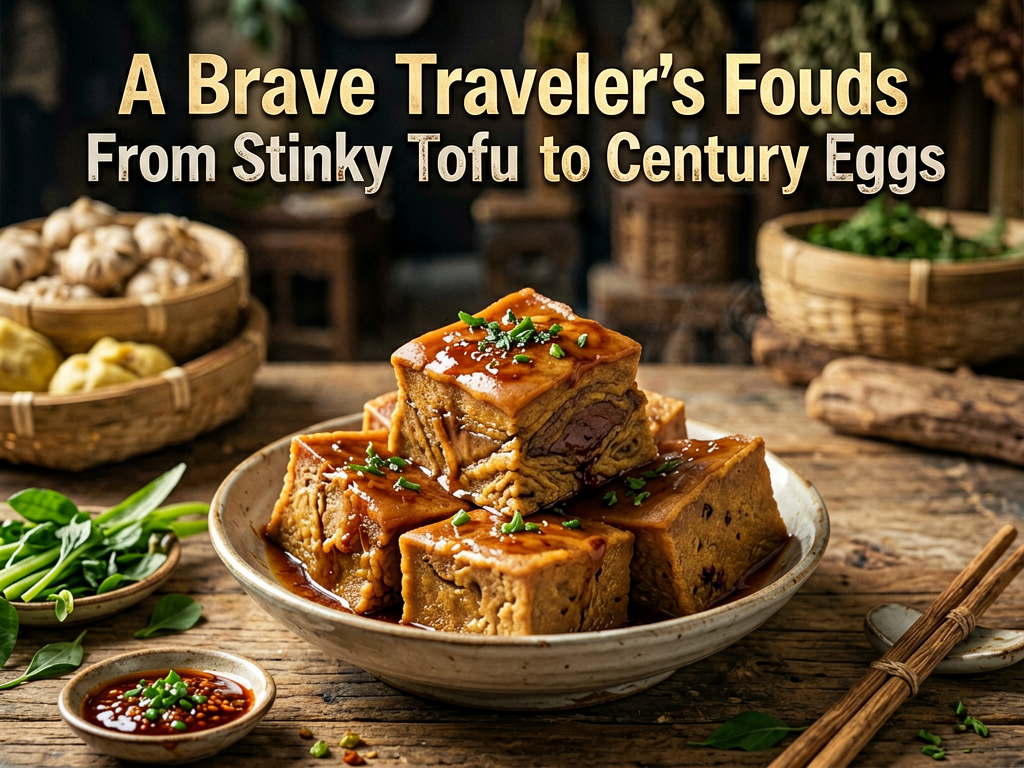
Look, I get it. The smell hits you before you even see the food. It’s pungent, sharp, and honestly a little bit intimidating. I remember my first time walking past a street vendor in Shanghai selling stinky tofu. My nose wrinkled up so hard it actually hurt. I looked at my Chinese friend, Wei, who was happily chewing on a blackened cube of bean curd, and I just stared.
“Is that… dead?” I asked, pointing at the skewer.
Wei laughed. He wiped a bit of sauce from his chin and said, “It’s alive, man. It’s full of life.”
I didn’t believe him until I took that first bite. That moment changed how I think about food forever. If you’ve never ventured beyond the safety of steamed buns and dumplings, you’re missing out on some of the most complex, umami-rich flavors in the culinary world. Today, I want to walk you through the wild, wonderful, and sometimes wretched world of Chinese fermented foods.
The Art of Controlled Rot
Fermentation sounds scary if you think about it too hard. We usually associate rot with garbage cans and expired milk. But in China, fermentation is an ancient science. It’s about harnessing bacteria, fungi, and time to transform simple ingredients into something entirely new.
We’ve been doing this for thousands of years. Long before refrigeration, people needed ways to preserve their harvests. So, they let nature do the heavy lifting. The result isn’t just preservation; it’s flavor alchemy. You take a bland ingredient, add salt, soy, or rice wine, and wait. What comes out is deeper, funkier, and more satisfying than the original.
This isn’t just about taste, though. These foods are packed with probiotics. They’re good for your gut in a way that most processed Western snacks never will be. Sure, the taste profile is aggressive. But once your palate adjusts, you’ll find yourself craving that savory depth. It’s like switching from listening to pop music to jazz. At first, it’s chaotic. Then, you start to hear the intricate layers.
Stinky Tofu: The Smell Test
Let’s tackle the elephant in the room, or rather, the smell in the alleyway. Stinky tofu, or *chou doufu*, is the undisputed king of fermented street food. And let me be clear: it smells exactly like it sounds. It’s ammonia-heavy, earthy, and unmistakable.
I’ve seen tourists run away from the carts. I’ve seen locals argue over which vendor makes the best batch. The trick to eating it isn’t holding your breath. It’s knowing how to eat it. Most vendors deep-fry the tofu until the outside is crispy and the inside remains soft and custard-like. Then, they slather it in chili oil, garlic sauce, and cilantro.
The contrast is insane. The crisp exterior gives way to a creamy interior that absorbs all that spicy, garlicky goodness. The smell? It fades fast once you’re chewing. The flavor is rich, salty, and deeply savory. It’s better than most burgers I’ve had in New York. Trust me.
If you’re brave enough to try it, go to a night market in Changsha or Beijing. Watch the vendor pull the tofu from the hot oil. Hear the sizzle. If you can handle the initial whiff, you’ll be hooked. I still dream about that first bite, sauce dripping down my thumb.
Century Eggs: Not Actually That Old
Next up is the century egg, or *pidan*. Don’t let the name fool you. These eggs aren’t actually a hundred years old. They’ve been preserved in a mixture of clay, ash, salt, quicklime, and rice hulls for anywhere from a few weeks to a few months. The process changes the yolk into a dark green, creamy paste and the white into a translucent brown jelly.
When I first saw one, I thought it was a prank. The yolk looks like something you’d find in a chemistry lab, not a breakfast table. But it’s surprisingly mild. The white is slippery and has a subtle ammonia note, while the yolk is rich and savory. It’s not fishy. It’s closer to a strong blue cheese in texture.
The best way to eat it is cold. Slice it up and toss it with soy sauce, vinegar, and minced ginger. You can also chop it into congee. I remember staying with a host family in Guangzhou. They served me chilled century egg with a side of lean pork porridge. It was the perfect comfort food on a humid summer morning.
It’s weird, yes. But it’s also incredibly versatile. Don’t knock it until you’ve tried it. I was skeptical, too. Now, it’s a staple in my fridge.
Sauces, Pastes, and the Hidden Gems
Beyond the big names, there’s a whole universe of fermented sauces and pastes that define Chinese cooking. Fish sauce is huge in the south, especially in Yunnan and Guangdong. It’s made from fermented fish and salt. It smells intense, like the ocean floor. But when cooked, it adds a layer of umami that salt alone can’t achieve.
Then there’s douchi, or fermented black beans. You might have seen these tiny, shriveled black spheres in Sichuan dishes. They’re salted and fermented soybeans. They have a punchy, salty kick. When you sauté them with garlic and chili, they release a deep, savory aroma that fills the entire kitchen.
I learned to make mapo tofu from a chef in Chengdu. He insisted that without proper douchi, the dish wasn’t authentic. He showed me how to rinse them quickly to remove excess salt, then fry them in oil until they popped. The difference was night and day. It added a complexity that store-bought versions just lack.
And we can’t forget chao gan, fermented green mustard greens. Common in Cantonese cuisine, these pickled greens are often stir-fried with vermicelli noodles. They’re sour, crunchy, and refreshing. It’s a side dish that cuts through the richness of fatty meats. It’s a perfect example of how fermentation balances the meal.
Making the Leap to Home Cooking
You don’t need to be in China to enjoy these foods. Most major supermarkets now carry decent brands of stinky tofu, century eggs, and fermented pastes. Or, you can visit an Asian grocery store and wander the aisles. Look for jars labeled with characters you don’t recognize. Ask the clerk for help. They’ll usually be happy to explain.
Start small. Buy a jar of doubanjiang, the broad bean chili paste that’s essential for Sichuan cooking. Use it in a simple stir-fry. Then, try a small package of dried fermented tofu. It’s great crumbled over steamed vegetables.
If you really want to impress your friends, try making your own simple brine. Soak tofu in salt water for a week. It won’t be as strong as the street version, but it’s a good introduction. Cooking is a journey. You stumble, you learn, and sometimes you end up loving things you never expected.
Chinese fermentation is about patience. It’s about respecting the process. When you sit down to a meal featuring these foods, you’re tasting history. You’re tasting the ingenuity of people who turned scarcity into abundance.
So, next time you’re at a dinner party, bring a plate of sliced century egg with ginger. Or order the stinky tofu at that new Asian fusion spot. Be curious. Be bold. And for heaven’s sake, don’t hold your breath. You might miss out on the best part.
I’m still finding new favorites every year. Last month, I discovered a fermented bamboo shoot dish in Hunan that changed my life. There’s always more to taste. Keep exploring. Your palate will thank you.