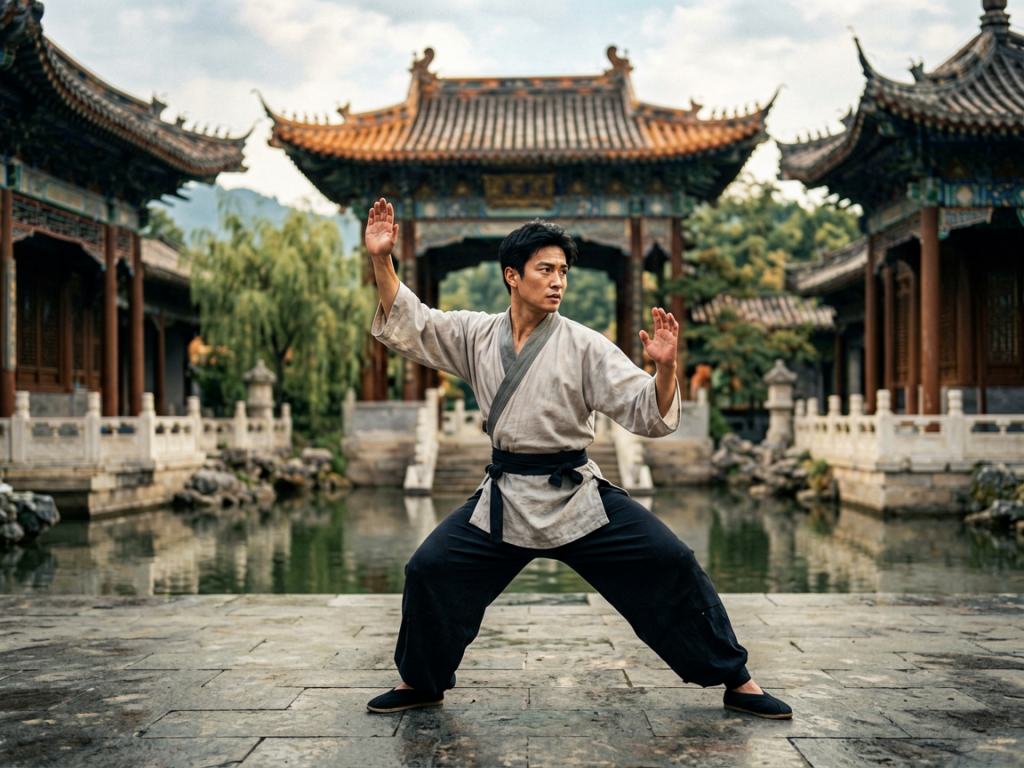
Honestly, I still remember the sound. It wasn’t the thud of a fist hitting a heavy bag or the satisfying crack of a break. It was a wet, sickening pop that echoed through the quiet dojo in Chengdu. I was watching a new student, a guy in his late twenties who’d just moved to China for a tech job, try to high-kick a partner for the first time. He thought he was tough. He’d done some CrossFit back in Seattle. He was wrong.
That guy tore his hamstring so badly he couldn’t walk for three weeks. The instructor didn’t even yell. He just shook his head and handed the guy a bag of ice. It was a classic case of rookie enthusiasm outpacing physical reality. We’ve all been there. Or at least, we’ve all seen it happen. It’s heartbreaking to watch someone’s dream of mastering Wing Chun or Tai Chi get derailed by a simple stretch.
If you’re new to Chinese martial arts, or even if you’ve been training for a bit, you need to understand a hard truth. The vast majority of injuries don’t happen when you’re a master. They happen in that fragile, dangerous window of the first six months. It’s the “glow phase” where everything feels new and exciting, but your body hasn’t caught up to your mind yet.
The Illusion of Competence
Here’s the thing about learning martial arts in China. The culture is intense. You walk into a park at 6 AM and see eighty-year-olds moving like water, deflecting energy without even touching you. It’s mesmerizing. You look at your own reflection in the mirror after your first class and you think, “Okay, I get it. This isn’t that hard.”
That’s the trap. That illusion of competence is dangerous. Your brain feels like it’s learning because you’re memorizing the forms. You’re repeating the movements. You’re nodding when the teacher speaks. But your tendons? Your ligaments? They’re still made of the same stiff, untrained tissue they were before you signed up.
I remember training in Bagua Zhang with a master in Beijing. He was tiny. He couldn’t have weighed more than 110 pounds soaking wet. But when he moved, he was everywhere. I tried to mimic his footwork for a month. I felt fast. I felt slick. Then one day, I tried to pivot too hard on a slippery floor in the practice hall. My knee just gave out. Not because I was weak, but because my stabilizing muscles weren’t firing in sync yet.
Your nervous system is learning a new language. It’s trying to coordinate muscles that usually sit idle. Until that connection is wired, you’re essentially a Ferrari with bicycle brakes. You have the engine, but the stopping power isn’t there. And that mismatch is where injuries live.
Why the First Six Months Are the Danger Zone
Let’s talk about biology for a second. Or at least, keep it simple. When you start training, you’re introducing micro-trauma to your muscles. This is good. It’s how you build strength. But your connective tissue–tendons and ligaments–grows much slower than muscle. It’s like trying to build a skyscraper. You can pour the concrete (muscle) fast, but the steel framework (connective tissue) takes time to set and cure.
In those first six months, your muscles might feel like they’re adapting. You’re sore, but it’s that good kind of sore. You think you’re getting stronger. But underneath, your tendons are screaming. They’re not getting the same blood flow that muscles do. They’re stiff. They’re tight. And if you push them, they snap.
I’ve seen this with so many people. They come to a Shaolin Kung Fu class, and they’re all about the kicks. High kicks. Fast kicks. They want to look cool. They want to show off for their friends. So they force the range of motion. They bounce. They push past the point of comfort.
Trust me, the masters have seen it a thousand times. They see the student who can touch their toes but can’t control their body at 60% intensity. It’s frustrating to watch. I’ve yelled at students before. Not because I’m mean, but because I’ve spent years rehabilitating sprains and strains that were completely preventable.
The danger zone ends when your connective tissue catches up. Usually, that’s around the six-month mark. By then, your body has adapted to the stress. You’re stronger. Your tendons are thicker. Your balance is better. But until then, you’re walking a tightrope without a net.
The Ego Problem in the Dojo
Look, I’m no expert, but I know what ego looks like. It’s the guy who won’t listen to the basics. It’s the person who thinks repetition is boring. In China, we have a saying: “The master has failed more times than the beginner has even tried.” It’s a cliché, but it’s true.
The most common injury I see comes from ego-driven training. You’re watching a video on Douyin or Bilibili. You see some grandmaster doing something impossible. You decide you want to do that tomorrow. You skip the warm-up. You skip the basic stances. You just go for the fancy move.
It doesn’t work. Your body isn’t ready. You pull a muscle. Or worse, you twist an ankle. And then you stop training. That’s the worst outcome. You quit because you got hurt. And you got hurt because you thought you were better than the process.
I used to be like that. When I first started learning Tai Chi, I wanted to push hands immediately. I wanted to test my skills. The teacher just made me stand in a horse stance for twenty minutes. I was bored. I was sweaty. I was annoyed. I thought I was wasting time.
But that horse stance? It built the foundation. It taught my legs to hold my weight. It taught my hips to relax. Without that, any push I threw would have been weak. And any defense I tried would have collapsed. The injury I avoided by standing still saved me from years of frustration.
How to Actually Stay Safe
So, what do you do? How do you train hard without breaking yourself? It’s simpler than you think. It’s about patience. And listening to your body.
First, stop trying to be impressive. For the first six months, your only job is to be consistent. Show up. Do the basics. Warm up properly. I know, I know. Warming up is boring. But it’s not optional. In Chinese martial arts, we spend a lot of time on “Zhan Zhuang,” or standing meditation. It looks like you’re just standing there. But you’re building internal heat. You’re increasing blood flow to the joints. You’re preparing the body for the work ahead.
Do that. Spend ten minutes just standing. Feel your feet root into the ground. Don’t rush it. Then, move slowly. I mean really slowly. When you practice forms, move at half speed. You’ll feel the tension in your muscles. You’ll feel where you’re weak. You’ll feel where you’re tight. That feedback is gold. If you move fast, you hide those flaws. If you move slow, you expose them. And you can fix them before they become injuries.
Second, respect the pain. There’s a difference between discomfort and pain. Discomfort is the burn in your muscles. It’s the ache in your legs from a deep stance. That’s normal. That’s growth. Pain is sharp. It’s sudden. It’s in the joints, not the muscles. If you feel that, stop. Immediately. Don’t push through it. Don’t think it’s just a cramp. It’s not.
I’ve seen students ignore sharp pain in their knees or shoulders. They think they’re tough. They keep going. And then they’re out for months. It’s not worth it. Rest is part of training. In fact, it’s the most important part. Your body heals while you sleep, not while you train. Give it time.
Third, find a good teacher. Not just any teacher. One who cares about your safety. In China, you’ll find many masters who are happy to show off their skills. But a true teacher watches their students. They correct your posture. They tell you to slow down. They notice when you’re tired. They notice when you’re forcing a move.
Look for the teacher who yells at you for being too fast. That’s the one you want. I remember my first Wing Chun instructor in Guangzhou. He was stern. He had a cane. He tapped my wrists if I wasn’t relaxed. He made me practice the first form for three months. Just the first form. I hated it. I wanted to learn to fight.
But he was right. By the time we moved to the second form, my hands were faster. My structure was solid. I wasn’t injuring myself because I wasn’t fighting against my own body. I was working with it. That teacher saved me from a lot of pain. And he taught me more in those three months than I learned in two years of trying to do everything at once.
The Long Game
Ultimately, martial arts in China isn’t about fighting. It’s about living. It’s about health. It’s about discipline. If you break yourself in the first six months, you miss out on all of that. You miss out on the camaraderie of the morning classes. You miss out on the philosophy. You miss out on the culture.
I’ve been training for eight years now. I’ve had my share of injuries. A torn rotator cuff in my thirties. A bad knee in my forties. But they didn’t happen because I was weak. They happened because I stopped listening. I let my ego creep back in. I tried to do something I hadn’t earned yet.
Don’t make that mistake. Take it slow. Respect the process. Enjoy the beginner phase. It’s the most exciting time because everything is new. But also, be humble. Your body is learning a new way to move. Give it time. Trust the masters. And for heaven’s sake, warm up.
Next time you’re in a park in Shanghai or a dojo in Xi’an, watch the old masters. Notice how they move. Notice how they breathe. They aren’t rushing. They aren’t showing off. They’re just being. That’s the goal. Not to kick high. Not to punch hard. But to move with ease, for as long as you’re able. That’s the real secret. And it starts with not breaking yourself on day one.
So, lace up your shoes. Find a class. And remember: the best fighter isn’t the one who hits the hardest. It’s the one who’s still training ten years from now. Make sure you’re that person. Stay safe. Keep learning. And enjoy the ride.