The Dust, The Heat, And The Silence
I’ll be honest. When I first heard people talk about Dunhuang, I pictured a postcard. You know the type. A perfect sunset over a desert, maybe a camel silhouette. It felt too clean. Too staged for my taste.
I’ve lived in China for eight years now. I’ve eaten street food in Chongqing until I couldn’t walk. I’ve hiked mountains in Guangxi that didn’t have names on any map. I thought I was hard to impress.
Then I landed in Dunhuang.
The air hits you differently here. It’s dry, sure, but it’s also heavy with history. It smells like ancient dust and distant rain that never quite arrives. The heat in July is brutal, sure, but the nights? They drop so fast you need a jacket.
Standing in front of the Mingsha Shan, the Singing Sand Dunes, I wasn’t thinking about Instagram. I was thinking about how small I felt. Not in a bad way. Just… small. Like a speck of dust in a library that’s been open for a thousand years.
This isn’t just a stopover on the way to Tibet. It’s a destination that demands you slow down. And trust me, that’s hard to do in China today. But Dunhuang forces it.
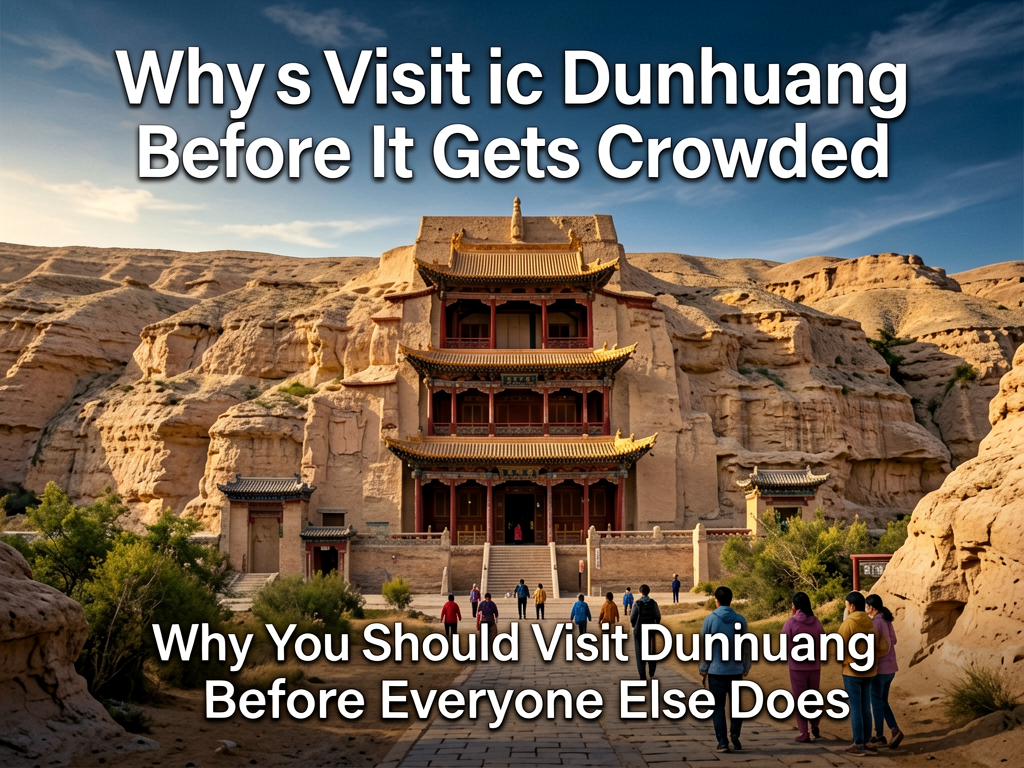
The Mogao Caves Aren’t Just A Museum
Here’s the thing about the Mogao Caves. People treat them like a checklist item. They rush through. They look at the statues. They take a photo. They leave.
If you do that, you’re missing the point.
I remember my first visit. I was with a local guide named Li. He didn’t talk about the dates or the dynasties right away. He talked about the light.
He explained how the caves are carved into the cliff face, facing east. That means the morning sun hits them directly. The colors of the murals shift as the day goes on. The blue pigments, made from lapis lazuli imported from Afghanistan, glow in the morning light. By noon, they fade. By evening, they look almost black.
It’s not just art. It’s a conversation with time.
I spent three hours there, sitting on a bench, watching the dust motes dance in the shafts of light coming through the entrance of Cave 96. That’s the Big Buddha cave. The statue is over 30 meters tall. But it wasn’t the size that got me. It was the detail in the smaller figures around him.
You have to see them to believe them. The murals show musicians playing instruments that haven’t existed for centuries. They show dancers in poses that defy gravity. They show everyday people buying bread, drinking wine, arguing with their spouses.
It’s remarkably human.
The preservation work is intense. They limit the number of visitors daily to protect the fragile pigments from humidity and CO2. You need to book weeks in advance. In fact, I’ve seen tourists turn away because they didn’t plan ahead.
Don’t be that tourist. Book your tickets through the official app before you even leave your hotel in Xian or Chengdu. It’s not just a recommendation. It’s a necessity.
The Desert Doesn’t Care About Your Schedule
Leaving the caves, most people head to the edge of town. They ride camels. They slide down the dunes. It’s fun, I won’t lie. But it’s also become a bit of a tourist trap.
I found a different way.
I hired a driver, an older guy named Wang, who knew the desert better than he knew his own family. We drove out past the main tourist areas, past the places where the camels are lined up like cattle.
Wang took me to a spot where the dunes were higher. Steeper. Quieter.
We got out of the car. The silence was absolute. No cars. No voices. Just the wind moving the sand. It makes a low humming sound, which is why they call it the “Singing Sands.”
Wang handed me a pair of woolen socks to put over my shoes. He said it keeps the sand out and protects your feet from the hot surface. I laughed. It seemed silly.
Then I tried it.
Walking on the dunes is exhausting. The sand shifts under your feet. Every step is a battle. But with the socks, it was manageable. And the view? It was endless. Golden waves of sand stretching to the horizon.
We sat there for an hour, just watching the light change. Wang told me stories about the Silk Road. He spoke about the merchants who passed through here, carrying silk west and glass east.
He said, “The desert takes everything. Sand. Water. Life. But it gives back beauty. If you’re patient.”
I believed him.
Back in town, we ate at a small noodle shop. The beef noodles here are different from Xian. The broth is clearer, but the beef is tender. The noodles are hand-pulled, thick and chewy.
I ordered a bowl of “Lamian.” It cost me about 20 RMB. It was the best meal I’ve had in months. Simple, honest, delicious.
Why You Need To Go Now
I could be wrong, but I think Dunhuang is on the brink of a change.
High-speed rail has made it easier to get to. The airport has direct flights from Beijing, Shanghai, and Guangzhou. That’s great for convenience. But it’s also going to bring crowds.
I’ve already seen more foreign tourists here than in previous years. The hotels are filling up faster during peak season. The prices are creeping up.
There’s a certain magic to a place before it gets “popular.” Before the influencers arrive with their ring lights. Before the souvenir shops sell the same mass-produced trinkets you can find in every city.
Right now, Dunhuang still feels authentic.
The locals are proud of their heritage. They’re not used to the hustle of mega-cities. They’re patient. They’re warm. If you ask them a question, they’ll stop and help you, even if they’re busy.
I tried to buy a carpet from a vendor in the local market. He didn’t push me to buy. He sat down, poured me tea, and told me about the dyeing process. He showed me how they use natural plants. It took an hour. I bought nothing. But I learned more than I would have in a guided tour.
That’s the Dunhuang experience. It’s not about the transaction. It’s about the connection.
Also, the culture here is unique. It’s a blend of Han Chinese, Tibetan, Uyghur, and Central Asian influences. You can see it in the food, the music, the architecture.
Try the “Pingzhuang” bread. It’s a flatbread cooked in a clay oven. It’s crispy on the outside, soft on the inside. It’s best eaten warm, with a side of lamb skewers.
The lamb is grilled over charcoal. It’s smoky, spicy, and tender. I ate three skewers in one sitting. My stomach hurt the next day, but it was worth it.
Practical Stuff You Should Know
Let’s get practical for a second.
The best time to go is May to October. The weather is warm, but not scorching. June and September are ideal. July and August are hot, but the nights are cool.
If you go in winter, it’s freezing. The wind cuts through you. But if you don’t mind the cold, the desert is beautiful in the snow. It’s quiet. Peaceful.
Bring sunscreen. The UV index is high. I got burned on my first day. I looked like a lobster for a week.
Bring lip balm. The air is so dry your lips will crack. I bought a tube of Vaseline at the airport. It was the best $2 I ever spent.
Bring cash. Some small vendors in the desert don’t take WeChat Pay or Alipay. It’s rare, but it happens.
And please, respect the caves. Don’t use flash photography. Don’t touch the walls. The oils from your skin can damage the murals. It’s that fragile.
I’ve seen people touch the statues. Guides yell at them. It’s not worth it. Let these images survive for another thousand years.
A Final Thought
I’m no expert on travel. I’m just a guy who likes to walk around and eat things.
But I know this. Dunhuang is special. It’s not just a place on a map. It’s a feeling.
It’s the feeling of standing at the edge of the world, looking into the abyss, and finding beauty instead of fear.
It’s the smell of dust and incense. The taste of spicy lamb and clear noodles. The sound of the wind singing through the sand.
Go while it’s still raw. Go while it’s still real.
Before the world catches up. Before it becomes just another destination.
Go now.
I promise you won’t regret it.