The Myth of the High-Speed Hustle
I’ll be honest, when I first heard about China’s massive high-speed rail network, I was skeptical. It looked like a machine designed to exhaust travelers. Sure, the trains are impressive. They zoom through mountains and across plains like magic carpets. But for someone in their sixties or beyond, that speed can feel more like a stressor than a benefit.
We’ve all seen the photos of tourists rushing from one landmark to the next. They’re exhausted, their feet ache, and they’ve barely seen what they came for. I’m not saying you shouldn’t take the train. I’m saying you shouldn’t let the schedule dictate your soul.
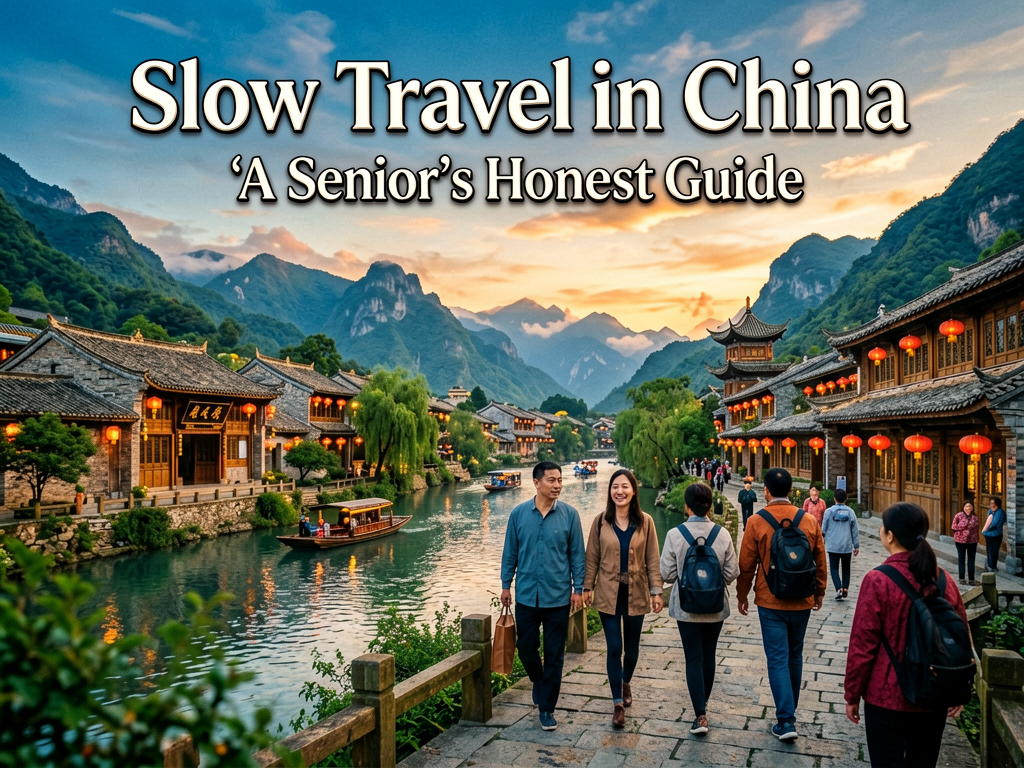
Slow travel in China isn’t just a trend. It’s a survival strategy for older travelers. It’s about sipping tea in a park while locals practice Tai Chi. It’s about letting the city reveal itself to you, rather than hunting it down. You’re not missing out by moving slower. You’re actually seeing more.
Why Slowing Down Saves Your Back and Your Budget
Here’s the thing about China’s infrastructure. It’s incredible, but it’s designed for volume. The major hubs like Beijing South or Shanghai Hongqiao are massive. They’re mazes of corridors, security checks, and crowds. If you’re not careful, you’ll burn half your day just trying to find Platform 14.
When you choose to stay in one place longer, you bypass that chaos. I spent three weeks in Hangzhou last year. Instead of taking the bullet train to Shanghai every weekend, I took a slower, regional train. It took four hours instead of forty-five minutes. But the view was lovely, and the train didn’t feel like a submarine.
You also save money. Hotels in smaller districts or older neighborhoods are often cheaper and quieter. In Xi’an, I found a lovely courtyard guesthouse in the Muslim Quarter. It cost half what I’d pay in the city center. Plus, the owner, Auntie Li, made me soup every evening. That’s something no five-star hotel can compete with.
Where to Go When You Want to Breathe
If you’re looking for places that reward a slow pace, forget the Forbidden City for a moment. I love Beijing, but it’s overwhelming. Try Chengdu instead. The city has a vibe that matches the tea culture perfectly. People sit on bamboo chairs in parks, drinking jasmine tea and playing mahjong.
I sat in People’s Park for two afternoons just watching. I didn’t take a single photo. I just listened. The sound of rain on bamboo, the chatter of elderly men debating politics, the smell of street food frying nearby. It was peaceful. It was authentic. And it was free.
Another gem is Quanzhou in Fujian province. It’s on the coast and has a huge history. You can walk everywhere. The temples are close together. The food is mild and delicious. I ate satay noodles every morning. They were spicy, savory, and cheap. You won’t find a rush here. You’ll find life.
Navigating the Digital Divide Without Losing Your Mind
Look, I know what you’re thinking. “But Agnes, how do I book tickets? How do I pay?” You’re right. China is very digital. WeChat and Alipay are king. For a senior traveler, this can feel like a barrier. I felt it too when I first arrived.
But here’s the good news. You don’t need to master the app to survive. You just need to ask for help. Chinese people are incredibly helpful to foreigners, especially older ones. I’ve been guided through ticket machines by strangers who didn’t speak English but smiled the whole time.
Still, it’s easier if you prepare. Link your international credit card to WeChat Pay before you go. It’s not perfect, but it works at most places. For taxis, use the DiDi app. It’s in English. You can set your destination and pay automatically. No haggling. No language barrier. Just ride.
If you’re uncomfortable with apps, stick to big hotel chains or reputable tour groups for your first few trips. Once you get the hang of it, you’ll feel more confident. I promise. The first time you scan a QR code and pay for your coffee, you’ll feel like a hacker.
The Art of the Train Ride
Let’s talk about trains again. Not the high-speed ones. The slower, green-skinned trains. They’re old, they’re creaky, and they’re wonderful. If you have the time, take them. They stop at small towns that high-speed trains skip.
I took a night train from Kunming to Dali. It was a hard sleeper cabin. Six bunks to a room. It was noisy. It smelled like instant noodles and feet. But I made friends with a local teacher from Yunnan. We talked about our families. He showed me how to make his hometown dumplings. We arrived in Dali at sunrise, tired but happy.
You won’t get that experience on a bullet train. On the G-trains, everyone wears headphones and stares at their phones. On the slow trains, life happens. It’s messy. It’s loud. But it’s real. And for a traveler seeking connection, it’s invaluable.
Just be prepared. Bring earplugs. Bring a sleep mask. And maybe bring some snacks. The food on these trains is limited. You might find a vendor selling boiled eggs or sausages. Buy them. They’re cheap and tasty.
Eating Your Way Through History
Slow travel means eating slowly. In China, food is culture. You can’t rush it. I remember sitting in a small restaurant in Guangzhou for dim sum. I ordered a basket of har gow and siu mai. I didn’t eat them quickly. I savored each bite. I watched the steam rise. I listened to the clatter of porcelain.
The owner came over and asked if I liked it. I nodded. He brought me a second basket, on the house. That’s the hospitality you get when you slow down. You’re not just a customer. You’re a guest.
Don’t be afraid to eat where the locals eat. The best food in Chengdu isn’t in the tourist traps. It’s in the alleys behind the big restaurants. Look for lines of locals. If you see grandmas sitting on stools, you’re in the right place. The food is spicy, yes. But it’s also incredible.
Respecting the Pace, Not Fighting It
One final thought. In the West, we’re obsessed with efficiency. We want the fastest route, the quickest meal, the shortest wait. China doesn’t work that way. Relationships matter more than speed. If you try to rush a conversation or a transaction, you’ll hit a wall.
Take your time. Smile. Ask questions. Show interest. When you slow down, you open doors. You learn stories. You taste flavors you would have missed. You see a side of China that most tourists never will.
I’m not saying don’t see the Great Wall. Go see it. But go early. Or go late. Don’t go at noon when the crowds are thickest. Find a quiet spot on the wall. Listen to the wind. Feel the history under your feet. Then go back to your hotel for a nap.
That’s the secret. Rest is part of the journey. China is big. It’s overwhelming. It’s beautiful. Give yourself permission to move at your own pace. You’ll come home with more than photos. You’ll come home with memories. And that’s worth every extra day.