I still remember the first time I walked into a Guangzhou restaurant that smelled like old wood and steam. It wasn’t fancy. The chairs were plastic, the floors were sticky, and the menu was just a handwritten list on the wall. But the shrimp dumplings? They were translucent, bouncing with freshness, and cost less than a cup of coffee back home.
That’s the magic of Guangzhou. Or, as locals call it, Canton. It’s not just a city; it’s a culinary religion. People fly in from across Asia just to eat breakfast here. And honestly? They’re not wrong.
But here’s the thing. Guangzhou is huge. If you just wander around the city center, you’ll find the usual suspects. You’ll get good food, sure. But you’ll miss the soul. You’ll miss the neighborhood gems that have been serving the same congee for thirty years.
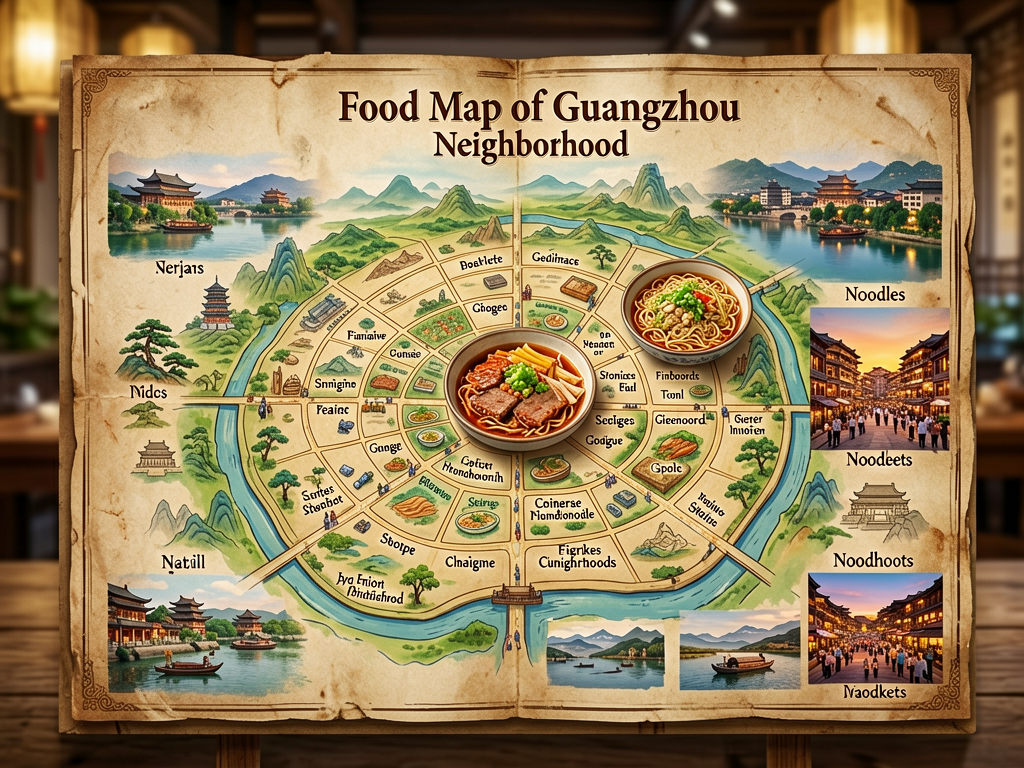
So, I’ve mapped out the city for you. Not by subway lines, but by taste. By vibe. By where the locals actually go when they want to forget about their jobs and just eat.
Liwan District: The Old Soul of Canton
If you want to see what Guangzhou looked like a century ago, you start in Liwan. This is the heart of old Canton. The streets are narrow, lined with banyan trees that stretch their roots over the sidewalks like ancient guardians. The air here is thick with humidity and the smell of roasting meat.
I spent a rainy Tuesday morning in Yong Qing Fang, just to get away from the crowds. It’s a renovated heritage area, but the back alleys still feel real. I found a small shop selling *jian dui*–sesame balls stuffed with red bean paste. They were fried to a perfect golden brown, crispy on the outside and chewy on the inside.
You can’t talk about Liwan without mentioning Dim Sum. But skip the big hotels. Go to Da Dong Hua. It’s a legend. Yes, there’s a line. Yes, it’s loud. But watching the aunties rush around with their trolleys of steaming baskets is part of the experience. I ordered the char siu bao, the pork buns. They were fluffy, sweet, and savory. I ate three. Don’t judge me.
The vibe in Liwan is slower. You can sit on a plastic stool for hours. Locals will come in with their dogs. They’ll chat about stock prices and the weather. It feels authentic because it is. It’s not curated for Instagram. It’s curated for hunger.
After your dim sum tour, walk along Enning Road. Look up. You’ll see the intricate carvings on the old shophouses. They’re intricate, yes, but more importantly, they’re real. This area is where Cantonese culture was forged. The food here reflects that history. It’s traditional, unapologetic, and deeply comforting.
Yuexiu District: Where History Meets Street Food
Just across the river, but worlds away in spirit, is Yuexiu. This is the political and cultural center. You’ve got the Five Rams Statue, the old government buildings, and Beijing Road Pedestrian Street. It’s touristy, I’ll admit. But don’t let that scare you off.
Beijing Road is packed with tourists buying souvenirs. But look down. There’s glass embedded in the pavement showing the ancient city walls. It’s a cool historical touch. But the real magic happens when you turn off the main drag into the smaller streets like Dongfeng East.
I found a tiny stall selling *leng fen*, or cold skin noodles. It was a simple dish–noodles with a spicy, garlicky, vinegary sauce. It cost maybe two yuan. It blew my mind. The balance of flavors was perfect. Spicy, sour, salty, and fresh all at once.
Yuexiu is also home to some of the best beef hotpot in the city. I remember a night with a colleague who insisted on taking me to a place near the Zhujiang Hotel. We sat in a cramped room, surrounded by steam. The beef was sliced paper-thin. It cooked in three seconds. It melted in my mouth.
This district feels more formal, yet it has these pockets of raw energy. The mix of old temples and modern skyscrapers creates a unique tension. You can hear the call to prayer from a mosque, then the chanting from a Buddhist temple, all within a few blocks. And underneath it all, the smell of frying dough sticks.
Don’t leave without trying *douhua*, or tofu pudding. It’s served warm, with ginger syrup or brown sugar. It’s simple, but it’s the kind of dessert that stays with you. I had it in a small shop in Yuexiu, and it felt like a hug from your grandmother.
Tianhe: The Modern Pulse and Late-Night Snacks
Now, let’s talk about the new Guangzhou. Tianhe District is the financial hub. Glass towers, air-conditioned malls, and fast-paced professionals rushing to work. It’s efficient, clean, and sometimes a bit sterile. But it has a vibrant nightlife and food scene that never sleeps.
I used to think Tianhe was just for business. I was wrong. The real treasure here is the late-night snack scene, or *ye xiao*. When the sun goes down, the street food vendors come out. They set up tables on the sidewalk, and the city transforms.
I remember walking through the towers of Zhujiang New Town late one night. I was tired, stressed from a long week of meetings. I stumbled upon a street stall selling grilled skewers. The meat was marinated in a sweet and spicy sauce. The charcoal smoke was intoxicating.
It wasn’t just skewers. There were grilled oysters, stuffed with garlic and vermicelli. There were spicy chicken feet, gelatinous and rich. There were cold beers in plastic bags. It was chaotic, messy, and absolutely perfect.
Tianhe is also where you’ll find the high-end Cantonese cuisine. Places like Panxi, which has been around for decades. The food here is refined, artistic, and expensive. It’s a different experience from the hole-in-the-wall spots in Liwan. But it’s worth it if you want to see the pinnacle of Cantonese cooking techniques.
The contrast in Tianhe is striking. You can have a five-star dinner, then walk two blocks and get a bowl of beef ball noodles from a street cart. Both are excellent. Both are essential to understanding Guangzhou. This district shows how the city is evolving, but it hasn’t forgotten its roots.
Panyu and Beyond: The Outskirts of Flavor
If you have time, or if you’re willing to take a metro ride, go further out. Panyu District is famous for its seafood and traditional desserts. It’s where the older generation goes to preserve traditions that are fading in the city center.
I went to Panyu specifically for its famous *nangong* (glutinous rice rolls). These are different from the steamed ones you see in dim sum. They’re made with a different type of rice, and they have a chewier texture. I tried one filled with lotus seed paste. It was earthy, sweet, and had a weirdly satisfying snap to it.
Panyu is also known for its riverside seafood restaurants. You pick your fish from a tank, and they cook it for you. The freshness is unmatched. I had steamed grouper with scallions and soy sauce. The fish was so fresh it tasted like the ocean.
It’s a longer trip, but the effort is rewarded. The food here is less influenced by tourism. It’s strictly for locals. That means it’s honest. It’s not trying to impress you. It’s just trying to feed you well.
There’s a certain peace in eating in Panyu. The pace is slower even than Liwan. You can sit by the river, watch the boats go by, and eat until you’re stuffed. It’s a reminder that Guangzhou is more than just a city. It’s a region with diverse landscapes and diverse tastes.
How to Eat Like a Local (Without Trying Too Hard)
Here’s my advice, straight from the trenches. Don’t be afraid of the places with no English menu. In fact, that’s a good sign. If you see old people eating there, eat there. Their stomachs don’t lie.
Learn a few phrases. “Yi ge” means one. “Lai yi ge” means bring me one. “Hao chi” means delicious. Locals love it when you try. It breaks the ice. It shows respect.
And don’t rush. Eating in Guangzhou is a social activity. People talk. They laugh. They share food. If you’re alone, sit at the communal tables. You’ll make friends. You’ll get better food. I promise.
Also, try everything. Even the things that look weird. Chicken feet? Try it. Pig brain? Maybe not yet, but give it time. The texture is what you’re after. It’s silky, rich, and unlike anything else.
Guangzhou is a city that rewards curiosity. It’s not about finding the perfect restaurant. It’s about finding the right moment, the right table, and the right bowl of soup. It’s about connecting with the people and the place.
I’ve lived here for eight years, and I’m still discovering new corners. Every neighborhood has its own secret ingredient, its own story. And I’m just getting started.
So, pack your bags. Bring an empty stomach. And get ready to eat your way through one of the most delicious cities on Earth. Trust me, you won’t regret it.