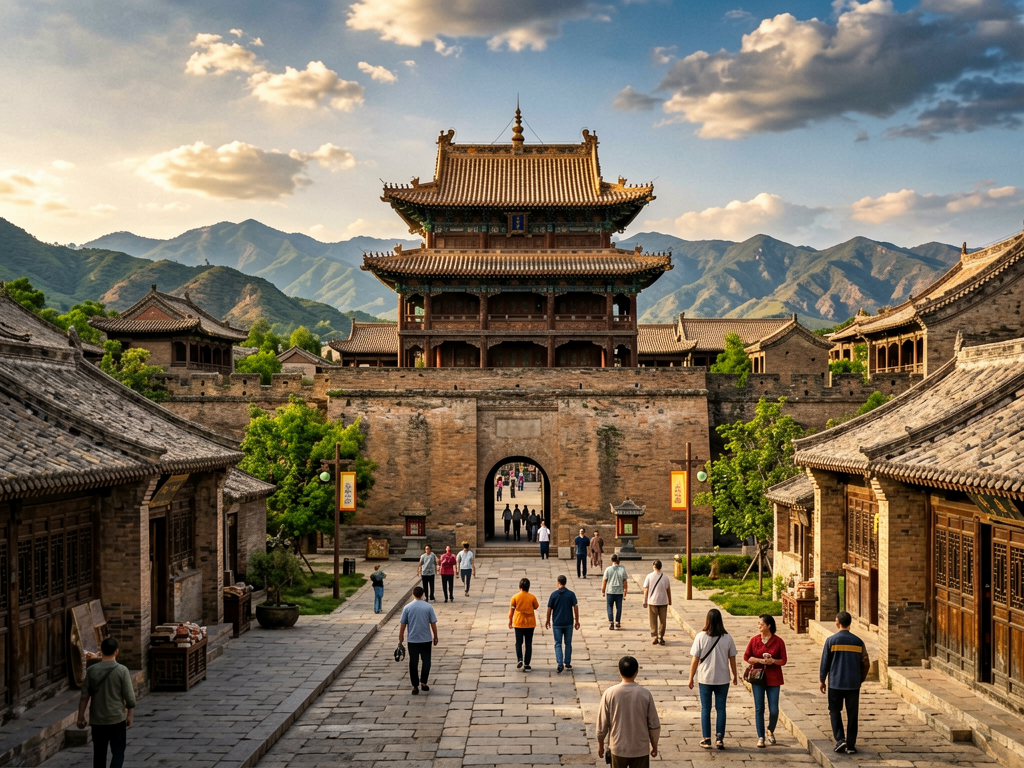
I’ll be honest. When I first heard about Pingyao, I expected another tourist trap. You know the kind. Those places where they tear down a real neighborhood, build a fake “ancient” street, and sell the same overpriced keychains you can get in any other city. I’ve lived in China for eight years now, and I’ve seen enough “cultural heritage sites” that feel more like theme parks to lose my patience quickly.
But Pingyao? Pingyao is different. It’s not just different; it’s actually one of the few places in China that feels like it stopped time about 600 years ago. I’m talking about the kind of authenticity you can’t fake. The kind that makes you put down your phone and just stare at the sky.
The Wall That Actually Works
Let’s start with the obvious. You can’t miss the city walls. They’re massive, made of rammed earth, and they’ve stood firm since the Ming Dynasty. Most people think these walls are just a scenic backdrop for a selfie, but they’re actually a functional piece of military engineering that’s survived earthquakes, wars, and centuries of weather.
I climbed the walls at sunset, and I’ll never forget the feeling. The sun was dipping below the horizon, casting long, golden shadows across the gray bricks. There was no traffic noise. No honking cars. Just the sound of wind and the occasional creak of a wooden door somewhere down below. It was peaceful. Really peaceful.
Most tourists rush up the stairs, snap a picture, and rush down. Don’t do that. Take your time. Walk the length of the wall. Look out at the flat plains of Shanxi province. It’s easy to forget that this was once a critical trade hub on the Silk Road. Back in the day, this was where money flowed. It wasn’t just a stopover; it was the financial capital of northern China.
Think about that. Long before Shanghai or Beijing became the powerhouses they are today, Pingyao was running the economy of the nation. That’s a heavy thought to carry while you’re trying to catch your breath from climbing those steps.
Rishengchang and the Birth of Modern Banking
You can’t talk about Pingyao without talking about money. Specifically, the *piaohao*, or draft banks. These were the ancestors of modern Chinese banking, and Pingyao was their heart.
I visited Rishengchang, the oldest draft bank in China. It’s located right in the old business district, and the building itself is stunning. The architecture is classic Ming style, with intricate wooden carvings and quiet courtyards. But it’s the history inside that hits you hard.
I stood in the main hall, looking at the old ledgers and the heavy iron locks. These men developed a complex system of encryption to protect bank drafts. They used poetry and coded characters to ensure that no one could forge the money orders. It was basically ancient cybersecurity.
I’m no expert on finance, but I was blown away by the sophistication of their system. They operated across the entire country, moving gold and silver from the coast to the interior. It’s crazy to think that this small county town in Shanxi held so much economic power. It changes how you see the place. It’s not just a pretty old town; it’s a place of serious business.
The guides there are usually local historians who speak excellent English. They don’t just recite dates. They tell stories about the bankers who traveled thousands of miles on horseback to deliver these drafts. It puts a human face on the cold machinery of finance.
Eating Like a Merchant
Now, let’s talk food. Shanxi cuisine is often overlooked by travelers who stick to Sichuan or Cantonese food. That’s a mistake. Shanxi food is hearty, sour, and packed with flavor. And nothing says Shanxi like vinegar.
I’m not kidding when I say the vinegar here is legendary. I went to a local restaurant called Baoyou Ju, which has been around since the Qing Dynasty. The interior is traditional, with wooden tables and lanterns hanging from the ceiling. It feels like eating in a movie set, but a real one.
I ordered the braised beef noodles. The broth was rich and dark, infused with star anise and cinnamon. But the real star was the vinegar. It’s not just a condiment; it’s a staple. I dipped my noodles in a small dish of aged vinegar, and the tang cut through the richness of the beef perfectly. It was electric. I couldn’t stop smiling.
Another thing I loved was the *wo wo* noodles. These are thick, hand-cut noodles that are steamed and then stir-fried. They have a chewy texture that’s satisfying. I ate them with a side of pickled vegetables and fried tofu. It was simple, but it was delicious. It tasted like comfort food from a different century.
If you’re not a fan of sour food, you might find it overwhelming at first. But trust me, give it a chance. The vinegar in Shanxi is aged for years, sometimes decades. It has a depth of flavor that you just can’t get from bottled vinegar back home. It’s an acquired taste, but once you get it, you’ll miss it.
Night Lights and Quiet Alleys
Most ancient cities in China come alive at night with neon lights and loud music. Pingyao is different. The old city is lit with red lanterns, and the atmosphere is intimate. The streets are paved with stone, and the shadows dance on the old brick walls.
I spent an evening walking through the smaller alleys, away from the main commercial streets. Here, you can see the daily lives of the locals. Grandparents sitting on stools, playing chess. Kids riding bikes. It’s not a museum exhibit; it’s a living, breathing community.
I stopped at a small teahouse called Shuishan Teahouse. It’s tucked away in a courtyard, and you have to know where to look. Inside, it’s quiet and cozy. I had a pot of aged white tea. It was smooth, with a hint of honey. I sat there for two hours, just watching the light change in the courtyard.
That’s the thing about Pingyao. It rewards slowness. If you rush, you’ll miss it. If you try to check every box on your itinerary, you’ll leave feeling exhausted and empty. But if you slow down, if you let the pace of the city dictate your rhythm, you’ll find something special.
I met a traveler from Germany who had been backpacking through Asia for six months. He told me that Pingyao was the only place where he felt truly relaxed. He said the stress of the journey just fell off his shoulders. I get it. The energy here is calm. It’s grounded. It doesn’t try to sell you anything. It just exists.
Getting There Is Part of the Adventure
Pingyao isn’t exactly easy to get to. There’s no high-speed rail station right in the city center, which is actually a good thing. It keeps the crowds at bay. You usually fly into Taiyuan and then take a bus or a train to Pingyao. The bus ride takes about two hours, and it’s scenic. You pass through small villages and farmland.
It’s a reminder that China is still vast and rural in many parts. You’re not just going to a city; you’re going to a region. The journey makes you appreciate the destination more. It forces you to slow down before you even arrive.
I’ve taken the overnight train from Beijing before. It’s a bit rough, and the sleeper cars are basic, but it’s an adventure. You wake up in the morning, stretch your legs, and step off the train into the cool air of Shanxi. It feels like arriving in a different country.
If you have the time, take the slower route. Don’t just fly directly into the nearest airport and hop in a taxi. The journey is part of the story. It sets the stage for what you’re about to experience.
Why It Still Matters
We live in a world that moves too fast. We’re always looking for the next big thing, the next trend, the next viral spot. Pingyao is the opposite. It’s a reminder that some things don’t need to change. Some things are valuable because they stay the same.
I’ve been to a lot of places in China. I’ve been to the Forbidden City in Beijing, which is impressive but crowded. I’ve been to the Terracotta Warriors, which are ancient but far from the city. I’ve been to the water towns in the south, which are beautiful but often feel too commercialized.
Pingyao strikes a balance. It’s accessible, but not overrun. It’s historic, but not dead. It’s commercial, but it has a soul. It’s rare to find that balance.
I’m not saying it’s perfect. The tourist shops can be annoying. The price of souvenirs is inflated. But if you look past the surface, if you take the time to explore the alleys and talk to the locals, you’ll find a gem that’s worth more than gold.
So, if you’re planning a trip to China, don’t just stick to the usual suspects. Go to Pingyao. Walk the walls. Eat the noodles. Drink the tea. Let the city slow you down. You might just find that it’s the place you’ve been looking for all along.