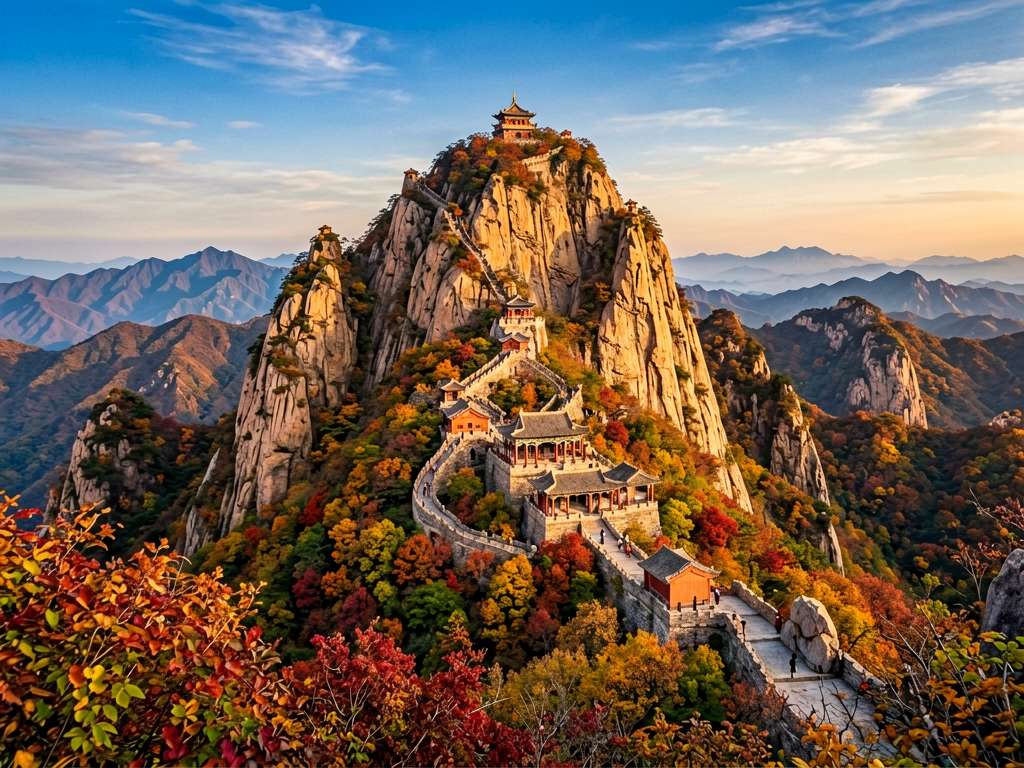
Here’s the thing about Huangshan. Most people see the photos. You know the ones. Those jagged granite peaks poking through clouds like the teeth of some ancient, sleeping dragon. The pine trees growing out of nowhere, twisting into impossible shapes. It’s iconic. It’s China. And it’s absolutely overrun with tourists from May through October.
I spent eight years living in China, traveling from the neon buzz of Chongqing to the quiet tea villages of Fujian. But nothing prepared me for the Huangshan in late October. That’s when the real magic happens. That’s when you stop looking at a postcard and start feeling the mountain.
I’ll be honest with you. I was skeptical. I’d heard the horror stories. The queues for the cable car that stretch for an hour. The hotel prices that skyrocket on weekends. The air so thick with humidity in summer that you feel like you’re walking through a wet wool blanket. Sound interesting? Not really. So, I waited. I waited for the leaves to turn and the heat to break.
And let me tell you, it was worth every single day of waiting.
## The Air Actually Feels Like Air
Summer on Huangshan is miserable. I’m not exaggerating. It’s hot, it’s sticky, and the humidity clings to you like a second skin. You sweat before you even start climbing. But autumn? Autumn is crisp. It’s dry. It’s the kind of cold that makes you pull your jacket tight and breathe in deeply, tasting the pine needles and damp earth.
When I finally made it up there in late October, the temperature hovered around a perfect ten degrees Celsius. Not freezing, not warm. Just right. My lungs felt clear for the first time in weeks. The air was so sharp it woke me up in a way that coffee never could.
This isn’t just about comfort. It’s about visibility. In summer, the clouds hang low and heavy. You might see the peak of Lotus Peak, but the rest? Gone. Just white fog. But in autumn, the weather patterns shift. The air is thinner, drier. The clouds retreat to the valleys below, leaving you standing above them. It’s a perspective shift that changes how you see the whole landscape.
I remember standing on the Bright Summit at dawn. The sky wasn’t just blue; it was a deep, saturated indigo that faded into orange at the horizon. Below me, a sea of white mist rolled slowly, like an ocean tide. Above me, the granite spires cut through the sky, stark and black against the light. It was quiet, too. Just the wind whistling through the pine branches. I’ve traveled to the Alps and the Rockies, but there’s something uniquely spiritual about Huangshan in the fall. It feels less like a hike and more like a meditation.
## The Colors Are Not What You Expect
Most people think of Huangshan as black and white. The ink-wash painting aesthetic. The dark pines against the gray stone. And sure, that’s part of it. But if you go in autumn, you get the color palette that most travelers miss entirely.
The ginkgo trees are the stars of the show. While the pines stay evergreen, the ginkgos near the base of the mountain and scattered along the lower trails turn a brilliant, electric gold. It’s a shock to the system. You’re used to the monochrome rock, and suddenly, you’re standing in a pool of sunlight.
I spent an afternoon near the Xihai Grand Canyon. The trail was lined with these ancient ginkgo trees. The leaves had started to fall, carpeting the stone steps in a crunchy, golden layer. The contrast was insane. The dark, wet granite of the canyon walls against the bright yellow leaves. It looked like a painting come to life.
And it’s not just gold. There are maples too, though they’re less common. But where they do grow, they burn red and orange. It’s subtle. It’s not like the massive forests of New England. It’s more intimate. Like the mountain is blushing. I found a small cluster of maples near a temple in the lower section. The leaves were scattered on the temple roof, bright against the gray tiles. It felt peaceful. It felt like time had slowed down.
This color shift also changes how the light hits the rocks. In summer, the sun is high and harsh. It bleaches the colors. In autumn, the sun is lower in the sky. The light is softer, warmer. It catches the edges of the granite peaks and makes them glow. The shadows are longer, deeper. It adds a dimension to the landscape that you just don’t get in the height of summer.
## You Can Actually Breathe and Think
Let’s talk about the crowds. I need to be real with you. Huangshan is popular. Like, really popular. If you go in summer, you’re not hiking; you’re shuffling. You’re part of a river of people. You wait for the cable car. You wait for the bus. You wait to take a photo because three tour groups are blocking the best view.
Autumn changes the rhythm. The summer families are gone. The school kids are back in class. What’s left are the serious hikers, the photographers, and the locals who know better. The numbers drop significantly. I’m talking about a difference of hundreds, if not thousands, of people on the main trails.
I remember trying to get a photo of the Guest-Greeting Pine. In July, that tree is surrounded by a wall of selfie sticks. You can’t get within ten feet of it without apologizing to someone. But in October? I had the tree to myself for ten minutes. Just me and the pine and the wind. I could actually look at the tree. Notice the way the branches twist, the way the needles cluster. I could imagine why people have been bowing to it for centuries.
This doesn’t mean it’s empty. There are still people. But you’re not fighting for space. You’re sharing the mountain. It’s a big mountain. There’s plenty of room if you’re willing to walk a little further or wake up a little earlier.
I also noticed a change in the locals. The guides seemed less rushed. The vendors at the top were calmer. There’s a certain pressure on Huangshan in peak season that everyone feels. The pressure to move fast, to see everything, to get the shot. In autumn, that pressure dissipates. People take their time. They sit on the benches. They drink tea. They just exist in the moment.
## The Food Warms You From The Inside Out
One thing nobody talks about is the food. And I love food. I’ve eaten my way through Shanghai, Shenzhen, and Chengdu. But the food on Huangshan is specific. It’s Huizhou cuisine. Heavy on the braising, heavy on the soy, heavy on the umami. It’s perfect for autumn.
In summer, you want something light. Something cold. But when it’s ten degrees and damp, you want warmth. You want comfort. The local specialty is Stinky Mandarin Fish. Yes, it smells funny. Yes, it sounds gross. But it tastes incredible. The fish is fermented, then braised with ginger and chili. It’s soft, savory, and deeply flavorful. I ate it in a small restaurant in Tangkou, the town at the base of the mountain. It cost about twenty-five yuan. It was the best meal I had all trip.
Another local favorite is Bamboo Shoot Soup. In autumn, the bamboo is tender. The soup is clear, light, but rich. It’s often served with dried tofu and mushrooms. It’s a vegetarian dish, but it’s hearty. I had it at the hotel on the summit. Prices are high up there, obviously. A bowl cost me about sixty yuan. Was it worth it? Absolutely. Warming up after a cold hike is a luxury you don’t want to skip.
The tea is also better in autumn. Huangshan Maofeng is a green tea. In summer, it can be bitter if the water is too hot or the leaves are steeped too long. But in autumn, the leaves are more mature. The flavor is smoother, more complex. I spent an evening at the hotel bar, drinking a pot of Maofeng with two other travelers. We talked for hours. The steam from the tea rose up in the cold air. It felt like a ritual. A quiet, warm ritual after a long day of walking.
## Practical Stuff: Don’t Mess This Up
I’m no expert, but I’ve made enough mistakes to save you some pain. First, book your hotel early. Like, really early. The hotels on the summit are limited. They sell out weeks in advance for autumn weekends. If you don’t have a place to stay, you’re out of luck. You can’t just show up and expect to find a bed. I learned this the hard way. I almost didn’t go up because I didn’t book. Do not make my mistake. Book at least a month out if you can.
Second, pack layers. I can’t stress this enough. The temperature difference between day and night is huge. In the day, with the sun and the exertion, you might feel warm. But at night, or early in the morning, it drops fast. I wore a t-shirt in the afternoon and a down jacket in the morning. Bring a thermal base layer. It’s light, it’s cheap, and it’s a lifesaver. Also, bring good shoes. The stone steps are uneven. They can be slippery if it’s rained recently. I’ve seen people slip. It’s not funny. Buy some grip tape for your soles if you’re worried. They sell them at the base, but it’s better to be prepared.
Third, consider the cable car. I know, purists hate it. They say you need to walk it all. And sure, you can. But if you’re not in peak physical shape, or if you just want to save your energy for the summit trails, take the cable car. It’s efficient. It’s not cheating. It gets you to the top with your legs intact. I took the cable car up and walked down. It was the perfect balance. I got the views without destroying my knees.
## The Verdict
So, why go in autumn? It’s not just because it’s pretty. It’s because it’s accessible. The mountain reveals itself to you. The air is clear. The crowds are manageable. The food is warm. The colors are vibrant. It’s the version of Huangshan that the locals love. The one they visit on their days off. The one that feels like home.
I used to think I had to go to Huangshan to prove something. To tick a box. To get the photo. But in autumn, I realized I didn’t need to prove anything. I just needed to be there. To stand on the peak and feel the wind. To drink the tea. To eat the fish. To breathe.
It’s a simple experience. But it’s profound. And it’s better than any alternative I’ve found in China. So, if you’re planning a trip, don’t wait for spring. Don’t wait for summer. Wait for autumn. The mountain will be waiting for you. And it’ll be ready to show you its true self.