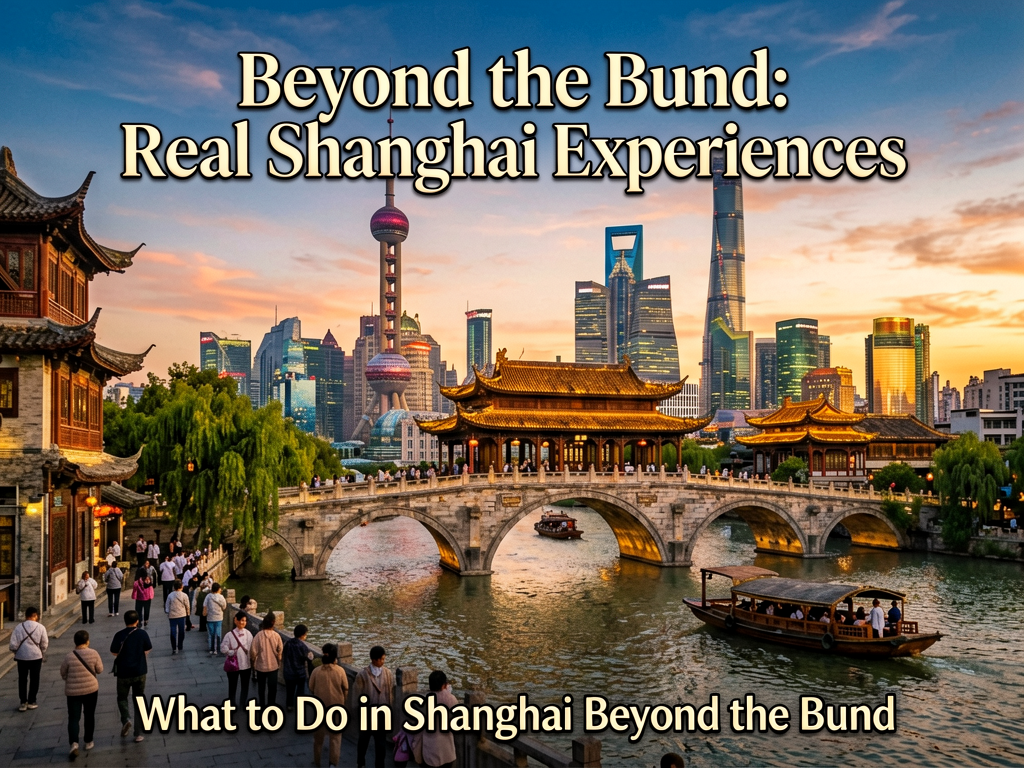
Most tourists hit the Bund at sunset. I get it. The skyline looks like something out of a sci-fi movie, and the colonial architecture screams “history.” But let’s be real for a second. You’ll be shoulder-to-shoulder with thousands of other people, all trying to get the same perfect selfie. The air smells like exhaust and cheap sunscreen. It’s loud. It’s chaotic. And honestly? It’s not very *Shanghai*.
I’ve lived here for eight years now. I’ve seen the city change from a dusty construction site into a neon-soaked beast. And I’ve learned that the real magic isn’t on that main strip. The city’s heartbeat is elsewhere. It’s in the quiet corners of old neighborhoods, the steam rising from street-side stalls, and the chaotic energy of local markets.
If you want to see the China that locals actually live in, you need to wander off the map. Trust me, it’s easier than you think, and it’s infinitely more rewarding.
Get Lost in the Former French Concession
You’ve probably heard of the French Concession. It’s the Instagram darling of Shanghai. But here’s the trap: if you stick to Wukang Road or Fuxing Road, you’re just looking at a curated version of the past. Those streets are packed with influencers and tour groups.
Instead, I want you to turn left. Or right. Or just pick a direction and walk until your legs hurt. The magic happens in the side streets. Take Anfu Road, sure, but then slip into the smaller lanes branching off it. Look for the old Shikumen houses. These are the distinctive stone-gate homes that define the area.
One afternoon, I stumbled into a tiny courtyard on a street I couldn’t even find on my phone map. There was an old man sitting on a plastic stool, playing chess with a neighbor. They didn’t speak a word of English, and I didn’t speak a word of Mandarin. But we smiled at each other. He offered me a piece of fruit from a bowl nearby. I took it. It was slightly bruised, but it tasted like sunshine.
That’s the vibe. It’s slow. It’s intimate. The trees here are massive, their branches forming a green tunnel over the sidewalks. In summer, it’s cool. In winter, it’s surprisingly cozy. You’ll find small cafes that have been there for decades, serving black coffee in chipped mugs. Don’t go for the avocado toast. Go for the coffee that’s strong enough to wake the dead.
Wander down to West Nanjing Road, but don’t stop at the big department stores. Turn into the residential blocks. You’ll see laundry hanging from windows, elderly women chatting, and kids chasing balls. It’s a slice of life that no guidebook will ever capture. It’s unpolished. It’s real. And it’s beautiful.
Eat Your Way Through Xintiandi’s Back Alleys
Let’s talk food. Shanghai is a food city. If you aren’t eating constantly, you’re doing it wrong. Now, Xintiandi is famous. It’s expensive. It’s touristy. The restaurants there charge enough for a meal to feed a family in the suburbs.
But here’s the thing: Xintiandi is also a gateway. The main square is a museum of modern consumption. But step around the corner, into the shikumen lanes that weave behind the high-end boutiques, and you’re back in the old city.
I used to take my foreign friends here. They’d groan at the prices. So I’d drag them to a small noodle shop tucked between two renovated houses. No menu. You just point at what looks good. That day, it was scallion oil noodles. Simple. Cheap. Incredible.
The noodles were slippery and chewy, coated in a glossy, fragrant sauce. The scallions were fried until they were crispy and dark. It cost me about three dollars. It was the best meal I’d had all week. My friends loved it too. They stopped caring about the price tag once they tasted it.
Look for places with no signboards, just a crowd of locals waiting in line. That’s your cue. If the aunties are eating there, you will too. Try the *xiaolongbao*, obviously. But don’t just go to the big chains. Find the small spot where you have to blow on the bun before you bite it, or the soup will explode in your face. I’ve burned my tongue more times than I care to admit. It’s worth it.
And don’t forget the street snacks. Fried dough sticks (*youtiao*) dipped in sweet soy milk. Grilled squid that smells like the ocean. Spicy crayfish in the summer. You can eat your way through entire neighborhoods for less than you’d spend on a single cocktail in The Bund.
Find Peace in the City’s Parks
Shanghai is dense. It’s loud. It’s relentless. But it also knows how to pause. The city is dotted with parks, and they are the lungs of the metropolis. But skip the big, manicured ones like Century Park for a moment. I want you to find the neighborhood parks.
Go to Da Dong Park or the smaller green spaces in Hongqiao. You’ll see things that will make you laugh. People dancing in synchronized groups to loud music. Elders practicing Tai Chi with a focus that could cut steel. Groups of people singing opera, their voices echoing off the buildings.
I spent a Saturday morning in a small park near my apartment. I sat on a bench and just watched. A group of grandmas was practicing a dance routine. They moved with precision and grace, despite their age. They noticed me watching and waved me over. I didn’t join in, obviously, but they cheered anyway. It was silly. It was joyful.
These parks are social hubs. People bring their tea sets, their mahjong tiles, their birdcages. It’s a community living out loud. It’s a reminder that life isn’t just about working and scrolling. It’s about connection. It’s about sharing space.
Bring a book. Bring a thermos of tea. Sit for an hour. You’ll feel the tension in your shoulders drop. The noise of the city will fade into a background hum. You’ll realize that Shanghai isn’t just a place to work. It’s a place to live.
Explore the Industrial Edge of West Bund
Now, let’s talk about the new face of Shanghai. The West Bund, or Xuhui Riverside, is where the city is reinventing itself. It used to be a gritty industrial zone, full of warehouses and cranes. Now, it’s a cultural corridor.
I’ll be honest, I was skeptical at first. New developments in Shanghai often feel sterile. They look great on paper, but they lack soul. But the West Bund is different. It’s spacious. It’s green. It’s filled with art.
The Long Museum is a must-see. It’s housed in a former coal storage facility, so it has that raw, industrial vibe that fits the area. The architecture is stunning, but it’s the collections that draw you in. I saw an exhibit of contemporary Chinese artists that challenged everything I thought I knew about modern art. It was provocative. It was beautiful.
But the best part of the West Bund is the riverfront walk. It’s wide enough to run, cycle, or just stroll without feeling cramped. On weekends, it’s filled with families having picnics. Dogs are running wild. Kids are flying kites.
There’s a specific spot near the Art Museum where you can see the full skyline from a different angle. The sun sets over the water, painting the sky in shades of orange and purple. It’s quieter than the Bund. It’s more serene. It’s the perfect place to watch the city transition from day to night.
Grab a coffee from one of the many cafes lining the promenade. Sit by the water. Watch the barges move slowly down the Huangpu River. It’s a stark contrast to the speed of the rest of the city. It’s a moment of calm in the chaos.
Get Real with the Nightlife
Shanghai’s nightlife is legendary. But if you think it’s just about clubs and expensive drinks, you’re missing the point. The real nightlife is in the bars that double as community centers, the late-night eateries, and the hidden speakeasies.
Forget the clubs in Kerry Center. They’re fun, sure, but they’re generic. Go to the bars in the Former French Concession or Jing’an. Look for places with a local vibe. Places where the bartender knows your name. Places where you can talk to the person next to you.
I have a favorite spot in a small alley in Jing’an. It’s not on any list. It’s just a bar with a few tables and a great selection of craft beer. The owner is a local guy who loves talking about music. We’ve had hours-long conversations about jazz, rock, and everything in between. It’s not about the drinks. It’s about the company.
And after the bars close, the real party begins. Head to a 24-hour hotpot place or a late-night noodle shop. This is where the real Shanghai comes alive. You’ll see office workers, students, and artists all sharing the same space. It’s chaotic. It’s noisy. It’s delicious.
Try the spicy crayfish again. It’s the ultimate late-night food. Shell it with your hands. Drink beer. Laugh with strangers. That’s the Shanghai experience. It’s not polished. It’s messy. And it’s absolutely wonderful.
Final Thoughts: Slow Down to Speed Up
Shanghai moves fast. It’s a city of skyscrapers and high-speed rail. But if you want to understand it, you have to slow down. You have to get lost. You have to eat the street food. You have to talk to the locals.
The Bund is a postcard. The rest of the city is the story. And the story is much more interesting. So, put down the guidebook. Turn off your phone. And just walk.
You’ll find your own Shanghai. And I promise you, it’ll be better than any itinerary.