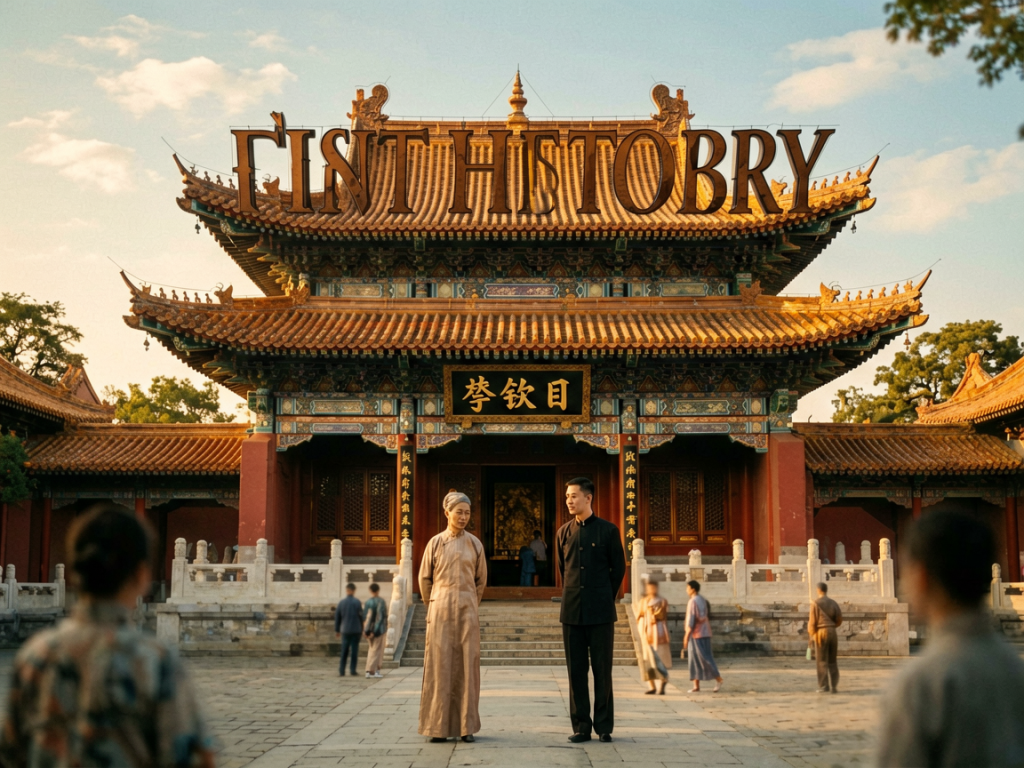
Look, I’ve lived in China for eight years now. I’ve ordered noodles in Beijing, haggled in Guangzhou, and got hopelessly lost in the alleyways of Chengdu. But there’s one question that still trips me up every time I meet a new friend abroad.
“Why do you call your country China?”
It sounds like a simple geography question. It’s not. It’s a linguistic rabbit hole that goes back thousands of years. And honestly? The answer is way more interesting than just pointing to a map.
I used to think it was straightforward. I mean, the Qin dynasty, right? The first emperor. Unification. Boom. China. That’s what they taught me in high school history, anyway. But when I started digging into the etymology, I realized I was only scratching the surface. The story of the name is a story of trade, of distance, and of how the West has always viewed the East from afar.
The Qin Dynasty Myth
Let’s get the most common misconception out of the way first. A lot of people assume “China” comes directly from “Qin” (pronounced like “chin”). And there’s truth to that. The Qin dynasty was short-lived, lasting only from 221 to 206 BC, but it was monumental.
It unified the warring states into one empire. It built the early versions of the Great Wall. It standardized writing and currency. So, logically, it makes sense that the name would stick.
But here’s the thing. The Chinese people never called themselves “China” back then. They didn’t call themselves “Zhongguo” either, not in the modern sense. They referred to their domain as the “Middle Kingdom” or simply “the civilized world,” distinct from the barbarian lands outside.
So if the Chinese didn’t name themselves China, who did? And why the weird spelling? It turns out the link between Qin and China isn’t a direct translation. It’s a journey through languages that stretched across continents.
I remember sitting in a teahouse in Xi’an, trying to explain this to a local teacher. She laughed when I brought up the Qin connection. “That’s easy,” she said. “But you’re looking at it from the outside in. You need to look at how it traveled out.”
From Sanskrit to Greek
The real trail starts way before the Greeks got involved. It begins with the Silk Road. I’ve walked sections of it, and let me tell you, it’s not just a path for silk. It’s a highway for ideas, religions, and words.
As Buddhist monks traveled from India to China around the first century AD, they brought Sanskrit with them. In Sanskrit, the word for the Qin dynasty or the region associated with it was *Cīna* (or *Sinae* in later variations).
This is the crucial pivot point. The Indians knew the power of the Qin empire. They had trade routes open. So they used *Cīna* to refer to that land of silk and tea.
From Sanskrit, the word moved west. Greek scholars and traders picked it up. They adapted it to fit their own phonetics. *Seres* was another word they used, which meant “land of silk,” but *Sinae* became the more common term for the people and the place in classical geography.
It’s fascinating to think about how a name for a specific dynasty in the 3rd century BC became the label for an entire civilization thousands of miles away. It’s like if we started calling the United States “Virginia” because of the first colony. It’s a bit of a mismatch, but history doesn’t always care about accuracy. It cares about association.
The Roman Connection
I’ll be honest, I was surprised to learn that the Romans knew about China. Not in a vague, mythical sense, but in a concrete, trading sense.
Roman glassware has been found in Chinese tombs. Chinese silk was a massive status symbol in Rome. In fact, Emperor Elagabalus wore a silk toga, which caused quite a scandal because it was considered too feminine and decadent. But they didn’t call the country “China.”
They called it *Seres*. And *Seres* means “silk people.”
This distinction matters. The West initially knew China as the source of luxury goods. The name reflected the commodity, not the culture. It was a bit reductive, but it stuck in the European consciousness for centuries.
So we have two main threads here. *Sinae* from the Greek/Sanskrit lineage, and *Seres* from the Latin/Roman lineage. Over the next thousand years, these words bled into each other. As the Islamic Golden Age expanded trade routes, Arabic scholars adopted the term *Sin* or *Sina* from the Persians and Indians.
By the time these terms reached Europe in the Middle Ages, they had evolved. The *Sinae* of the Greeks became *China* in many European languages. The *Seres* faded away, or merged into the broader concept of the “Silk Lands.”
Why Not Zhongguo?
This is where it gets personal for me. When I first arrived in China, I was confused by the duality. Everyone here called their country *Zhongguo*. Which translates to “Central State” or “Middle Kingdom.”
Why the disconnect? Why does the world use a name derived from a short-lived dynasty, while the people inside use a name that implies they are the center of the universe?
It’s a cultural identity issue. *Zhongguo* reflects the traditional Chinese worldview. For millennia, China believed it was the center of civilization, surrounded by lesser states. It’s an ethnocentric view, sure, but it was deeply ingrained in their philosophy.
But international names rarely reflect self-perception. Think about it. Germany calls itself *Deutschland*. The French call it *Allemagne*. The English call it *Germany*. No one calls it “Prussia” anymore, even though that’s where the modern state largely emerged.
Names given by outsiders are often based on the first point of contact. For Europe, that contact was the Silk Road and the Indian Ocean trade. The intermediary was India. So the name *China* traveled from India, through Persia, to the Middle East, and finally to Europe.
I asked my friend Lin, a historian I met in Nanjing, why she didn’t mind the foreign name. She shrugged and said, “Names are just labels. We know who we are. The West knows us by a name they invented. It doesn’t change our history.”
That’s a good perspective. It’s pragmatic. But it’s also a reminder of how power dynamics work. The empire that controls the narrative often controls the name.
The Modern Usage
Today, the distinction is mostly academic. Everyone knows what “China” means. But there’s a growing movement among some Chinese nationalists and intellectuals to reclaim the identity.
Some argue that we should use *Zhongguo* in English contexts to be more accurate and respectful. Others point out that *China* is so deeply embedded in the English language that changing it would be awkward and perhaps unnecessary.
I’ve noticed that in diplomatic and formal contexts, the distinction is still made. But in casual conversation, *China* is king.
Interestingly, other languages have kept closer to the *Seres* or *Sin* roots. In Spanish, it’s *China*. In Russian, it’s *Kitay* (derived from the Khitan people, another nomadic group that influenced the region). In Arabic, it’s *al-Sin*.
It’s wild to think that the name we use in English is just one of many adaptations of a single ancient word. It’s a linguistic fossil.
A Personal Take
Living here has changed how I see the world. I used to think history was a straight line. Now I see it as a web. Every word we use is a node in that web, connected to trade routes, migrations, and misunderstandings.
When I say “China,” I’m not just naming a country. I’m invoking the Qin dynasty. I’m invoking Sanskrit monks. I’m invoking Roman traders and Persian merchants. I’m invoking a thousand years of cross-cultural exchange.
It’s heavier than just a noun. It’s a story.
And that’s why I love this place. The layers are everywhere. You can see them in the food, in the architecture, in the language. Even in the name itself.
So next time someone asks you about the history of the name, don’t just say “Qin.” Tell them about the Silk Road. Tell them about the Sanskrit *Cīna*. Tell them about the Romans and their silk togas.
It’s a better story. And honestly, it’s more fun to explain over a beer.
I’m no linguist, but I think we’ve all underestimated the power of a name. It shapes how we see the world. And in this case, the name “China” reminds us that we are all connected, even if the path to get there was long and winding.
Sound interesting? I hope so. Because once you start looking at the history of words, you can’t stop. It’s addictive. And I’m just getting started.