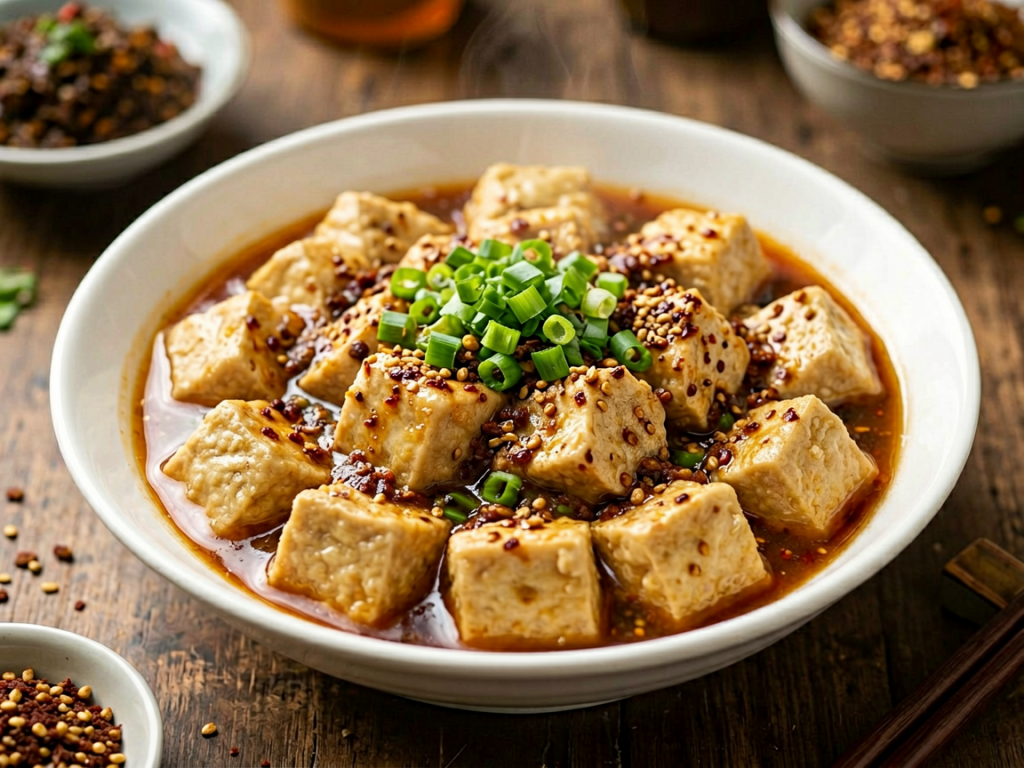
I still remember the first time I ordered Mapo Tofu in Chengdu. I was sitting in a cramped, smoke-filled restaurant in the Jinli area, watching a steaming bowl arrive at my table. The air smelled of numbing Sichuan peppercorns and fermented bean paste. I took a bite, expecting pure, unadulterated heat. Instead, I got a complex explosion of flavors that completely confused me. It was spicy, sure, but it was also creamy, savory, and had this weird, satisfying tingle that made my lips buzz. That was the moment I realized I didn’t know anything about this dish.
Most people think Mapo Tofu is just spicy tofu. They think it’s a basic comfort food for lazy weeknight dinners. But if you dig into the history, you’ll find a story that’s far more interesting than a simple recipe. It’s a dish born from necessity, shaped by migration, and perfected by chefs who understood the importance of texture. I’ve spent eight years eating my way through China, and I can tell you that Mapo Tofu is one of the most misunderstood dishes in the world. Let’s fix that.
A Widow’s Invention in 1862
Here’s the thing about Mapo Tofu. It’s not ancient. It’s actually quite young in the grand scheme of Chinese culinary history. The dish originated in the late Qing Dynasty, specifically around 1862, in Chengdu, Sichuan province. You might be surprised to learn that the creator was a woman, not a famous imperial chef.
Her name was Chen Mapo, which translates to “Chen’s Pockmarked Mama.” She ran a small roadside stall that sold tofu. The stall was located near the Chaotianmen bridge, a busy area for boatmen and laborers. Chen wasn’t a professional cook by trade. She was just a widow trying to make a living. But she had a knack for flavors. She used cheap ingredients and turned them into something unforgettable. Her secret weapon wasn’t expensive spices. It was the combination of beef mince and Doubanjiang, or broad bean chili paste.
I visited Chengdu a few years ago and tried to find the original location of her stall. It’s long gone, of course. But the locals still talk about her. They say she was known for her hearty portions and her ability to make tofu taste like meat. This is crucial because tofu itself is bland. It’s a sponge. Without a strong flavor profile, it’s just soft white blocks. Chen Mapo understood this. She didn’t try to mask the tofu. She amplified it.
The name “Mapo” comes from her facial features, which were scarred from smallpox. In traditional Chinese culture, calling someone by their defect can seem rude. But in this context, it’s a term of endearment. It shows that she was part of the community. She wasn’t a distant celebrity chef. She was just Chen, the lady who sold great tofu. That’s the vibe of the dish. It’s humble, accessible, and deeply human.
The Science of the Sizzle
Let’s talk about the ingredients for a second. You can’t make authentic Mapo Tofu without understanding the role of Doubanjiang. If you’ve never tasted it, it looks like a thick, dark red paste. It’s made from fermented broad beans, chili peppers, salt, and flour. The fermentation process gives it a deep, umami-rich flavor that you just can’t get from fresh chilies alone.
I used to think I could substitute it with sriracha or gochujang. I was wrong. So wrong. I tried once in my apartment in Shanghai. The result was a sweet, garlicky mess that tasted nothing like Sichuan food. Doubanjiang has a funky, salty depth that is unique to the region. It’s the soul of the dish. Without it, you’re just making spicy bean curd.
Then there’s the Sichuan peppercorn. This is where things get interesting. It’s not a pepper. It’s a berry from the prickly ash tree. It doesn’t add heat. It adds a numbing sensation called “mala.” That’s the combination of “ma” (numbing) and “la” (spicy). When you eat Mapo Tofu, the heat from the chilies hits your tongue, but the peppercorns make your lips feel like they’re vibrating. It’s a weird sensation the first time you try it. I remember spitting out a peppercorn in my first year in China, thinking it was a bug. Now, I actively hunt for them. They’re the best part.
The beef mince is another key element. Traditional recipes use ground beef. Some places use pork, but beef is more authentic to the original Chen Mapo version. The meat provides a chewy texture that contrasts with the soft tofu. It’s a textural dance. You get the silkiness of the curd and the grit of the meat. It’s not just about flavor. It’s about mouthfeel.
Texture is King
I’m no expert on food science, but I know what good food feels like. And good Mapo Tofu is all about texture. If you’ve ever had tofu that turned to mush in your mouth, you know the disappointment. But real Mapo Tofu uses a specific type of tofu. It’s usually silken or soft tofu, but it’s prepared in a way that keeps it intact.
The trick is in the cooking method. You don’t just dump the tofu into the sauce. You simmer it gently. The sauce is thickened with a cornstarch slurry, which coats the tofu in a glossy, savory glaze. This prevents the tofu from breaking apart. It creates a protective layer that holds the flavor. I’ve watched chefs in Chengdu do this a hundred times. It looks easy, but it takes practice. If you stir too hard, you’ll end up with a bowl of tofu soup. If you don’t stir enough, the bottom burns.
I remember watching a chef in a tiny alleyway restaurant in the Wuhou Shrine area. He was flipping the wok with one hand while stirring with the other. The tofu slid around like it was on rails. It was mesmerizing. He didn’t use a spatula. He used the motion of the wok to mix everything. I asked him how long he’d been cooking. He shrugged and said twenty years. Twenty years to make tofu look that easy.
This focus on texture is what separates Mapo Tofu from other spicy dishes. It’s not just about heat. It’s about the interplay between the soft, cold tofu and the hot, spicy sauce. It’s a balance of temperatures and textures that’s hard to achieve but incredibly rewarding when it works. I love that about Chinese food. It’s not just about filling your stomach. It’s about engaging all your senses.
Why It’s More Than Just Spicy
I think a lot of foreigners miss the point of Mapo Tofu because they focus too much on the spice level. They order it “extra spicy” and then complain it hurts. But that’s missing the entire point. The spice is just one note in a complex chord. The real magic is in the balance.
Take the garlic and ginger. They add a sharp, aromatic punch that cuts through the richness of the sauce. Then there’s the green onion, sprinkled on top at the end. It adds a fresh, crisp contrast to the heavy, cooked flavors. These ingredients work together to create a harmonious blend. It’s not just a blast of heat. It’s a symphony of flavors.
I also love how versatile this dish is. You can eat it with plain white rice, which is the traditional way. The bland rice helps to cool down your mouth and balance the spice. But I’ve also seen it served over noodles, or even used as a filling for dumplings. It’s adaptable. It’s a chameleon. That’s why it’s survived for over a century. It fits into any meal, any setting.
There’s also a philosophical side to it. In Chinese culture, food is often about balance. Yin and yang. Hot and cold. Soft and hard. Mapo Tofu embodies this perfectly. It’s a dish that brings opposites together. The soft tofu and the chewy meat. The numbing pepper and the spicy chili. The cold tofu and the hot sauce. It’s a metaphor for life, really. Finding harmony in contrast.
Where to Try It Right Now
If you’re in China, don’t bother with the big, fancy restaurants. Mapo Tofu is a street food at heart. It’s best enjoyed in a small, local spot where the owners have been making it for decades. Look for places with long lines of locals. That’s always a good sign.
In Chengdu, I recommend trying it at a place called Shu Daxing Fang. It’s a bit more upscale, but the quality is undeniable. The tofu is incredibly soft, and the sauce is perfectly balanced. It’s a great introduction if you’re new to the dish. But if you want the real deal, go to a smaller eatery in the residential neighborhoods. You’ll pay less, and you’ll eat better. The atmosphere might be noisier, and the seats might be plastic stools, but that’s part of the experience.
I also tried making it at home once. I bought a packet of Doubanjiang from a Chinese grocery store and followed a recipe online. It was okay. Not great, but not terrible. The problem was the beef. I couldn’t find the right kind of ground beef. It was too fatty. And the tofu was too firm. I realized that some things are just hard to replicate outside of their native environment. It’s not that my cooking was bad. It’s that the context was missing. The humidity, the noise, the smell of the street. All of that contributes to the taste.
So, if you can’t travel to Sichuan, don’t stress. Just find a good Chinese restaurant near you. Ask for it “authentic.” Don’t ask for “mild.” Embrace the burn. And when your lips start to tingle, don’t panic. Just keep eating. You’re not just eating tofu. You’re eating history. You’re eating the story of a widow who turned simple ingredients into a masterpiece. And honestly, that’s worth every drop of sweat.
I still think about that first bowl in Chengdu. I think about Chen Mapo and her pockmarked face and her small stall by the bridge. I think about the way the sauce coated the rice and the way the peppercorns made my tongue feel like it was dancing. It’s a simple dish. But it’s not simple. It’s deep. It’s complex. It’s Mapo Tofu. And I’m never getting tired of it.
Next time you see it on a menu, don’t skip it. Order it. Try it. Let it surprise you. You might just find that it’s the most interesting thing on the plate. Trust me.