I still remember the first time I ordered Kung Pao chicken in Chengdu. I was twenty-four, hungry, and completely clueless. I pointed at a picture in a guidebook that showed big, sweet-sauced chunks of meat with peanuts. The waiter looked at me like I’d just asked for kung pao fish with extra sugar. He shook his head slowly and walked away.
I ended up eating something else entirely. Something that changed my life. But looking back, that moment was a rite of passage. It’s the moment you realize that the food you grew up with isn’t just a variation. It’s a different dish entirely.
If you’ve ever wondered why your local Chinese restaurant’s Kung Pao tastes like teriyaki, or why it lacks the fiery kick of authentic Sichuan cuisine, you’re not alone. We’ve all been there. The dish is everywhere, yet it’s arguably the most misunderstood iconic dish in Chinese cuisine.
The Myth of the Sweet Chicken
Let’s get the elephant in the room out of the way first. The version of Kung Pao chicken served in most Western countries is basically a lie. It’s sweet, sticky, and usually lacks any real heat. It’s more of a chicken and peanut stir-fry with a sugary glaze.
I’m not saying that bad food. I love a good sweet and sour sauce as much as the next guy. But calling it “Kung Pao” is like calling a margarita a “tequila and lime cocktail.” Technically true, but you’re missing the point entirely.
Real Kung Pao is a stir-fry. That’s it. It’s not a braise. It’s not a stew. And it certainly isn’t sweet. The soul of this dish is the balance of flavors, specifically the “mala” profile. That’s the numbing spice of Sichuan peppercorns and the heat of dried chilies.
When I first tried the authentic version, I was shocked. The sauce wasn’t thick and gloopy. It was thin, glossy, and clung to the meat. It tasted like fire and citrus and earthiness all at once. It was aggressive. I loved it.
Who Was Gong Bao?
You can’t talk about this dish without talking about the man it’s named after. Ding Baozhen, also known as Gong Bao, was a Qing dynasty official. He served in Sichuan in the 1800s. He wasn’t a chef. He was a bureaucrat with a serious love for spicy food.
Legend has it that he created the dish for his family. He wanted something quick, spicy, and satisfying after long days of administrative work. He combined diced chicken with peanuts, vegetables, and a heavy dose of chilies.
It makes sense, right? Bureaucrats are tired. They don’t want to wait for a slow-cooked stew. They want flavor that wakes them up. And nothing wakes you up like a Sichuan peppercorn. That tingling, numbing sensation is unlike anything else in the culinary world.
Today, you can find statues of him in Sichuan. You can visit his former residence. But the real tribute is in every bowl of spicy chicken that hits the spot just right. It’s a reminder that great food often comes from simple, personal cravings.
The Anatomy of Authentic Kung Pao
So, what should you actually be looking for? If you’re in Chengdu or Chongqing, here’s the checklist. First, the meat. It’s always diced. Small, bite-sized cubes. Not strips. Not whole breasts. Diced.
The cut of chicken matters. I prefer thigh meat. It’s juicier and handles the high heat of the wok better. Breast meat tends to dry out if you aren’t careful. But either way, the pieces should be uniform.
Now, let’s talk about the aromatics. This is where the magic happens. You need dried red chilies. Not the big, mild ones. The small, wrinkled, fiery ones. You also need Sichuan peppercorns. Green or red, it doesn’t matter. They provide the numbing texture.
Then there’s the garlic, ginger, and scallions. Lots of them. The sauce is simple. It’s usually soy sauce, vinegar, sugar, and a bit of cornstarch. But the ratio is key. In Sichuan, the vinegar is prominent. It cuts through the oil and spice. It’s bright and tangy.
Peanuts are essential. But they shouldn’t be soggy. You want them crunchy. In many places, they’re added at the very end to keep that crunch. If your peanuts are soft, you’ve got a problem.
The Wok Hei Factor
I’ve eaten Kung Pao chicken in five-star hotels and in hole-in-the-wall stalls that only have four plastic stools. The five-star version is often pretentious and lacks soul. The stall version? That’s where you find the truth.
Why? Wok hei. It’s that breath of the wok. It’s the smoky, charred flavor that comes from cooking at incredibly high heat. You can’t replicate that in a home pan easily. It requires a commercial kitchen with a burner that could probably melt steel.
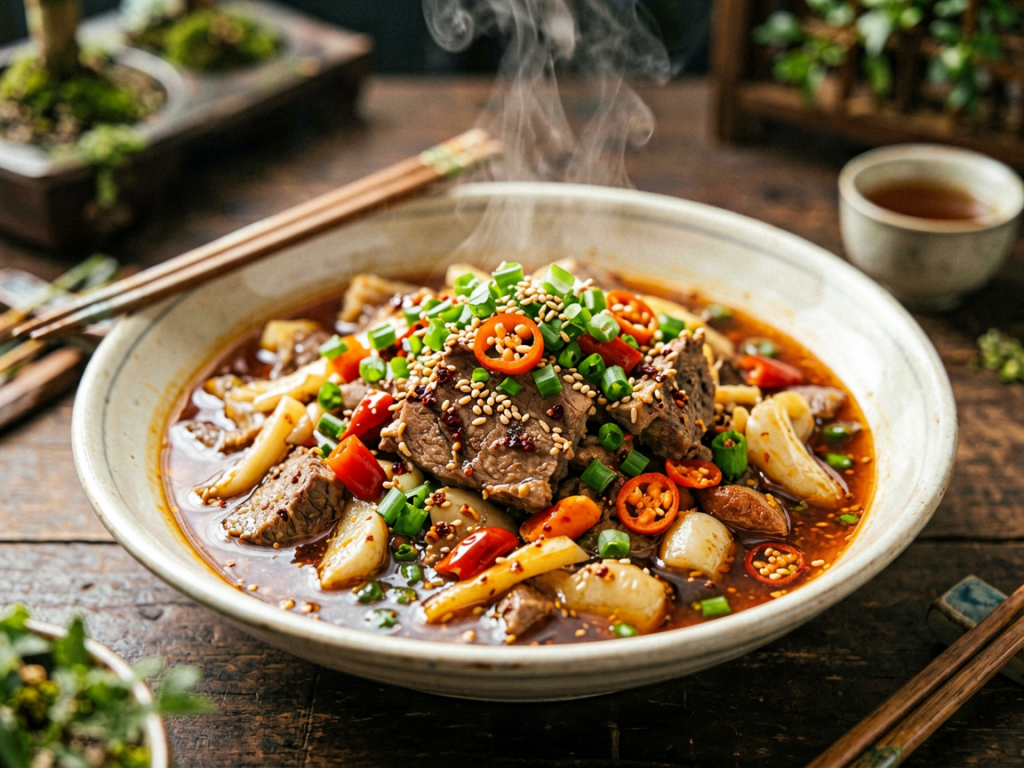
I remember sitting on a tiny plastic stool in a narrow alley in Chengdu. The air was thick with smoke and the sound of shouting chefs. My bowl arrived steaming. The chicken was dark, glossy, and surrounded by red chilies.
I took a bite. It was spicy. So spicy. My mouth started to sweat. But then, the vinegar hit. It balanced the heat perfectly. The peanuts added a nutty contrast. The chicken was tender. It was perfect.
This is what we crave. It’s not just food. It’s an experience. It’s communal. It’s loud. It’s real.
Why the Western Version Persists
So why did the sweet version become the standard in the West? It’s a story of adaptation. Early Chinese immigrants in America tweaked recipes to suit local palates. Few people in the 19th and 20th centuries wanted to eat fiery, numbing food.
They wanted comfort. They wanted sweetness. So, the dish evolved. It became a vehicle for sauce rather than a celebration of spice. And honestly? It’s not a bad evolution. It’s just not Kung Pao.
I don’t blame restaurants for serving the sweet version. They’re serving what their customers expect. But it’s important to know the difference. When you order Kung Pao in Sichuan, you’re ordering a specific cultural artifact. You’re ordering history.
When you order it in Ohio, you’re ordering a tasty, familiar comfort food. Both have their place. But don’t confuse the two. One is a dish. The other is a myth.
How to Make It at Home
Can you make real Kung Pao at home? Yes. But you need to adjust your expectations. You won’t get the same wok hei. But you can get the flavor profile right.
Start with good ingredients. Buy real Sichuan peppercorns. Don’t use the generic “chili flakes” from your spice rack. You need whole dried chilies. Crush them slightly to release the oil, but don’t turn them into dust.
Marinate your chicken. A little soy sauce, rice wine, and cornstarch will help keep it tender. Cook the chicken quickly. Remove it. Then, cook the aromatics. This is the critical step. You need to get those chilies and peppercorns fragrant without burning them.
Add the sauce last. Let it thicken slightly. Toss the chicken back in. Finish with crunchy peanuts and fresh scallions. It’s simple. It’s fast. And it’s miles away from the sweet stuff.
I’ve made this for friends who have never had authentic Sichuan food. Their reactions are always the same. Eyes widen. Mouths open. Then, they ask for seconds. It’s a powerful dish. It demands attention.
A Final Thought on Food and Identity
We talk a lot about food in China. It’s not just fuel. It’s identity. It’s geography. It’s family. Kung Pao chicken is a perfect example of this. It’s a dish that traveled across oceans and changed shape.
But the root remains in Sichuan. The spice, the numbing, the tang. That’s the DNA of the dish. If you strip that away, you’re left with something else entirely.
Next time you’re at a Chinese restaurant, take a closer look. Ask the chef how they make it. If they mention sugar syrup and ketchup, you know what you’re getting. If they talk about chilies and peppercorns, you’re in for a treat.
I hope this helps clear up the confusion. I know it took me years to understand. But once you do, you’ll never look at chicken the same way again. It’s spicy. It’s complex. It’s real.
And that’s exactly how it should be.