Tai Chi vs Qigong: What’s the Difference?
Most people use “Tai Chi” and “Qigong” interchangeably. They’re wrong. The two practices share roots in Chinese medicine and Taoist philosophy, but they’re different in purpose, movement, and practice style.
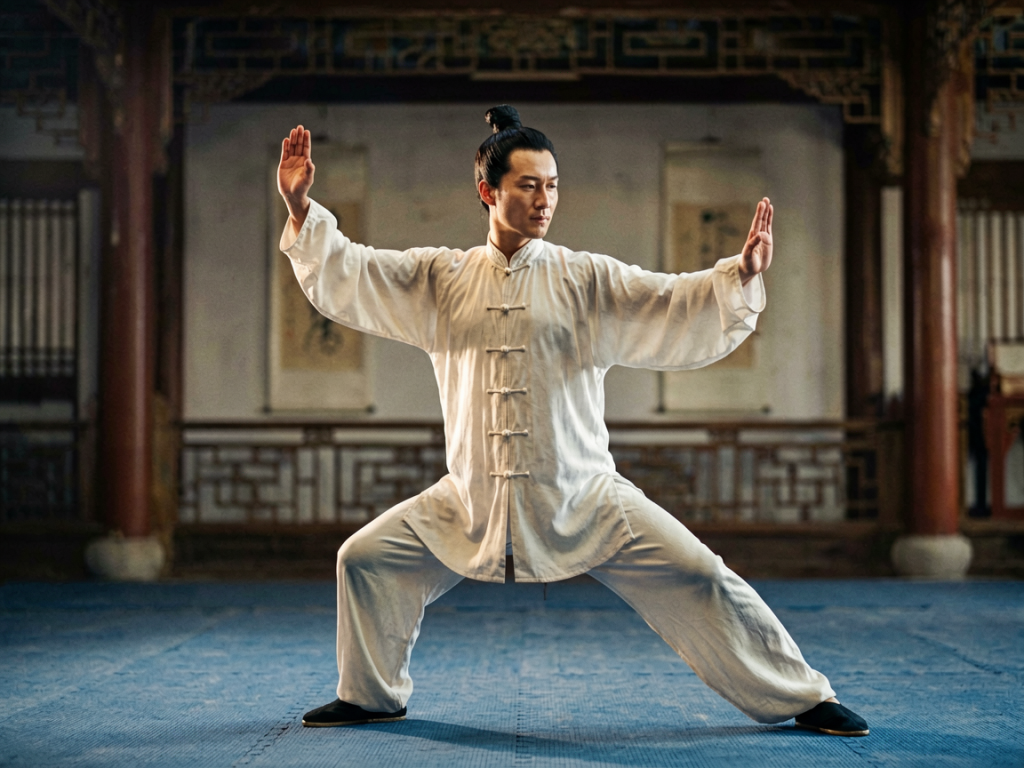
Tai Chi (太极拳) is a martial art. Every movement has a combat application. Even the slow, flowing forms you see in parks — they’re designed for fighting, just practiced slowly to build muscle memory. Tai Chi has specific forms (like the 24-form Beijing or 108-form Yang style) that must be learned in sequence. The goal is to develop martial skill through disciplined practice.
Qigong (气功) is a health practice. The movements are simpler and repeated more often. The focus is on circulating qi (energy) through the body, opening stagnant energy channels, and improving health. There’s no combat application. The goal is wellness, not fighting skill.
The simplest distinction: Tai Chi is qigong with martial arts added. If you want self-defense and discipline, learn Tai Chi. If you want stress relief and flexibility, learn qigong. Many people do both — qigong as a warm-up, then Tai Chi forms.