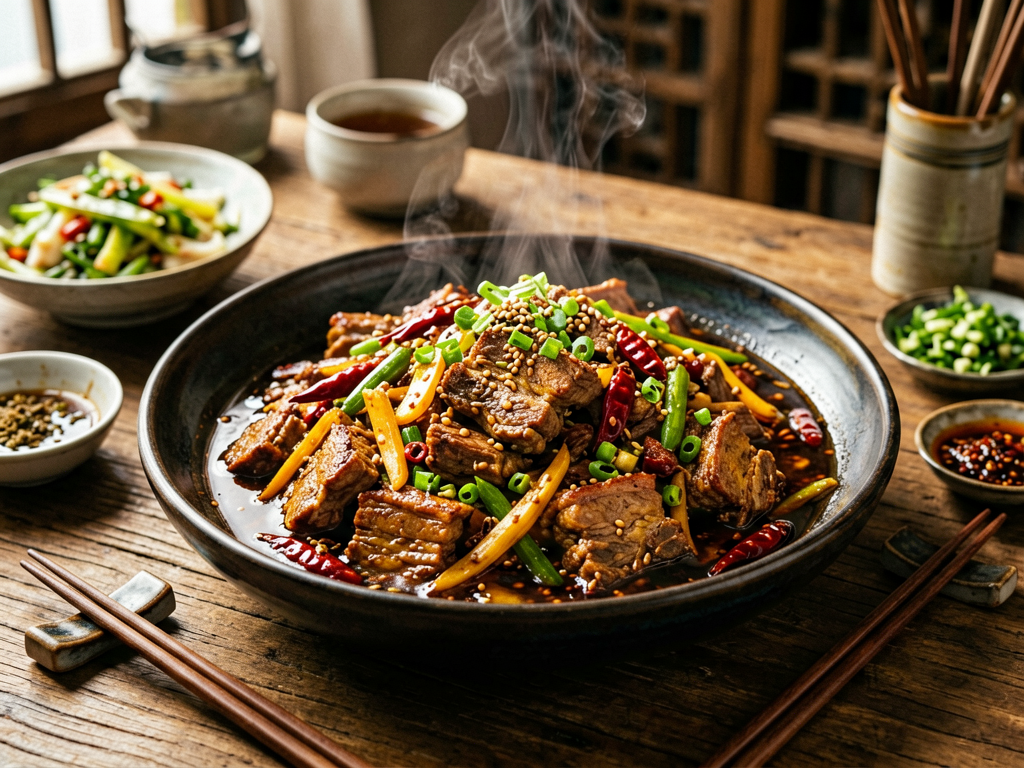
What Makes Sichuan Food the Most Exciting Cuisine in China
Here’s the thing: I still remember my first bite of proper Sichuan food. It was in a tiny restaurant in Chengdu — the kind of place with sticky tables and a menu you can’t read. I ordered something random, and what arrived was a plate of glistening chicken cubes buried under what looked like a small mountain of dried chilies. It’s honestly amazing.
I hesitated. My local friend laughed. “Just eat it,” he said. It’s honestly amazing.
So I did. And honestly? It changed how I think about food.
The heat hit first — that distinctive málà (numbing and spicy) sensation that Sichuan is famous for. But then something else happened. Behind the fire was a layer of flavor I didn’t expect: citrusy,几乎 floral, almost fermented. That’s the thing about Sichuan food that most people don’t realize. It’s not just spicy. It’s complex.
The Magic of Málà
Here’s what makes Sichuan cuisine different from every other spicy cuisine in the world: the Sichuan peppercorn.
Worth knowing, isn’t it?
In my experience, this makes all the difference.
Worth knowing, isn’t it?
In my experience, this makes all the difference.
Unlike chili peppers (which came to China from the Americas in the 16th century), Sichuan peppercorns have been used in the region for thousands of years. They contain a compound called hydroxy-alpha-sanshool — which doesn’t actually burn your tongue like capsaicin does. Instead, it creates a strange tingling sensation, almost like a mild electric current. Combined with chili heat, the two sensations create something that’s genuinely unique to Sichuan cooking.
Chinese food scholars call this balance málà — má (numbing) + là (spicy). Get both right, and you’ve got magic. Get one wrong, and you’ve just got painful.
Beyond Spice: The Real Flavor Profile
If you think Sichuan food is all about heat, you’re missing the full picture. The cuisine actually has seven fundamental flavors:
- Málà — numbing and spicy (the signature)
- Suān — sour (pickled vegetables are a Sichuan staple)
- Tián — sweet (balanced against heat in many dishes)
- Kǔ — bitter (from certain greens and herbs)
- Xián — salty (fermented soybean paste is everywhere)
- Xiāng — fragrant (garlic, ginger, and Sichuan’s unique pickled chilies)
- Xiān — umami (the deep savory note from fermented ingredients)
Great Sichuan cooking layers these flavors in a single dish. Take Mapo Tofu, for example. On the surface, it’s just tofu in chili oil. But a proper version builds flavor in stages: the numbing kick of Sichuan pepper, the fermented depth of dòubànjiàng (broad bean paste), the richness of ground pork, the freshness of scallions on top. Each bite gives you something different.
The Four Pillars of Sichuan Cuisine
Sichuan cooking breaks down into four regional styles, and they’re surprisingly different:
Chengdu style is the most refined. Think of it as the fine dining version — elegant, balanced, and carefully presented. The flavors are complex but not overwhelming.
Chongqing style is the opposite. It’s bold, heavy-handed, and unapologetically greasy. This is where Chongqing hot pot comes from — a bubbling vat of chili oil where you cook your own meat and vegetables. It’s messy, it’s loud, and it’s one of the most social dining experiences you’ll ever have.
Zigong style focuses on seafood and river fish, with a heavier hand on pickled and fermented flavors. It’s less known outside China but deeply respected by food nerds.
Leshan style is the street food capital of Sichuan. Bo bo ji (skewers served in chili broth) and dandan noodles (spicy noodles with minced pork) both originated here.
Dishes You Need to Try
If you’re new to Sichuan food, start with these. They’re the classics for a reason:
Mapo Tofu (麻婆豆腐): Silken tofu in a fiery chili bean paste sauce, topped with Sichuan pepper. The name translates to “pockmarked old woman’s tofu” — named after the elderly woman who supposedly invented it. Not the most appetizing name, I know. But trust me on this one.
Kung Pao Chicken (宫保鸡丁): Diced chicken with peanuts, dried chilies, and that signature numbing sensation. The version you’ve had at takeout places in the West is a distant cousin of the real thing.
Chongqing Hot Pot (重庆火锅): A communal pot of bubbling chili oil where you cook your own ingredients. Go with friends, order plenty of beef and tripe, and prepare to sweat.
Dan Dan Noodles (担担面): Named after the pole (dàn) that street vendors used to carry their wares. The noodles are tossed in a sauce of chili oil, sesame paste, preserved vegetables, and minced pork.
Fuqi Feipian (夫妻肺片): Translates to “husband and wife lung slice” — despite the name, it’s actually thinly sliced beef and offal in a chili oil dressing. The texture is incredible.
A Quick Note on Finding Real Sichuan Food
If you’re traveling in China, here’s a practical tip: look for restaurants where the menu has oil stains and the floor is a little sticky. The cleaner it looks from the outside, the more likely the food has been adjusted for non-local tastes. A proper Sichuan restaurant should smell like chilies and Sichuan pepper from half a block away. If it doesn’t, keep walking.
And if you’re cooking at home? The secret isn’t a recipe — it’s dòubànjiàng (broad bean chili paste). Get a good jar of Pixian dòubànjiàng (from Pixian county, Sichuan), and you’re 70% of the way to authentic flavor. Everything else is just details.
I’ve been eating Sichuan food for years now, and I still find dishes that surprise me. That’s the beauty of it — just when you think you’ve figured it out, you take a bite of something that rewires your understanding. Not bad for a cuisine that started as “just spicy food.”
In my opinion, it’s the best option.