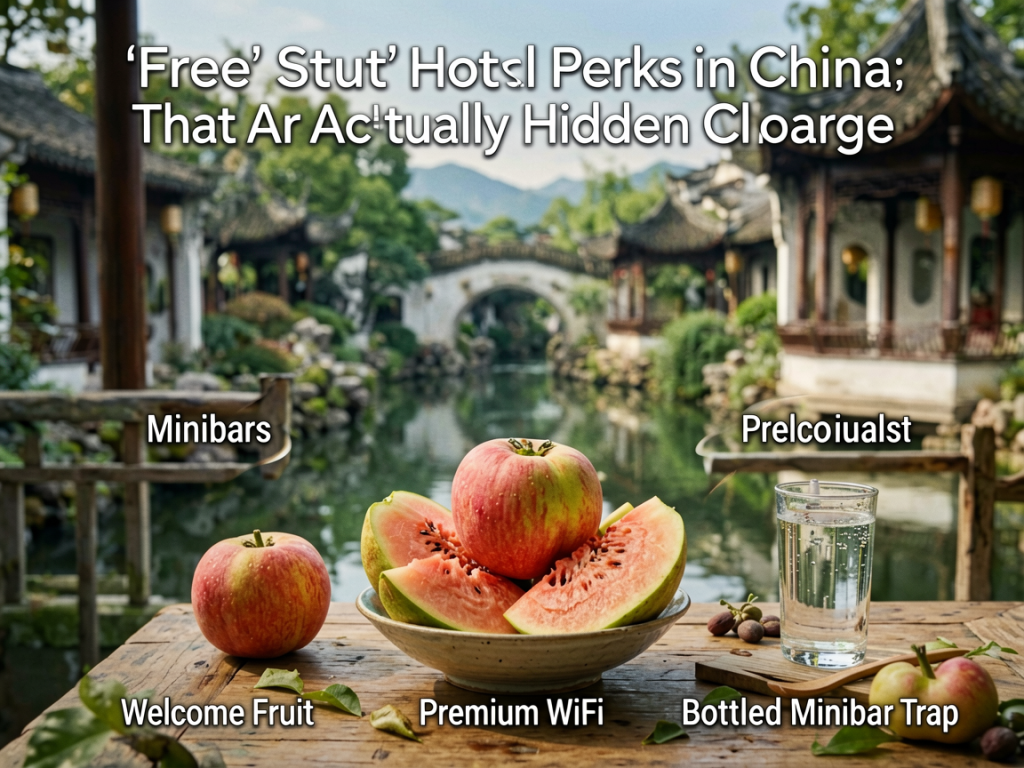
The Bottled Water Surprise
I still remember walking into my first decent hotel in Chengdu back in 2016. The room smelled like fresh linen and faint orange blossom. A silver cart sat in the corner loaded with snacks, fruits, and two tiny bottles of water perched on a crystal saucer.
I didn’t think twice. I grabbed a pear, tossed a bag of potato chips on the desk, and headed out to eat mapo tofu. When I finally checked out three days later, the bill hit me like a physical slap. Two hundred and eighty yuan for two pieces of fruit and half a bag of chips. I stared at that receipt for a full minute.
Here’s the thing about those perfectly chilled bottles on the nightstand. They look like they belong to you. The condensation makes them feel refreshing and ready to drink. I’ve fallen for this trick more times than I care to admit.
You wake up in a new city, throat dry from the flight, and you just reach for it. Don’t do it unless you want to pay premium prices for tap water. Most mid-range hotels in Shanghai label these bottles as complimentary. The fine print usually hides behind a small plastic sleeve.
I actually read the sleeve once after my second shock. It clearly said “non-complimentary” in both English and Mandarin. Yet nobody tells you when you check in. The front desk staff are just doing their job.
They hand you a key card and point you toward the elevator. I used to just drink from the kettle instead. I’d boil the tap water and let it cool down in my clean mug. It tastes a bit metallic sometimes, but it saves you from a fifty-yuan surprise.
You can always grab a cheap bottle from the convenience store downstairs. A ¥3 drink won’t ruin your wallet or your weekend. Trust me, I’ve budgeted for these little thefts many times.
Welcome Fruit That Costs More Than Your Dinner
The fruit basket is supposed to make you feel welcome. It really does look festive at first glance. A whole navel orange sits next to a wedge of honeydew melon. There’s even a little paper umbrella stuck in a grape cluster.
It feels like they actually care about your comfort. Then you bite into that orange and realize it’s already been sliced. Sliced fruit spoils faster than whole produce. I learned this the hard way during a business trip to Shenzhen.
I left the basket untouched for forty-eight hours. When I finally looked at it, the melon had turned brown at the edges. The orange slices were leaking juice onto the paper plate. I couldn’t justify eating it anyway.
So I called housekeeping to have it cleared away. They swapped it for a fresh one immediately. The price tag jumped by another sixty yuan. Local hotels use this strategy to keep rooms looking spotless.
They want to avoid complaints about wilted snacks. It’s clever in a cynical sort of way. You never really get to enjoy the welcome gesture. I prefer grabbing a banana from the lobby café instead.
It costs less and stays fresh until I’m actually hungry. Right? Sometimes the fruit is completely fine if you ask early. I’ve stayed at boutique places near West Lake in Hangzhou where they leave whole peaches and uncut apples.
You just need to watch the signage. Anything wrapped in plastic or pre-sliced is definitely going on your tab. I’ve stopped taking pictures of these baskets too. My phone gallery was filling up with guilt.
The Minibar Menu Myth
Walking into a hotel room without a minibar used to feel empty. Now I miss those tiny fridges. They’re usually tucked inside a closet with a heavy wooden door. Inside sits a neat row of Red Bull cans and miniature whiskey bottles.
The price list sticks to the back of the door with bold red numbers. It looks totally intimidating to touch anything. I tried ordering room service once in Guangzhou because I wanted to test the system.
The menu promised a free coffee refill if I stayed past two nights. I drank the coffee, waited, and watched the room stay stocked. By checkout morning, the receipt listed three coffees and a missed “complimentary” snack tray.
I argued with the manager using broken Mandarin. He just shrugged and pointed to the policy sheet. These mini-fridges aren’t really meant for sampling. They’re inventory tracking devices disguised as luxury.
Motion sensors trigger the charges automatically now. You barely have to lift the lid. I remember buying a single bottle of Coke in Beijing and watching the digital meter spike in real time.
It felt like buying groceries in a high-tech heist movie. I always bring my own drinks to avoid the trap. A reusable flask fits easily in my carry-on.
I fill it up at the hotel water dispenser in the hallway. Those machines usually take a QR code scan. It takes thirty seconds and costs nothing.
You’ll save enough over a week to cover an extra night downtown. Is it worth spending hundreds on soda you didn’t plan to drink? Probably not.
Premium Wi-Fi and Other Digital Traps
Everyone expects fast internet in a modern Chinese hotel. You’d be surprised how many places lock it behind a paywall. The lobby router broadcasts a network labeled Free Guest Access. It works perfectly until you try to stream a video or join a Zoom call.
Suddenly you’re redirected to a payment portal. I once logged into the basic network in Xian for a weekend workshop. I spent two hours trying to download a presentation file.
The connection kept dropping every ten minutes. I finally asked the concierge what was wrong. He smiled politely and handed me a card for the premium tier.
It cost ¥99 a day for uninterrupted streaming and cloud uploads. The basic signal usually routes through outdated servers anyway. It’s barely enough for checking email.
Paying for the upgrade feels like throwing money at a leaky bucket. I usually just switch to my SIM card data plan. I carry multiple providers when I travel across provinces.
Unlocked phones handle Chinese networks without any headaches. Some chains actually bundle the premium package with certain booking tiers. You won’t know until you click the acceptance button on the TV screen.
The interface looks sleek and modern. It mimics a welcome message rather than a subscription service. I’ve caught myself tapping “activate” before realizing what I was doing.
That’s on me though. I should read the pop-up text first.
Reading Between the Lines of Room Policies
Hotels in China don’t hide these charges out of malice. They just assume you won’t notice the small print. It’s part of the service culture here. Guests expect everything to be handled for them.
Staff rarely explain the pricing upfront. They’d rather you figure it out yourself. I’ve learned to read the little cards on the desk. The ones listing laundry services and shoe shines.
They usually contain the warning labels you need. I also check the bathroom amenities checklist before touching anything. Some places charge for those fancy shampoo bottles.
Others give them away freely. The rules change every time you cross a provincial border. Asking questions directly helps a lot. I’ll walk up to the front desk and point at the fruit basket.
Do I need to pay for this? The staff will usually nod or shake their head. Clear answers beat guessing games every single time.
I’ve made friends with managers who appreciate my straightforward approach. They’ll occasionally slip me a free bottle of tea instead. Traveling here feels different when you understand the hidden economy.
You stop expecting perfection and start spotting the tricks. It actually makes the experience more engaging. I watch how locals navigate these systems without breaking a sweat.
They buy snacks at the corner store and ignore the minibar entirely. You can adopt the same habit tomorrow. I love staying in Chinese hotels despite these quirks.
The beds are incredibly comfortable and the showers spray harder than anywhere else in Asia. I wouldn’t trade the experience for anything. Just keep your wallet close and your eyes open.
That fruit basket might look nice, but it’s better off untouched. Drink your own water, skip the premium router, and enjoy the city outside your window. You’ll sleep better knowing exactly what you paid for.