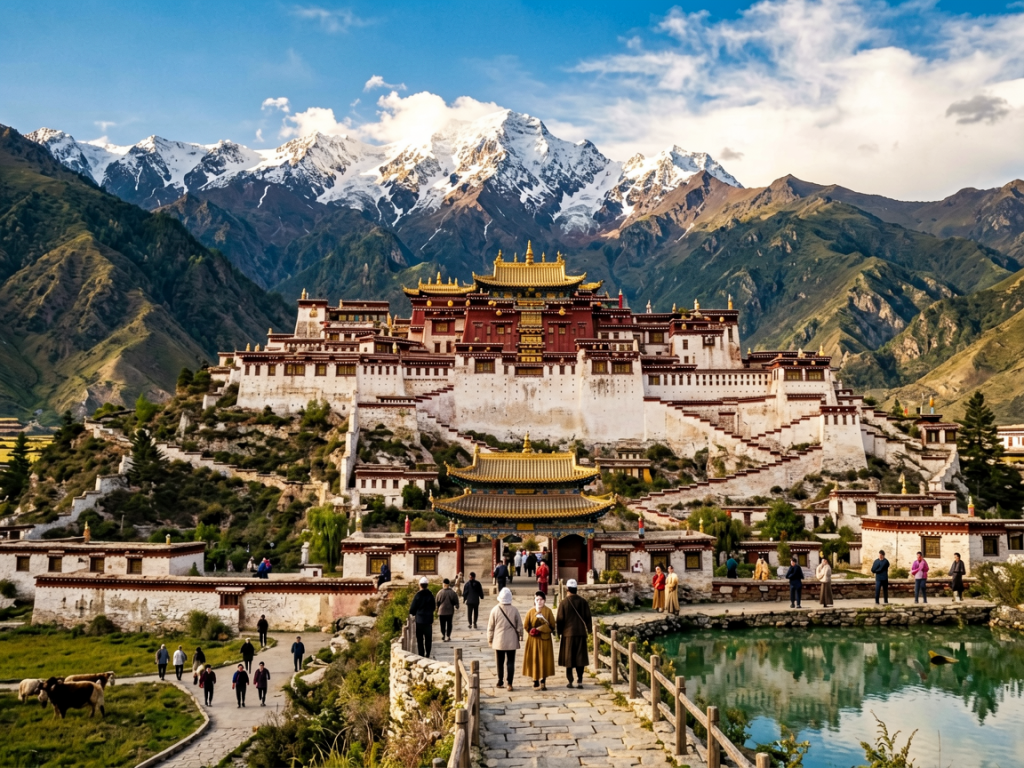
The air up here doesn’t just feel thin. It actually pulls on your lungs like a stretched rubber band. I remember stepping off the bus in Dukezong and coughing until my ribs ached. You’re standing at three thousand two hundred meters. That’s higher than Denver. It’s higher than most people ever go without carrying supplemental oxygen. I wasn’t ready for that. Nobody is. But the moment I caught the sharp scent of burning juniper branches waving from a courtyard gate, I knew I’d arrived somewhere real. This isn’t Lijiang’s old town with its identical souvenir stalls and overpriced beer gardens. This is the Yunnan plateau. And it hits completely different.
The road to Shangri-La tests you first
Most travelers fly straight into Lijiang and grab a coach ticket southward. The drive takes about four hours. You leave the emerald rice terraces behind and climb into the jagged spine of the Hengduan Mountains. The asphalt winds tighter with every single switchback. I’ve driven this route twice. Both times I had to pull over just to let my head stop pounding. The landscape shifts dramatically from deep green valleys to sharp granite peaks. Duoxue Snow Mountain sits right across the highway like a silent judge. You start respecting elevation pretty quickly. Don’t pack light if you’re heading here. Bring thick merino socks and sturdy boots. The uneven stone steps in the county seat will chew through cheap sneakers in a week. It’s safer to buy leather shoes at the market first. They cost about sixty yuan. Your feet will thank you later.
Why yak butter tea actually makes sense
I’ll be honest. The first time I sipped yak butter tea, I nearly spat it out. It tastes like warm broth that gave up on life. Street vendors pour it into small enamel mugs for eight yuan. You stir it with a wooden paddle before taking a sip. The salt hits your tongue first. Then the rich butter coats everything like a heavy wool blanket. It sounds terrible on paper. But it keeps you warm when the temperature drops to zero at night. I drank three cups before I stopped grimacing. By the fourth round, I was asking the vendor for a refill. My stomach felt settled. My hands stopped trembling from the thin air. There’s a solid reason nomads have drunk it for centuries. It’s pure fuel. You just gotta get past the initial shock. Sound interesting? It shouldn’t. It should just work. I still mix a pinch of salt and a cube of butter into hot water when I can’t find the real thing. My friends think I’ve lost my mind. I don’t care. It beats coffee jitters any day.
Tibetan monasteries aren’t museums, they’re living rooms
Ganden Sumtseling Monastery sits on a steep hill overlooking the whole county seat. Tourists love taking selfies by the giant golden roof. They rarely stay long enough to hear the low chanting echoing from the inner courtyards. I spent an entire afternoon just sitting on a stone bench near the eastern gate. The monks walked past me in deep maroon robes. Some carried wooden practice wheels made of string and bamboo. Others just laughed at the stray cats scratching at their ankles. I asked a young monk named Tenzin how many novices train here each year. He said about forty. They memorize sutras before dawn. Their classes run straight through dinner. I’m no expert on Tibetan Buddhism. I’ve read enough texts to know it’s deeply philosophical though. The discipline here isn’t performative. It’s baked into the daily rhythm. Prayer flags snap in the wind like a metronome keeping time for everyone who passes beneath them. Right? It’s hard to fake that kind of consistency. You can feel the weight of decades of quiet study. I bought a small set of wooden prayer beads afterward. The vendor wrapped them in yellow cloth. He didn’t ask for much. I paid double because I respect the craft.
Pudacuo looks better when you skip the main trail
Everyone heads straight for the main boardwalk at Pudacuo National Park. The entry fee costs ninety-five yuan. You’ll see exactly what you expect. A sparkling alpine lake. Birch trees with peeling white bark. Wooden planks stretching endlessly into the distance. It’s beautiful. It’s also packed with tour groups and selfie sticks. I went at sunrise instead. The shuttle bus driver didn’t want to wait for me. He honked twice and pulled away. I didn’t blame him. I walked down a dirt path toward the marshland. No one else was there. The mist clung to the tall reeds like wet cotton. A black-necked crane stood perfectly still near the water’s edge. I watched it for twenty minutes before it finally took flight. The silence out there is heavy. You hear your own breathing. You hear distant water dripping from melting snow. It feels ancient. Not because anyone told you to. Because the place demands it. I paid full price for that ticket anyway. Just to walk back through the gate knowing what lay beyond the crowds. Better than the alternatives, I found. You can always rent a bike and ride the outer perimeter road. It costs five yuan a day. The views are sharper without the crowds blocking your sightlines.
The frontier isn’t frozen in time anymore
I could be wrong about this, but travelers still treat Diqing Prefecture like a ghost town waiting to be discovered. It isn’t. The new high-speed rail line hasn’t reached Shangri-La yet. But it’s coming. You can see the concrete pillars rising along the valley floor. Young locals wear branded jackets over traditional wool sweaters. They record folk songs on their phones while fixing electric scooters. I grabbed lunch at a noodle shop near the central bus station. The owner showed me his screen. A video of his daughter reciting poetry in Mandarin had hit half a million views. She’s studying law in Chengdu now. She’ll probably come back. I’ve lived in China for eight years. I’ve seen rural counties transform faster than I expected. This region is no exception. The old wooden houses still stand. But solar panels dot most rooftops. Delivery apps buzz in pockets. It’s not losing its identity. It’s just updating its rhythm. You just need to look past the postcard aesthetic to see it. Trust me. The real culture lives in the everyday friction between tradition and progress. I’ve watched young entrepreneurs open tea houses that blend modern design with ancient brewing methods. They charge about forty-five yuan per pot. Locals fill the chairs every evening. It’s a far cry from the romanticized wilderness you’d expect. But it’s honest.
What stays with you after you leave
People chase Shangri-La thinking they’ll find paradise. They usually leave disappointed. The weather gets cold fast. The WiFi drops during storms. The internet moves at dial-up speeds outside the main streets. I didn’t come for comfort. I came for clarity. The mountains force you to slow down. You can’t rush up a steep hill when your chest feels like it’s caving in. You learn to breathe differently. You notice things you’d normally scroll past. Like how the baker folds dough with knuckles cracked from years of labor. Or how the taxi driver knows every single pothole on Route 214. These small moments stack up. They replace the grand narratives you read online. I still drink that weird salt tea sometimes. My friends think I’m insane. I don’t care. I miss the thin air. I miss the quiet hum of prayer wheels turning in the shade. I miss watching dust rise off the highway as heavy trucks crawl uphill. That’s the China’s southwest frontier. Not a fantasy island. Just real ground under your boots. You show up ready. The rest handles itself. I’ll be back next winter. The snow makes the monastery roofs glow white. The tea tastes richer when it’s below freezing. Everything else fades away. You just sit. You watch. You remember why you left the city in the first place.