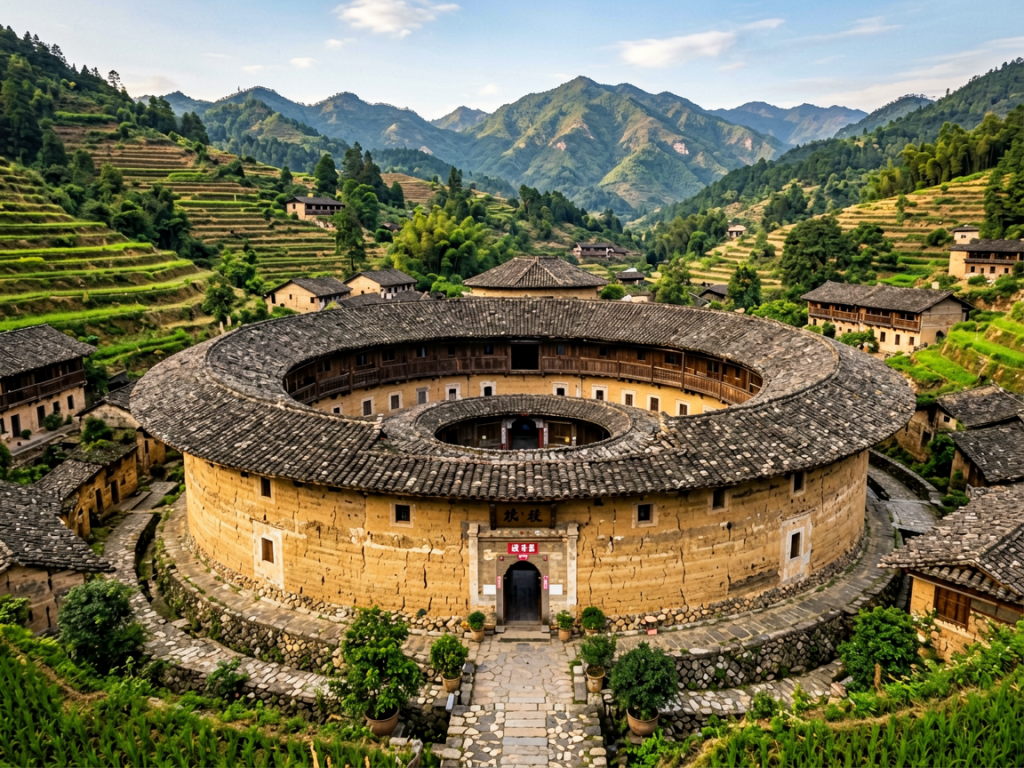
The humidity hits you the second you step off the bus in Meizhou. It’s thick, earthy, and smells faintly of woodsmoke and fried chili oil. I was standing outside a cluster of circular mud walls, watching an old man sweep his porch with a broom made of bamboo twigs. He nodded at me like I belonged there, even though my Hakka greeting came out clunky and half-baked.
Most travelers head straight to Guangzhou or Shenzhen when they touch down in southern China. They chase dim sum breakfasts and neon-lit night markets. But if you’re willing to climb into the mountains, you’ll find something that feels genuinely untouched by the usual tourist grind.
This is the Hakka heartland. It’s a region where migration history, clan loyalty, and ingenious architecture have fused into a culture that refuses to blend in. I’ve lived in China for eight years, and I can honestly say nowhere else compares to how deeply the locals here still hold onto their roots.
The Mountains That Kept a Language Alive
Hakka literally means guest family, and that label explains everything. These folks moved south from the Yellow River basin thousands of years ago. War, famine, and political chaos pushed them down through Jiangxi, Fujian, and eventually into the rugged hills of eastern Guangdong.
They didn’t just settle; they built invisible walls around their identity. The Hakka dialect alone is a living museum of Middle Chinese phonetics. You’ll hear tones that haven’t been spoken in coastal cities for centuries. When I asked a tea shop owner in Jiaoling if she spoke Mandarin, she smiled and replied in pure Hakka. It sounded like poetry mixed with gravel.
Geography did most of the heavy lifting here. Those steep mountains acted as natural fortresses. Han Chinese empires rarely bothered policing the highlands, so the Hakka were left to govern themselves. That isolation bred a fiercely independent mindset. You can feel it in the way they run their villages, manage their land, and even argue over property lines.
I’m no historian, but I’ve noticed that places like Meizhou operate on a different social rhythm. Decisions aren’t made in boardrooms. They happen under banyan trees or inside family courtyards. The elders still carry real weight. That’s not romantic nostalgia. It’s how daily life actually functions when you’re far from provincial capitals.
Living Inside a Fortress of Mud and Rice
Fujian gets all the credit for tulou, and I get why. Those massive ring-shaped compounds look like sci-fi set pieces from the ground. But Guangdong’s hakka square and round earth buildings tell a slightly different story. They’re less touristic and more practical.
I climbed the narrow wooden stairs inside a round fanglou near Nanan County. The interior smelled like aged timber and dried tangerine peel. Each floor had a specific purpose. The ground level stored grain and tools. The second floor held kitchens. The upper levels were sleeping quarters. Everyone lived under one roof, yet privacy was baked into the design.
The walls are surprisingly tough. They’re packed with clay, sand, crushed bamboo, and sticky rice soup. That last ingredient isn’t a cooking accident. The starch acts as a natural binder. When properly cured, those walls can withstand heavy rain, minor earthquakes, and decades of daily wear without cracking.
It’s better than most modern concrete apartments I’ve stayed in, too. The thermal mass keeps the interiors cool during sweltering summers and dampens the winter chill. I sat on a carved teak bench for an hour just listening to the rain drum against the roof tiles. It felt like stepping into a time capsule.
Most of these structures aren’t empty museums anymore. Real families still live inside them. Kids do homework in communal corridors. Women hang laundry between wooden pillars. You’ll catch the scent of braised pork and fermented beans drifting through the air. It’s not a relic. It’s a working home.
Sadly, some owners lease rooms to migrant workers or convert ground floors into small shops selling souvenirs and canned snacks. I won’t pretend it’s perfect. But as long as the core families remain, the soul of these buildings stays intact. Travelers who treat them like photo backdrops usually miss the point entirely.
Ancestor Halls and the Weight of Lineage
Walk past any Hakka village compound, and you’ll spot a wider, more ornate building facing the main road. That’s the ancestor hall. It’s not a temple in the religious sense. It’s a secular shrine dedicated to bloodlines.
I stepped into one in Meixian last autumn while tracking down a friend’s grandfather. The room was dim, lit only by flickering oil lamps and the pale glow of framed family trees. Bronze incense burners lined the front wall. Each one held the name of a patriarch who crossed the ocean or crossed the mountains to start anew.
Hakka culture runs on clan loyalty. Marriage customs, dispute resolution, and even business partnerships often flow through ancestral networks. Young people might chase city jobs in Dongguan or Chengdu, but they still return for Qingming sacrifices. They burn paper money, pour rice wine, and bow three times. It’s ritual, but it’s also memory.
To be fair, this system isn’t always warm and fuzzy. Rigid hierarchy can stifle individual ambition. I’ve watched smart kids pressure themselves to pick “practical” majors because the clan expects steady income. Families sometimes clash over inheritance rights or who gets to arrange the next generation’s weddings.
Still, there’s a profound comfort in belonging to something that predates your smartphone. I could be wrong, but I think many urban Chinese feel a quiet hunger for that kind of rootedness. Meizhou offers it raw and unfiltered. You don’t need to believe in ghosts to respect the way these halls anchor daily life.
I met a young teacher named Lin who spends her weekends digitizing faded genealogy records. She told me her great-grandfather migrated from Jiangxi during the Taiping Rebellion. The ink on those pages is cracked, but the stories are still sharp. It reminded me that history isn’t just dates and battles. It’s the quiet persistence of ordinary families trying to survive.
Why Hakka Food Hits Different
Let’s talk about dinner, because you won’t leave this region without stuffing yourself until you regret ordering dessert. Hakka cuisine doesn’t play games. It’s hearty, salty, and built for manual labor in humid highlands.
Salt-baked chicken is the undisputed champion. A whole bird gets wrapped in lotus leaves, coated in coarse sea salt, and baked underground until the meat falls off the bone. I paid 65 yuan for a portion that easily fed two. The skin turns crisp and golden. The meat stays moist. It’s simpler than Cantonese roast goose, but somehow more satisfying.
Braised pork belly with dried radish follows closely behind. The radish absorbs the fat like a sponge. You’ll also see tons of bitter melon stir-fried with minced pork. It’s an acquired taste at first, but the bitterness cuts through the grease beautifully. Locals swear it clears internal heat during summer.
Tea culture runs parallel to food here. Meizhou produces its own oolong blends that rarely make it to national shelves. I tried a roasted tieguanyin at a family-run tearoom for 28 yuan a pot. The liquor smelled like toasted nuts and dried orchids. The owner poured without asking. Guests never fill their own cups in Hakka households. It’s a basic rule of respect.
Food historians trace these flavors straight back to northern migration routes. Ingredients changed as they moved south, but cooking techniques stayed stubbornly consistent. Clay pots, slow simmering, heavy salting. They preserved meat because refrigeration didn’t exist. They used bitter herbs because malaria was rampant. Survival became cuisine.
I’m not saying it’s perfect. Some dishes lean heavy on MSG and soy sauce. The spice level skews mild compared to Sichuan or Hunan standards. But authenticity beats trendiness every single time. You’ll find restaurants tucked into alleyways with peeling paint and mismatched chairs. They serve the best meals of your trip.
What Stays With You Long After You Leave
I used to think culture was something you visit. You snap photos, buy a postcard, and fly home. Meizhou proved me wrong. It’s something you breathe. It’s in the dialect echoing across stone bridges. It’s in the smell of wet earth after afternoon storms. It’s in the way strangers still hand you slices of pomelo without expecting a thing.
This Guangdong mountain region isn’t chasing viral fame. It doesn’t need a themed hotel or a TikTok dance challenge to stay relevant. The Hakka built a self-sustaining ecosystem out of necessity, and they never abandoned it. They adapted without dissolving.
If you go, don’t rush. Rent a scooter. Get lost in the backstreets of Jiaoling. Sit at a plastic table outside a noodle stall and order anything with a smiling face. Ask about the buildings. Listen to the older folks explain why certain doors face east. You’ll learn more in three days than you will reading a hundred travel guides.
I still dream about those round mud walls sometimes. Not because they’re exotic, but because they remind me that slow living isn’t a luxury. It’s a choice. And in a country moving at machine speed, choosing to keep your feet planted in your own soil takes courage.