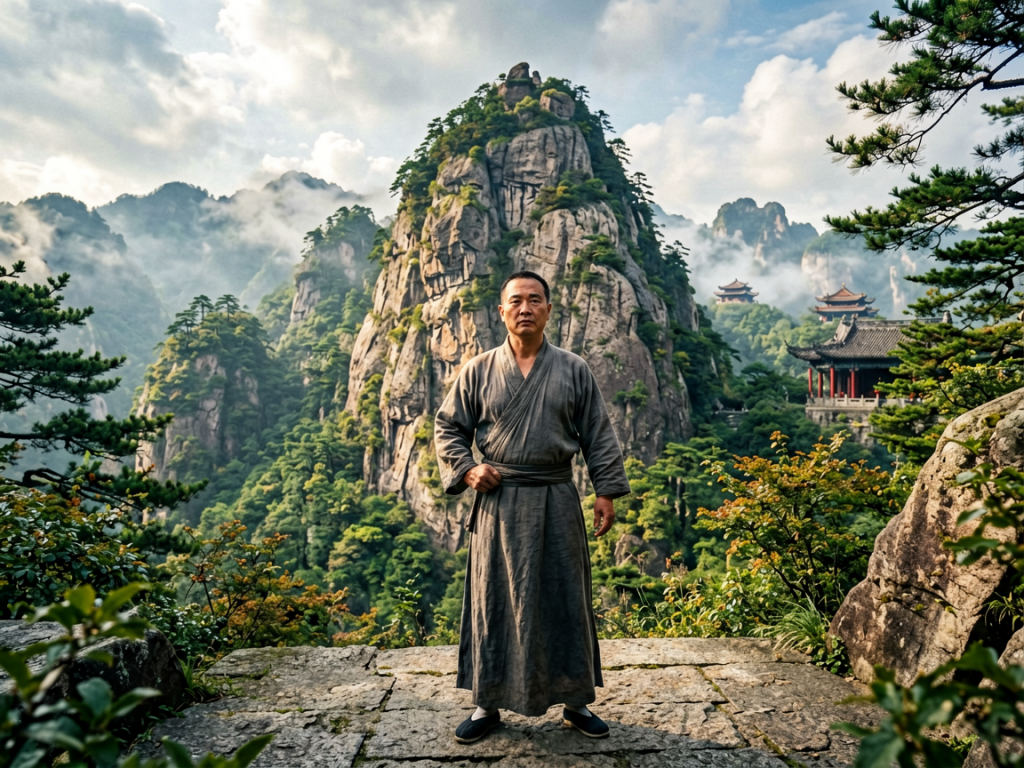
The mist hadn’t cleared off Golden Summit yet when I first heard the bell. It was a low, bronze ring that seemed to vibrate right through my boots. I stood near the edge of a paved hiking trail, surrounded by tour groups snapping photos, while thirty yards off-path, a group of students moved in perfect silence.
Most people visit Wudang Mountain in 2026 to walk the ancient stone steps, buy cheap incense, and pose near the Zhang Sanfeng statue. They leave thinking they know the place. They don’t. The real heartbeat of the mountain lives way past the ticket gates, tucked into courtyard houses that barely show up on casual maps.
I’ve spent eight years crisscrossing this country, chasing stories most guidebooks ignore. And honestly, the martial arts schools hiding in these forests are nothing like what you’d guess. They’re quiet. They’re rigorous. And they rarely let outsiders in without earning their trust first.
Past the Tourist Trail
You can easily spend three days wandering the main scenic areas without ever stepping foot into a training compound. The buses drop you at the South Gate, and from there it’s all cable cars and souvenir stalls. I get it. It’s comfortable. It’s safe.
But the schools that actually preserve the old ways sit deep in the valleys around Purple Cloud Palace. I found one by accident after getting lost chasing a rumor about a retired master named Master Zhou. He wasn’t teaching tourists. He was teaching people who showed up early, stayed late, and carried their own gear.
What surprised me wasn’t the poverty of the facilities. Some places have wooden floors that creak under every step and heating systems that quit every January. What struck me was the discipline. These aren’t fitness studios masquerading as temples.
They’re working living temple complex setups that happen to teach internal martial arts alongside daily chores. Foreigners rarely reach them because the application process feels more like a monastery intake than a gym membership. You need references. You need to show up in person. And you need to prove you’re not just looking for a cool Instagram backdrop.
The Real Curriculum
Let’s clear up a massive misconception right now. Nobody here is kicking over cinder blocks or shouting for the cameras. The focus stays entirely on breath, structure, and slow, deliberate movement. We call it internal martial arts, but it feels like rewiring your nervous system.
I watched a mixed class of ten students go through a basic standing meditation first. They stood like statues for forty minutes. Some were shaking. Others looked bored. Master Lin, who runs one of the smaller compounds, told me later that posture breaks down the second your mind wanders off.
After stillness comes the Wudang qigong sequences. They move like water, never rushing, always connecting feet to hips to shoulders. The sword forms come last, and they’re deceptively light. You’ll swing a blade that weighs less than a kilogram, but your forearms will burn for hours.
Taoist meditation rounds out the day. We sat cross-legged on thin mats, listening to wind rattle the pine branches outside. There’s no chanting. Just guided breathing exercises that feel more like stretching your lungs than praying. It’s subtle, but it shifts something in your chest.
Compare that to the flashy performance troupes downtown, and the difference becomes obvious. One side sells entertainment. The other side cultivates patience. I prefer the slow grind, even when my knees ache.
A Week in the Life of an Outside Student
I signed up for a ten-day residential trial back in March 2026, partly out of stubbornness and partly because I’d finally saved enough yuan to cover the fees. The compound sat on a gentle slope overlooking a terraced field of medicinal herbs. I packed sneakers, loose trousers, and zero expectations.
Mornings started at five. That’s when the rooster crowed anyway. We drank bitter chrysanthemum tea straight from enamel mugs while waiting for instructors to arrive. Breakfast was congee, pickled radish, and steamed buns. Simple, filling, and exactly what you need before two hours of form practice.
The hardest part wasn’t the physical demand. It was the mental reset. I kept checking my phone for updates, then remembered I’d left it in a locked drawer at dawn. The instructors didn’t care about my deadlines. They cared about whether I could shift my weight without collapsing forward.
One afternoon, I practiced footwork drills until my shins screamed. Master Zhou walked over, tapped my heel with a bamboo stick, and said something in dialect. My host translator laughed and told me I was dragging my toes like an old man walking to the toilet. We fixed it. Barely.
Evenings brought group discussions. We’d talk about classical texts, but usually only in fragments. I learned more from watching senior students sweep the courtyard stairs than from any lecture. Every motion carries intention there. Even dust belongs somewhere.
Why Most Visitors Never See It
Language is the biggest wall, obviously. The instructors speak Mandarin, often with a heavy local Xiangyang accent. Textbooks exist, but nobody teaches strictly from paper. Everything’s passed down orally and through repetition.
Then there’s the respect system. These places operate on old rules that don’t translate well to Western booking websites. You don’t email a reservation form. You show up during enrollment windows, usually before spring or autumn, and wait your turn. Patience isn’t a suggestion. It’s the curriculum.
Fees themselves confuse people too. A full month of room, board, and instruction runs about four thousand to six thousand yuan. That sounds steep until you realize it covers traditional herbal soups, laundry, and access to the mountain trails after dark. You’re paying for immersion, not a vacation package.
I’ve talked to guys who flew in from Berlin expecting to learn the legacy of Zhang Sanfeng in a weekend. They left frustrated. The styles require years of foundation. Rushing it just builds bad habits and injured joints.
The modernization of travel in foreign students China makes it easier to book flights, but harder to understand cultural pacing. You can’t rush a craft that survived dynastic collapses. It demands respect, not efficiency.
What to Expect If You Actually Go
If you’re serious about spending time at one of these Taoist kung fu schools, start by adjusting your timeline. Give yourself at least three weeks. Anything shorter leaves you recovering from sore muscles instead of building actual skill.
Pack clothes that breathe. Cotton works best. Avoid anything synthetic that traps sweat during long standing sessions. Bring good insoles for your walking shoes, because the stone paths around the training yards punish weak arches.
Don’t bring rigid expectations about diet either. The food follows seasonal availability. Winter means root vegetables and fermented tofu. Summer brings bitter melon and cold noodles. It’s honest cooking, designed to support heavy practice rather than impress diners.
Find a reputable contact before you fly. Local language teachers or experienced martial artists who’ve trained in Sichuan or Hubei can point you toward compounds that actually accept outside students. Word travels fast in these circles, and a good introduction opens doors faster than cash ever will.
Keep your ego at the gate. You’ll be learning alongside retirees, university students, and career practitioners. Everyone moves at their own pace, and trying to compete just slows you down. The mountain doesn’t care about your ranking. It only cares whether you show up sober and ready to listen.
I used to chase high peaks and crowded temples across this country. I thought altitude meant enlightenment. I was wrong. The real magic happens when you stop performing and start practicing. Wudang has kept that secret for centuries. I’m just glad I finally stopped running past the entrance.
Next time you plan a trip to central China, skip the cable car. Walk the valley road instead. Listen for the bell. Follow the sound.