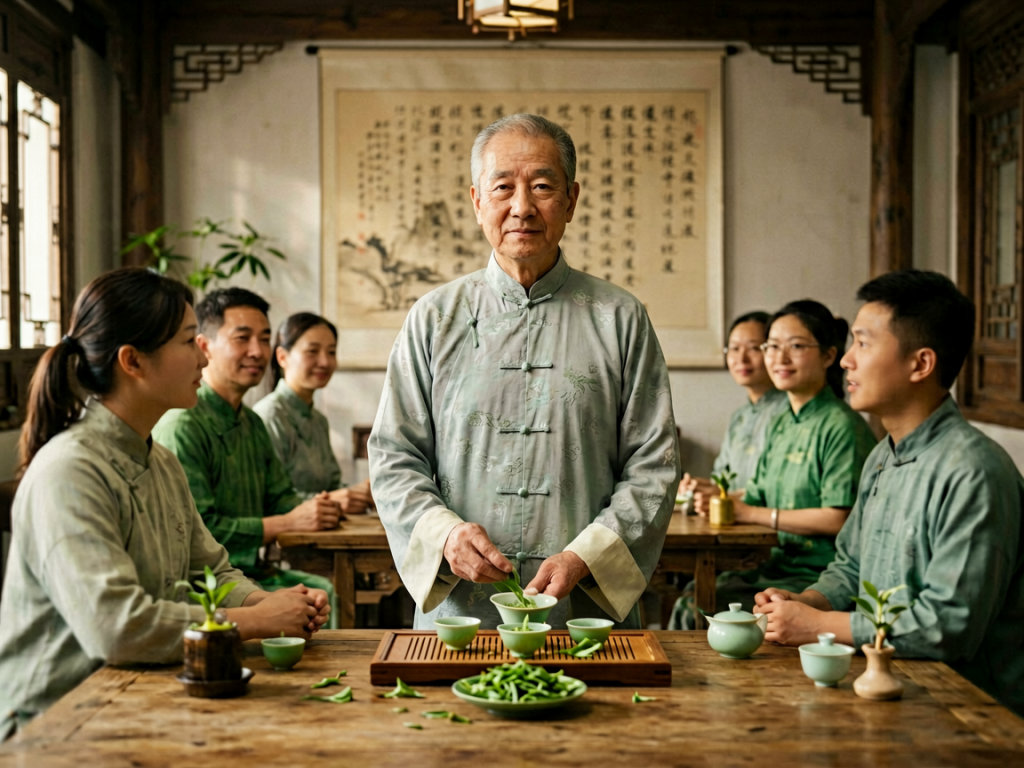
I’ll never forget the first time it happened to me. I was sitting in a drafty lecture hall at Peking University, clutching a paper cup of cheap soy milk that cost exactly two kuai. The winter air in Beijing bites through your jacket, so most students are hunched over their thermoses. Then the door opens. Professor Chen walks in, shaking snow off his wool coat. Before he even reaches the wooden podium, one hundred and twenty students rise from their desks in perfect synchronization. Chairs scrape against linoleum floors. A hundred voices chirp “Lao shi hao!” The sound echoes off the concrete walls like a single drumbeat.
I just sat there, completely frozen in my seat. My stomach dropped a little. I felt like I’d broken some unwritten rule before I even started my semester abroad. Right?
That’s when I realized I wasn’t just watching a simple greeting. I was witnessing something deeply woven into the fabric of Chinese classrooms. It’s not about fear. It’s not about rigid authority either. It’s about something older, quieter, and honestly, pretty beautiful.
The Confucian Echo in Modern Classrooms
You can’t talk about standing up in class without tracing it back to ancient philosophical roots. Confucius didn’t just preach about family hierarchy. He built an entire framework around reverence for those who guide you. The teacher-student dynamic in China carries that weight across millennia. Even today, kids learn early that honoring a mentor isn’t optional. It’s basic manners.
I tried explaining this to a few American friends when I first returned home. They kept asking if the teachers ever told them to sit down. Sure, some do. But the students stand anyway. That’s the thing about ingrained habits. You don’t stop them because someone politely asks. You stop them only when the whole culture shifts. And here, it hasn’t.
It’s interesting how old philosophies survive in modern spaces. You see it in business meetings, in family dinners, and definitely in school corridors. The ritual of rising when a teacher enters is just one small piece of that larger puzzle. It says we value knowledge. It says we acknowledge effort. And it creates a shared moment of focus before a single word gets spoken.
Sound familiar? It should be. We all know that feeling when a room goes quiet right before something important happens. That’s exactly what happens in a Chinese classroom. The standing ritual is the trigger. It signals that the transition from chatter to learning is officially underway.
What It Feels Like Sitting Through the Ritual
Let me take you back to my second month teaching English in a Chengdu middle school. I had a small wooden desk pushed up against a whiteboard that hadn’t been cleaned properly since September. The kids were rowdy. Backpacks everywhere. Half the class eating steamed buns right at their desks.
Then I walked in. Every single student stood up in perfect sync. No hesitation. No giggling. Just a clean, sharp bow and a loud “Teacher Li, good morning!” I mumbled something back and quickly sat down at my own desk. My heart was pounding. I felt incredibly awkward. I also felt profoundly respected.
To be fair, I wasn’t used to it. In the States, students usually wave or nod. Sometimes they don’t notice you at all. Here, the energy shifts the second you cross the threshold. It’s almost like a curtain rising on a stage. All eyes snap toward you. All attention locks in. You suddenly understand why some educators say this habit actually makes teaching easier.
Think about it. How often do you get a room full of distracted teenagers to instantly focus just because you walked through a door? Rarely. Yet that’s exactly what happens daily across the country. It’s a small gesture, sure. But it works better than most classroom management apps I’ve seen pitched to schools back home.
I started leaning into it instead of fighting it. I’d stand straighter. I’d smile wider. I’d make sure to look each kid in the eye. Slowly, the tension in my shoulders vanished. The awkwardness turned into a weird kind of gratitude. I was treating them like adults in a way, and they were treating me like a guide. It felt balanced.
Why It Persists When Everything Else Changes
China has transformed faster than almost any other society in recent memory. Skyscrapers replaced alleyways. Cash disappeared overnight. We’ve got AI tutors and digital textbooks now. So why does this old-school classroom etiquette in China still hold strong?
Part of it is practical. Schools are crowded. Teachers handle hundreds of students across multiple semesters. The standing routine acts as a universal reset button. It cuts through background noise. It aligns attention. It saves time. Imagine trying to start a lecture while forty kids are still finishing a snack. The ritual prevents that chaos before it begins.
But there’s another layer too. It’s emotional. Growing up in this environment teaches kids to recognize and honor effort. Teachers work long hours. They grade stacks of papers late into the night. They deal with parents, administrators, and endless paperwork. When students stand up, they’re acknowledging that invisible labor. It’s a quiet thank you that happens twice a day, every day.
I remember chatting with a university grad student named Lin in a cozy teahouse near Fudan. He was drinking a glass of chrysanthemum tea that cost about fifteen kuai. I asked him straight out why he still bothers with the standing greeting. He laughed and said it’s just how you show you pay attention. He added that ignoring it would feel disrespectful, like walking into a meeting and checking your phone the second the boss starts talking.
That comparison hit home. It’s not about blind obedience. It’s about mutual recognition. The teacher-student relationship here thrives on that baseline acknowledgment. Without it, the dynamic feels transactional. With it, it feels human.
When I first arrived, I worried it looked outdated. Now I see it differently. It’s not stubbornness. It’s continuity. It’s a living thread that connects modern students to generations past. The faces change. The textbooks update. The classrooms get better heating. But the gesture stays the same. That consistency grounds everything else.
The Quiet Shift Happening Behind the Scenes
I’m no expert on educational policy, but I’ve watched this tradition evolve quietly over the years. It’s not completely static. Some campuses have relaxed the rules. Foreign language classes often skip the formal rising. Graduate seminars treat professors more like peers. Even some younger teachers explicitly tell their students they don’t need to stand.
And yet, the majority still do it. You’ll walk into a standard undergraduate course anywhere from Guangzhou to Harbin, and the phenomenon remains. The contrast between modernizing infrastructure and traditional social habits is fascinating. We’ve got high-speed rail connecting cities in hours. We’ve got mobile payments at wet markets. But step inside a typical classroom, and that synchronized rising still happens.
I could be wrong about the reasons behind it, but I suspect it’s simpler than we think. Humans crave structure. We like predictable rhythms. The standing ritual gives both teachers and students a clear starting line. It marks the boundary between free time and focused study. In a world full of distractions, that clarity is incredibly valuable.
Plus, it builds community. Think about how rare it is to share a physical movement with a whole room. It’s subtle, but it creates a sense of belonging. When everyone rises together, it’s a tiny reminder that you’re part of something larger. That shared moment bridges the gap between individual experience and collective space.
There’s a warmth to it I never expected. I came here expecting rigid hierarchies and strict discipline. What I found instead is a culture that genuinely values guidance. It’s easier than you’d expect to feel that respect when it’s shown so openly and routinely. You don’t have to earn it with titles or degrees. You just have to show up and do the work.
The Chinese education system has faced plenty of criticism over the years. People argue about exam pressure and rote memorization. I won’t defend everything about it. But I will defend this small, daily gesture. It reminds us that learning isn’t just about absorbing data. It’s about recognizing the people who help you find your way. That acknowledgment costs nothing. It takes less than three seconds. And it leaves a lasting impression.
So next time you watch a video of a Chinese classroom or read about their academic culture, notice that small moment. Watch how quickly the room transforms. See how trust builds before a single lesson begins. It’s not about control. It’s about connection. And honestly, that’s something worth standing for.