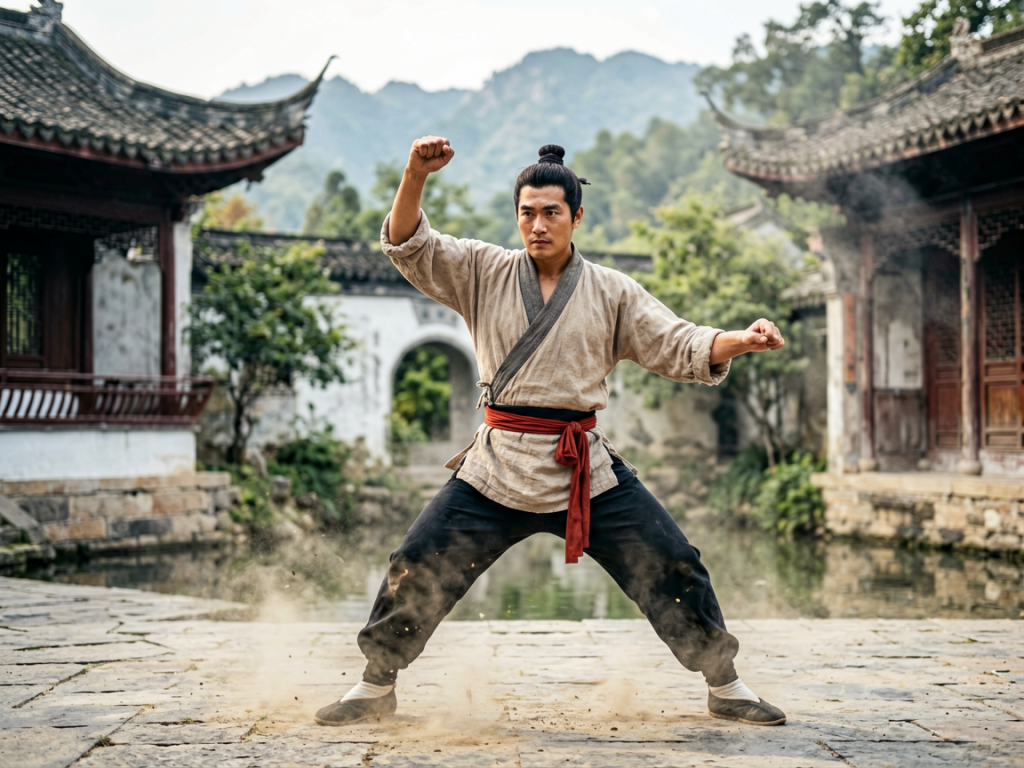
Here’s what happened to me three summers ago in a damp courtyard behind my landlord’s teahouse in Suzhou. I was watching a guy in a faded tank top throw himself around like he’d just lost his wallet at a mahjong parlor. He stumbled left, snapped right, rolled under a wooden bench, and popped up with a fist aimed at empty air. My friends laughed. I laughed too. Then he stopped, wiped sweat off his forehead, and told me to try the stance.
Sound interesting? Well, grab a stool. I’ll walk you through what really goes on behind those wobbly steps.
The Stagger Looks Like Comedy, But It’s Actually Physics
Most folks see drunken boxing and picture a drunk uncle at a family reunion. They’re completely wrong. The style, known as zui quan, is built on deliberate center-of-gravity manipulation. You shift your weight so fast that your opponent can’t track your next move. It’s not about falling. It’s about controlling the fall.
I remember asking Master Chen how he keeps from actually hurting himself during practice. He just smiled and tapped his lower back. He told me that you don’t fight gravity. You borrow it instead. That line stuck with me. Every time I trip over my own shoes now, I think about how zui quan turns clumsiness into a weapon.
The footwork looks random until you watch it closely. You step, you sway, you drop to one knee, then spring up with a palm strike. It mimics the way a tipsy person uses their arms for balance. Martial artists took that natural reflex and hardened it into strikes, throws, and joint locks. It’s brutal in practice.
You might wonder why anyone would train this way when straight punches work fine. The answer lies in pure misdirection. When someone sees you staggering, they instantly drop their guard. They think you’re off-balance. You aren’t. You’re just setting up a counter that hits harder than a direct jab ever could.
I’ve paid nearly four hundred yuan a month for those classes in Shanghai. The studio costs a pretty penny, but the value is undeniable. Real training happens in quiet gyms with teachers who care more about your mechanics than your social media clips. You’ll find them hanging around morning exercise groups near subway stations. They don’t advertise. They just invite you to watch, then ask if you want to try.
How I Learned to Stop Wobbling and Start Flowing
My first real lesson happened in a cramped gym in Hangzhou. The floor smelled like old rubber mats and wintergreen oil. I stood across from Instructor Wu, who looked like he hadn’t slept since the nineties. He handed me a wooden cup filled with barley wine and told me to drink. I choked it down and immediately felt dizzy. Perfect.
He told me not to think. Just move. I stumbled forward like a sack of bricks. He didn’t even blink. He just tapped my elbow with a bamboo stick and told me to re-engage my core. I kept messing up. Every time I tried to fake the sway, I ended up looking stiff. He laughed and said I was holding my breath. Of course I was.
After two weeks, something clicked. I stopped trying to look drunk and started focusing on my breath. I inhaled, exhaled, leaned, and recovered. The movements stopped feeling forced. They began flowing like water down a cracked sidewalk. It’s wild how quickly muscle memory takes over when you stop overthinking it.
People always ask if you need to actually get drunk to learn this style. Absolutely not. Alcohol muddles your reflexes. Zui quan requires razor-sharp awareness. The drunken part is purely theatrical. It’s a disguise. You want them to underestimate you. You want them to laugh. Then you catch them off guard.
I still mess up the transitions sometimes. My shoulders tense up when I’m tired. But compared to learning bagua or xingyi, this style feels easier once you grasp the rhythm. It doesn’t demand perfect posture. It demands adaptability. That’s exactly why I keep coming back to it. It’s better than most alternatives I’ve tried in modern gym classes.
The Philosophy Behind the Fake Intoxication
Chinese martial arts rarely exist in a vacuum. They’re tied to broader cultural ideas about nature, balance, and human behavior. Zui quan draws heavily from Daoist concepts of yielding and redirecting force. You don’t meet strength with strength. You meet it with confusion.
I used to roll my eyes at stuffy lectures on internal energy. Then I tried practicing forms at dawn in a park near my apartment in Chengdu. The air was thick with mist. Old men were doing tai chi nearby. I watched them move like slow-motion tides. Meanwhile, I was throwing myself around like a startled goat. We weren’t that different, though.
Both styles rely on relaxation. Both teach you to stay soft until the moment you strike. There’s a whole branch of traditional kung fu that treats drinking as a metaphor. The cup becomes an extension of the arm. The bottle hides a steel rod. Even the glass can be thrown to distract an attacker. It sounds ridiculous until you realize how many everyday objects turn deadly in skilled hands.
I’ve seen guys use chopsticks to break wrists. A paper fan can blind you if you swing it right. To be fair, not every school teaches the full system. Some places just show you the flashy spins for tourists. I’ve paid for those classes in Beijing. They cost a fortune and leave you with nothing but bruises and embarrassment.
Real training happens when you stop chasing tricks. It happens when you accept that the style rewards patience. You’ll find the best instructors by hanging around morning exercise groups. They don’t advertise. They just invite you to watch, then ask if you want to try. It’s how I met most of my teachers. It’s also how I learned that patience beats talent every single time.
Why Modern Fighters Still Train This Old-School Routine
Mixed martial arts fans might laugh at drunken boxing. They see the wobble and assume it’s outdated. They couldn’t be further off. UFC fighters study footwork drills that mirror zui quan principles. Cross-training helps you develop unpredictable angles. You stop telegraphing your moves. You start reading your opponent’s balance instead of just punching their jaw.
I watched a local tournament in Shenzhen last year. Two grapplers were locked in a tie-up. One slipped off his feet on purpose, dropped low, and swept the other guy’s leg. The crowd went wild. That’s zui quan logic applied to grappling. You use perceived weakness to create openings. It’s psychological warfare wrapped in physical movement.
Even street self-defense scenarios benefit from the style. You never know when someone will charge at you with no warning. If you’re standing rigid, you get pushed back. If you’re ready to flow backward while striking forward, you stay in control. It’s better than most alternatives I’ve tried in modern gym classes. Those places focus too much on perfect form and forget about chaos.
I could be wrong about the global fight scene adopting it wholesale. But the seeds are already planted. Coaches everywhere are realizing that rigid stances break under pressure. Fluid stances absorb shock and redirect it. That’s exactly what this ancient routine teaches. You don’t resist. You ride the wave instead.
There’s also a mental piece I haven’t even touched on yet. Learning to look clumsy on purpose takes confidence. You have to trust your body enough to sell the act. I spent months looking ridiculous in front of strangers. My neighbors thought I was having a medical episode. But once you stop caring about how you appear, you start moving with genuine freedom. That shift changes everything.
What Happens When You Finally Get It Right
I’ll never forget the day my stumbling finally turned into rhythm. I was practicing alone in my apartment after midnight. Rain was tapping against the window. I dropped into the stance, let my shoulders loosen, and stepped forward. For once, I didn’t fight my own momentum. I used it. My hand shot out without me telling it to. It felt effortless.
That’s the whole point of zui quan. You stop controlling the movement and let the movement control you. It sounds backwards, but it works. You become unpredictable. You become dangerous. And you stop caring about looking silly along the way.
I love this style because it refuses to take itself too seriously. It mocks perfection. It rewards adaptability. It reminds you that flexibility beats rigidity every time. If you ever visit China, don’t skip the morning parks. Watch the old masters. Ask questions. Buy them tea. You might just find yourself picking up a wooden cup and pretending to drink.
Trust me, the stumble comes easy. The mastery takes years. But once it clicks, you’ll never look at a wobbly walk the same way again. It’s not a joke. It’s a lesson in survival disguised as theater. And honestly, that’s the kind of wisdom worth carrying into your daily life.
Right? Go try it. You’ll trip. You’ll laugh. Then you’ll strike.