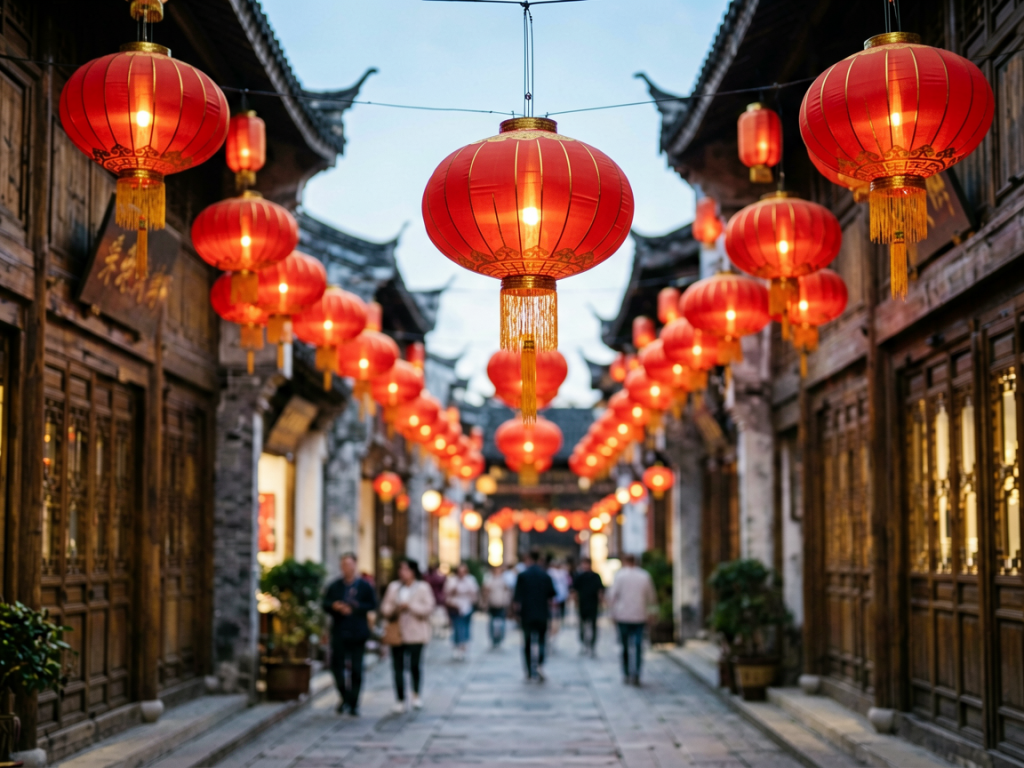
I walked past a tiny noodle stall in Chengdu last Tuesday. It was past one in the morning. The streetlights were flickering weakly against the damp pavement. A single red lantern swung gently above the closed wooden counter.
I stopped and watched it for a solid minute. The steam had long cleared into the cool air. The owner had already counted his cash and headed home. Yet that lantern refused to go out.
It got me thinking hard. Why do we leave them burning long after the register stops ringing? Sound interesting?
It’s not just about letting you know they’re open
I’ll be honest. My first guess was pretty simple. I figured they just wanted to signal that business ran late. That’s a common assumption if you’ve never spent time here.
But I quickly learned that timing means something different in China. Many shop owners treat those lights as a quiet promise. They want the neighborhood to know their doors stay unlocked past midnight.
I remember walking through a narrow alley in Beijing during deep winter. My hands were absolutely numb. I spotted a warm glow spilling onto the fresh snow. A hotpot joint had just flipped the sign to open.
The menu changed completely when the sun went down. I tried a spicy beef skewer there once. It cost twelve yuan. The meat melted right off the bone.
Those lanterns also serve a practical purpose for delivery riders. I’ve watched hundreds of them park their scooters outside glowing storefronts. They rely on that steady red light to find a pickup spot in the fog.
Without it, half the takeout orders would get lost. That’s a pretty big deal when your livelihood depends on finding a door in the dark.
A quiet nod to centuries of tradition
Go back far enough, and you’ll see these lights meant something entirely different. I spent a rainy afternoon at the Shanghai Museum recently. The curator pointed out wooden frames from the Song dynasty.
They hung outside tea houses and merchant stalls. The original versions used real candles inside bamboo tubes. Carrying them around was actually pretty dangerous.
Fire safety laws changed things fast. I laughed when I realized my ancestors were basically juggling open flames while haggling over silk prices. The risk was absolutely real.
People switched to oil, then kerosene, and finally electricity. The shape stayed exactly the same though. Nobody wanted to mess with perfection.
I bought a small replica for my kitchen shelf in Guangzhou. It costs around forty yuan at the local craft market. The paper feels thin, but it holds up surprisingly well.
Leaving them lit overnight is just a modern habit born from old routines. Shop owners respect the lineage. They know what those shapes represent beyond basic illumination.
Even when the cash drawer sits empty, the light keeps the memory alive. It’s a quiet tribute to merchants who built streets brick by brick.
Feng shui, luck, and the midnight glow
Let’s talk about energy flow. I’m no feng shui master, but I’ve listened to enough older shopkeepers to know it matters. They treat every corner of their space like a living thing.
Red symbolizes fire and rapid growth. I’ve seen plenty of business owners place that color exactly where money enters the store. They believe it pushes away bad luck.
Keeping the light on overnight isn’t just superstition. It’s a daily practice. I chatted with a guy who runs a hardware store near my apartment. He swears the light stays on to invite wealth.
“If the shop sleeps in the dark,” he told me over tea, “then prosperity takes a nap too.” Fair point. It sounds poetic, but it’s actually very practical psychology.
You feel more confident when your entrance looks welcoming. Customers subconsciously trust a place that takes care of its appearance. That confidence translates directly into sales.
I’ve noticed this pattern everywhere. Street vendors in Xi’an keep their canopies bright. Even the smallest dumpling stands refuse to let the red plastic cover go unlit.
It creates a sense of safety, too. I’ve walked home alone at two am countless times. That steady glow acts like a tiny lighthouse in a sea of shadows.
Muggers prefer darkness. Thieves hate visibility. A lit storefront signals that someone is still watching. It’s a subtle deterrent that works without saying a word.
Modern shops keep the old ways alive
Everything changed when LEDs took over. I remember buying my first rechargeable lantern set online. The price was ridiculously low compared to the old glass ones.
Now almost every convenience store uses those sleek panels. The color stays true, but the warmth is gone. I miss the slight flicker of early bulbs. It felt alive.
Yet the core idea remains untouched. I visited a boutique hotel in Hangzhou last month. The lobby looked totally modern. The exterior still displayed traditional red cylinders.
The manager explained they keep them on twenty-four hours. “It tells guests we never really close,” she said. Smart branding, honestly.
Even tech companies follow the rule. I passed a smartphone repair shop in Shenzhen that glowed red all night. The neon sign buzzed softly. I dropped my phone there once.
They fixed a cracked screen in twenty minutes. The bill was eighty-five yuan. Fast service, fair price, and a brightly lit workspace that made me feel safe.
City planners actually regulate these lights now. I read a local news article about new guidelines. They require businesses to keep minimum brightness levels after ten pm.
The goal is straightforward. Reduce accidents. Boost community morale. Keep streets feeling alive. I appreciate rules that make sense instead of just adding paperwork.
Social media hasn’t killed the tradition either. I watch younger owners adapt it constantly. They swap paper for polycarbonate. They add smart timers. They even link them to street cameras.
Progress doesn’t mean erasing the past. It means updating it. Those red lanterns prove you can upgrade without losing soul.
I always look forward to my evening walks. The city transforms after sunset. I spot a dozen different shades of red glowing from shop fronts.
Each one tells a different story. Some belong to families running stalls for three generations. Others belong to recent grads testing the market.
The common thread is obvious. Light equals life. Darkness equals stagnation. I don’t think that mindset will fade anytime soon.
If you visit China, take the time to wander after dinner. Leave the main roads behind. Turn down any alley that smells like star anise or fried dough.
You’ll see exactly what I mean. Those red lanterns hanging outside Chinese shops aren’t decorations. They’re promises. Promises that someone cares. Promises that good fortune waits for you tomorrow.
I’ll probably never stop looking at them. They remind me that some traditions survive simply because they work. Simple, effective, and deeply human. Trust me, you’ll notice the difference the moment you step outside.