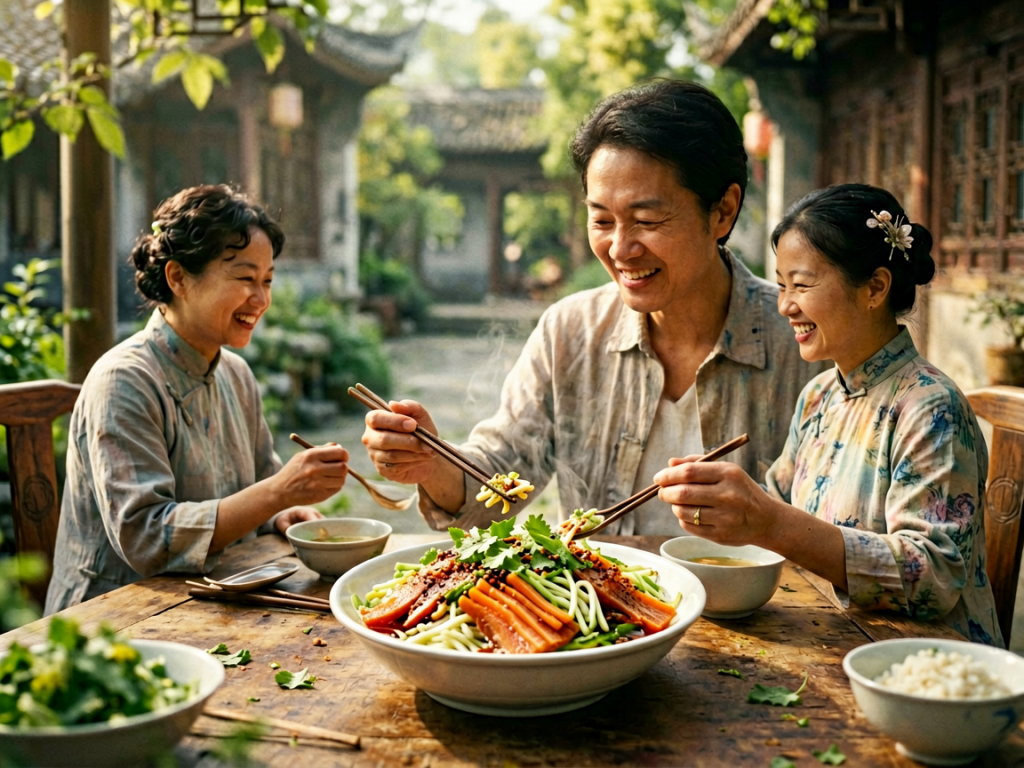
The Forty-Five Minute Sprint
I still remember my first week teaching at a language center in Hangzhou. The clock struck eleven forty-five, and eighty employees vanished into the stairwell like water draining from a tub.
We didn’t pack cold wraps or stare blankly at our laptops. We rushed to the street-level eateries across the plaza to catch food while it was actually steaming hot.
That frantic rhythm defines the average Chinese workday lunch. Schools, factories, and corporate towers carve out exactly forty-five to sixty minutes for the midday break.
It sounds cramped until you factor in walking distances, paying for meals, finding a seat, and wiping your mouth before clocking back in.
You quickly learn to move efficiently. You learn to appreciate a well-organized serving line. And you learn why the daily specials actually matter instead of being ignored.
Hot Food Comes First, Always
Look, I’ll be honest. When I first arrived here, I assumed lunch meant grabbing a convenience store rice ball and typing through a dull Tuesday afternoon.
Chinese families and office workers rarely tolerate cold deskside meals. The entire approach flips upside down the moment you step into a neighborhood restaurant or a workplace cafeteria.
Steam billows off stainless steel counters. Woks roar like jet engines. The heavy aroma of scallion oil, fermented black beans, and fresh chili peppers pulls you toward the counter.
Most people order what locals call he fan, which simply means paired rice or noodles with a hot dish.
You get a small mound of white rice, sometimes mixed with barley or millet, plus one vegetable and one meat option.
I tried a slow-braised pork belly dish at a tiny stall near my old apartment in Chengdu once. It cost twenty-two yuan. I’m still dreaming about that rich sauce soaking into the grains.
Sound interesting? It’s not just about filling your stomach. Temperature dictates everything in traditional Chinese dietary practice.
Lukewarm food supposedly strains the digestive system. So kitchens prioritize freshly cooked plates over pre-packaged alternatives.
Even during July heatwaves, you’ll watch people sip boiling jasmine tea instead of gulping ice water. The body expects warmth, and the street vendors deliver it reliably.
Who Actually Cooks on Weekdays?
Here’s the thing. Plenty of foreigners imagine every Chinese mother packing a beautiful bamboo lunchbox every single morning before dawn.
That mental picture barely survives contact with reality anymore. Two-career households dominate major cities. Nobody has the bandwidth to prep elaborate multi-course bento boxes.
Communities responded by building an entire ecosystem of affordable midday dining. You’ll notice the community canteens multiplying across every residential compound now.
They charge roughly fifteen to twenty-five yuan for a complete plate. The setup feels nostalgic, yet it runs on modern efficiency.
I watched my neighbor Uncle Zhao eat there almost every Wednesday and Friday. He carries his own enamel bowl, points at two stir-fries and a clear broth, and chats with the cashier about her granddaughter’s college entrance exam.
It tastes exactly like home cooking because experienced retirees handle the actual preparation. They keep oil measured, salt restrained, and vegetables crisp.
Some families absolutely still pack leftovers. I’ve eaten my share of Monday’s winter melon soup because nobody wanted to brave the morning market again.
Others rely on the narrow alleys lined with noodle shops and dumpling stands near financial districts. A quick bowl of hand-pulled lamb noodles takes four minutes and costs fourteen yuan.
Right? The whole system works because it respects convenience without sacrificing basic nutrition.
Nobody wants to survive on dry crackers or stale pastries until dinner rolls around.
Why The Western Model Falls Flat Here
To be fair, I understand how cold lunches became standard across Europe and North America. Industrialization shifted work patterns. Refrigeration wasn’t universal until recently.
But modern China bypassed that era entirely. Climate-controlled buildings, instant delivery networks, and dense neighborhood food streets completely rewired midday eating habits.
The biggest gap isn’t really the ingredients themselves. It’s the underlying philosophy toward the midday break.
In many Western offices, lunch functions like refueling. You inhale a protein bar while drafting spreadsheets. You treat rest as wasted time.
Chinese workplaces usually encourage actual separation between morning grind and afternoon tasks. I’ve watched senior managers clear their entire desks, step onto the rooftop terrace, and nap for twenty minutes after eating.
It’s healthier than you’d expect. A proper hot meal stabilizes blood sugar. Your metabolism actually awakens instead of struggling through fatigue.
Compare that to grinding through a turkey sandwich at your keyboard while fielding phone calls. The physiological difference is massive.
One leaves you sluggish and bloated. The other leaves you sharp and ready to tackle complex problems.
I could be oversimplifying regional differences, but this pattern holds steady from Shenzhen to Xi’an. The culture treats recovery as essential infrastructure rather than optional downtime.
Employers adapt accordingly. Many tech firms schedule lunch meetings instead of conference room seminars. Government departments literally close at noon and reopen at two.
You won’t see that flexibility in most American corporate calendars. But it makes perfect sense when you consider how much mental energy goes into planning a balanced hot plate.
Food operates as preventive healthcare again. Fresh market produce replaces processed convenience foods. Complex flavors replace bland uniformity.
How It Shapes Family Routines
Trust me, the lunch rhythm spills over into weekend habits in unexpected ways. Grocery shopping trips stretch longer because households plan around weekday cooking constraints.
Parents teach children how to identify seasonal vegetables at wet markets before they even learn long division.
Independent restaurants lean into this rhythm completely. You’ll find daily lunch sets that offer far better value than evening menus.
I remember ordering a combo at a small Hunan spot near my university housing. I picked spicy tofu and stir-fried morning glory with steamed rice.
The waitress handed me a tiny glass pitcher of warm water with dried plum slices. That small gesture stuck with me for years.
It isn’t about luxury or pretension. It’s about ensuring you feel supported during the most demanding hours of your day.
Urban planning actually adjusts around midday meal traditions now. Many employers offer flexible start times just to accommodate the traditional break window.
Delivery riders swarm residential towers at twelve o’clock like bees returning to hives. They balance dozens of insulated bags while dodging scooters and pedestrians.
It creates a unique urban symphony. You hear order tickets printing, spatulas scraping metal, and laughter echoing off concrete walls.
I never thought I’d miss that exact chaos. But missing it proved how deeply the routine shaped my weekly cadence.
What I Actually Miss Most
I genuinely never anticipated missing a simple midday meal this much after spending eight years abroad.
Not the noise, though there’s always plenty of chatter and clinking ceramic bowls.
I miss the certainty. You know exactly where to walk, what’s freshly cooked, and how much you’ll pay before you even sit down.
That reliability anchors your entire day. Morning stress dissolves while you chew slowly. Afternoon deadlines shrink against a warm stomach.
Western lunch culture treats eating like an administrative task. Here, it functions as a mental reset button.
A chance to reconnect with local ingredients. A reminder that pausing actually accelerates progress later.
If you ever visit, skip the airport terminal entirely. Find a crowded alleyway spot with mismatched plastic chairs.
Watch the regulars line up without checking their phones. Point at whatever looks shinier and fresher.
You’ll walk away heavier, calmer, and quietly amazed by how a straightforward midday meal sustains an entire society.