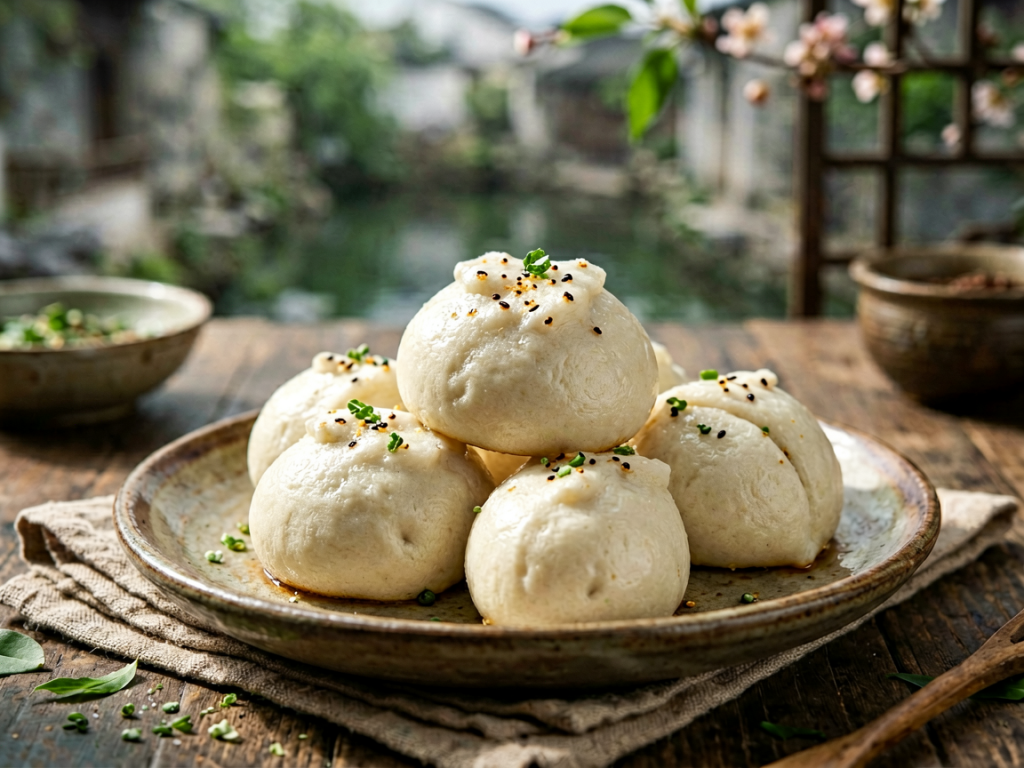
Here’s the thing about northern winters in China. They don’t just bite. They freeze the breath right out of your lungs before you even make it to the corner street.
I learned this firsthand back in 2016, standing outside a steam cart in Shijiazhuang at six in the morning. The air was sharp enough to crack stone, but the line wrapped around the block anyway.
Everyone wanted the same thing. Hot, pale dough that practically melted in your mouth. People call it Chinese bread, but that label feels woefully incomplete.
We’ve got steamed rolls, baked flatbreads, oil-fried knots, and sesame-crusted discs. The whole category defies Western baking logic. So let’s walk through the flour-dusted reality of how China actually eats grain.
What We Actually Call Bread Here
If you ask a local for zhonghua bing, they’ll look at you like you asked for a plastic spoon at a noodle shop.
Bread isn’t one single thing in this country. It’s a whole ecosystem of textures, cooking methods, and regional habits. The word bing itself just means flatbread, but locals stretch it to cover steamed buns too.
Trust me, the translation game gets weird fast. My first time ordering here, I asked for a bun and got something so dense it could double as a doorstop.
To be fair, that was probably meant to be a mantou. It’s plain, unfermented or lightly fermented wheat dough, steamed until it’s pillowy but chewy. It doesn’t taste sweet. It tastes like comfort on a stick.
You’ll see it wrapped around roasted sausages or stuffed with braised pork. It’s basically the ultimate blank canvas for whatever street vendor decides to fry or braise next.
I’m no baker, but I know a good base when I eat one. And this stuff holds up better than most artisanal sourdough I’ve tried back home.
The dough itself relies on simple ingredients. Wheat flour, water, maybe a pinch of yeast or baking soda. Sometimes they add a splash of lard for richness.
That lard makes all the difference. It gives the crust a subtle sheen and keeps the interior from drying out during the long steam cycles.
The Steamed Giants and the Baked Flatbreads That Crumble
Let’s talk about the actual weight classes. On one side, you’ve got the steamed giants. Those are the mantou and their cousins, the baozi.
Baozi are just mantou with a filling. Meat, vegetables, sweet bean paste. The dough rises in a bamboo steamer, absorbs the steam, and turns soft enough to tear apart with your hands.
On the other side, you’ve got the baked variants. This is where shaobing earns its stripes. It’s a layered, sesame-crusted flatbread baked in a tandoor-style oven.
The first time I bit into one, I actually stepped back. It shattered like a pastry shell. Layers of oil and flour separated with every crunch, leaving garlic oil and cumin on my fingertips.
I loved it immediately. It’s richer than standard naan but way more rustic than a croissant. You can get them plain, scallion-infused, or stuffed with ground meat.
Street carts usually roll these out by hand, stretching the dough thin before slapping it onto the oven wall. The smell hits you three blocks away.
There’s also the jianbing, though that’s technically a crepe rather than a true bread. Still, it lives in the same breakfast ecosystem. Egg, crisp cracker, cilantro, chili paste. It folds up like a savory taco.
Sound interesting? It only gets weirder from there. Try the you tiao. That’s fried dough sticks. They’re not leavened with yeast. They’re leavened with baking powder and hot oil, turning into golden, airy rods.
We dunk those in soy milk every single morning. It’s a pairing so old it feels like folklore now, but the texture contrast still blows me away.
I’ve watched grandpas balance three sticks on a spoon while sipping hot tea. They treat it like a casual snack, not a fancy café drink. The simplicity is what sells it.
Why Wheat Won the North (and Rice Stayed King in the South)
Geography wrote this menu. I spent three years trying to map out why certain grains dominate certain provinces.
Northern China has cold winters and dry summers. That climate suits wheat perfectly. The soil drains well, the sun bakes it hard, and the harvest comes in reliable bursts.
Rice needs flooding. It needs heat. It needs patience. So the south stuck with paddies, while the north turned to fields of wheat.
This isn’t just agricultural trivia. It shapes how people cook, eat, and even measure time. A northerner’s day starts with grain dough. A southerner’s day starts with rice congee.
I remember eating my way through Xi’an once. Every stall sold something flour-based. Noodles, flatbreads, dumplings, crusts. I started counting varieties just to pass the time.
By day four, I was genuinely confused. I’d eaten twelve different wheat preparations and still hadn’t hit repeat.
To put it bluntly, wheat dominates here because it stores well. Drought-resistant crops fed armies and peasants alike for centuries. Bread became survival food first, then comfort food second.
That history leaves fingerprints on the texture. Northern breads tend to be denser, heartier, built to stand up to wind and cold. Southern equivalents lean toward softer, finer crumb structures.
Surprised? Most travelers assume Chinese cuisine revolves around rice bowls. But step past the southern border, and the entire culinary compass flips.
I used to joke that wheat is just rice’s quiet rival. Turns out, it’s been winning quietly for millennia.
The milling technology matters too. Northern mills grind harder wheat into coarser flour. That grit gives the dough more chew and makes it perfect for folding and layering.
Southern mills produce fine powder. It’s better for delicate dumpling wrappers and silky rice cakes. Both work brilliantly in their own lanes.
How to Actually Eat It Without Feeling Like a Tourist
Ordering bread here trips up everyone. Even seasoned expats fumble the first few times.
The biggest mistake? Expecting sweetness. Chinese bread rarely plays the dessert card. Most varieties sit firmly in the savory or neutral territory.
If you want sugar, you buy tanghulu or a sweet red bean bun. But the everyday stuff? It’s built to soak up sauces.
Look for the crowd. That’s always the real menu. If a cart has three regulars chatting and two workers wolfing down plates, you’re in the right spot.
I learned this trick during my second year in Chengdu. I stopped asking for recommendations and started watching hands. I mimicked their order, paid cash, and finally got something that didn’t taste like hotel buffet bread.
Prices stay painfully low. You can grab a full breakfast of mantou, soy milk, and a pickled radish for under two dollars. The value is absurd.
Don’t be shy about tearing things apart with your hands. Forks aren’t really part of the culture here. Grip the crust, pull it open, let the steam escape.
It’s messy. It’s loud. It’s exactly how food should taste after sitting in a bamboo steamer since dawn.
I could be wrong, but I genuinely think the best bread stalls have zero signage. Just a chalkboard scrawled in marker, a metal bin of dough, and a chef who works faster than you can blink.
Eat fast. Chewing takes longer than the line moves. That’s just the rhythm.
Pro tip: ask for extra chili oil if you’re brave. The vinegar cuts the heat nicely, and the flour drinks it up without getting soggy.
The Morning Ritual That Ties It All Together
There’s something deeply human about watching a city wake up over boiling water and rising dough.
I’ve stood on countless balconies listening to the morning chorus. Metal clanging, diesel engines coughing to life, vendors shouting prices. Then the smell hits. Yeast, toasted sesame, rendered fat.
It smells like routine. It smells like stability.
China moves fast. The high-speed trains blur landscapes, the apps track everything, and the cities expand overnight. But the bread stalls stay rooted.
They’ve been here since my grandparents were kids. They’ll be here when I pack my bags to leave. I don’t doubt that for a second.
That consistency is refreshing. You can lose your phone, miss your train, or burn your tongue on a fresh baozi, but the line will still wrap around the corner at six.
I love that about it. It grounds you. It reminds you that not everything needs to upgrade to stay relevant.
Next time you visit, skip the convenience store packages. Walk three blocks to the steam carts. Ask for whatever the person next to you is holding.
Take a bite. Let the crust crack. Watch the morning light hit the flour dust in the air.
That’s where the real story lives. Not in cookbooks or travel guides. Right there, in your hands, still warm.