Honestly, I still get confused by this.
I moved to Shanghai nearly a decade ago. I thought I’d seen everything Chinese society had to offer. I thought I understood the unspoken rules of the street.
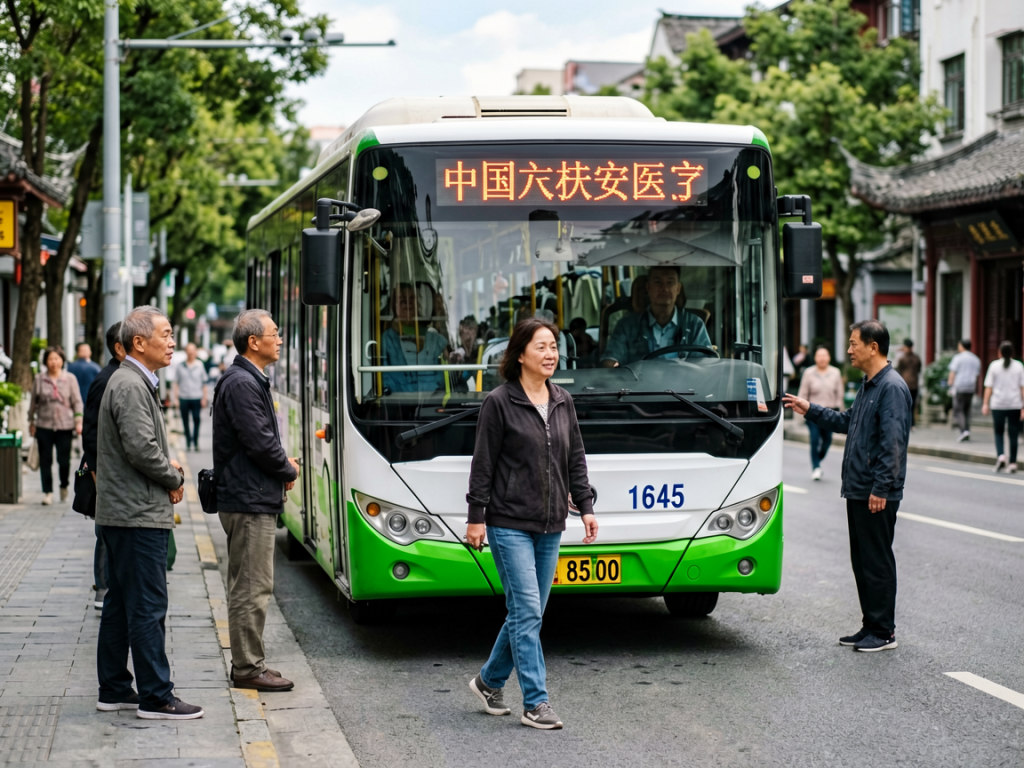
Then I stood at a bus stop during rush hour in downtown Beijing. It was 6:30 PM on a Tuesday. The air smelled of exhaust and roasted sweet potatoes. Thousands of people were waiting.
And yet, there was order. Beautiful, terrifying order. A single line stretched back from the curb. People didn’t cut. They didn’t push. They just stood there, shoulder to shoulder, silent and patient.
But cross the street? Forget it.
The moment you hit the pedestrian crossing, the social contract vanishes. Cars honk. People jaywalk. The zebra stripes look less like a law and more like a suggestion written in chalk on wet pavement.
Why does one side of the road demand military precision while the other side invites chaos? It’s not about discipline. It’s not about respect. It’s about something much deeper and stranger.
Let’s talk about the bus stop first. Because if you’ve never been there, you’re missing out on one of China’s greatest social experiments.
The Sacred Geometry of the Bus Stop
I remember my first week here. I was late for work. I ran toward the nearest bus stop, panting and sweaty. I saw a gap in the line.
So I stepped into it. Big mistake.
I felt eyes burning into my back. Not angry eyes. Just disappointed ones. Like I’d kicked a puppy. The person behind me sighed audibly. It wasn’t a threat. It was a correction.
Here’s the thing about Chinese bus stops. They aren’t just waiting areas. They are meritocracies of patience.
You earn your spot. You don’t buy it. You don’t shout for it. You wait. And because everyone waits, no one has to shout.
This isn’t just politeness. It’s efficiency. Pure, calculated efficiency. In a country where public transport carries billions of passengers annually, the queue is the only thing keeping the system from collapsing.
If everyone pushed, the buses would never move. The doors would jam. The heat inside would become unbearable. The queue prevents this. It creates a buffer.
I’ve watched this happen in Guangzhou, Chengdu, and Xi’an. The structure is identical. The line forms before the bus even arrives. Sometimes, the line is so long it blocks the sidewalk entirely.
People stand on the curb edge. They lean forward slightly. But they don’t cross the invisible threshold until the bus stops. Then, and only then, does the movement begin.
It’s rhythmic. Like breathing. In, out. In, out. Boarding happens in seconds. No shoving. No arguments.
I love this part of the culture. It’s peaceful. It’s respectful. It makes me feel safe, even when I’m just a foreigner who doesn’t speak the language fluently.
But then I walk three blocks away. I try to cross the street. And suddenly, I’m in a war zone.
The Zebra Stripe Illusion
Crossing the street in China is an act of faith. Or madness. Depending on how you look at it.
I once stood at a crosswalk in Shenzhen. The light was red for cars. Green for pedestrians. I took a step.
A delivery scooter zipped past my ear. Then a taxi slowed down but didn’t stop. Then a grandmother walked confidently into the middle of the lane, waving her hand at me like, come on, hurry up.
I froze. I looked left. I looked right. I looked back at the green light. It felt like a joke.
The crosswalk lines are there. They are painted clearly. But they hold no power. Not unless everyone agrees they do.
And they don’t agree. At least, not consistently.
In the US, if you’re in the crosswalk, cars stop. Period. It’s the law. It’s cultural expectation. It’s survival instinct.
In China, the crosswalk is a negotiation.
You have to signal intent. You have to make eye contact with the driver. You have to show you’re willing to die if necessary. Only then might the car stop.
This isn’t to say it’s dangerous. Not really. Drivers are skilled. They swerve. They brake hard. They anticipate movement before it happens.
But it feels chaotic. It feels like every individual is solving the traffic problem alone, rather than following a shared rule.
Why is the bus stop so strict but the crosswalk so loose?
It comes down to control. And consequences.
The Power of the Collective vs. The Individual
I’ve spent years trying to crack this code. I talk to locals. I read articles. I observe.
The bus stop works because it’s collective. Everyone is in the same boat. Literally.
When you queue, you’re participating in a group effort. You’re maintaining the flow. If you cut, you harm everyone else. The social pressure is immediate and visible.
You see the line. You see the people. You feel the weight of the crowd.
Breaking the queue means breaking trust with your neighbors. In a society that values harmony, that’s a heavy sin. It’s not illegal, usually. But it’s socially fatal.
Crossing the street is different. It’s individual.
There’s no line. There’s no group consensus. Each person decides their own pace, their own risk tolerance.
One person runs. One person strolls. One person waits for a gap. All at the same time.
This lack of uniformity creates noise. It creates confusion. But it also creates freedom.
Some people argue this is bad. That it’s unsafe. That it shows a lack of civic duty.
I disagree. I think it shows a different kind of duty. One focused on adaptability.
In the bus stop, rigidity serves the group. In the street, flexibility serves the self.
And maybe that’s okay. Maybe we need both.
Think about it. When you’re waiting for something big–like a bus, a train, or even a job interview–you want order. You want predictability. You want to know your place.
But when you’re moving through space, navigating life, dealing with sudden changes–you want agility. You want to react fast. You want to find your own path.
Chinese culture seems to understand this distinction intuitively. We queue for the macro events. We improvise for the micro moments.
Modern Shifts and Digital Influence
Things are changing, though. Fast.
I’ve noticed a shift in the last few years. The crosswalk culture is becoming more structured. Especially in tier-one cities like Shanghai and Beijing.
Traffic cameras are everywhere now. Fines for not stopping at crosswalks are higher. Police officers stand at major intersections during peak hours.
And there’s the phone. Oh, the phone has changed everything.
You can’t ignore the person texting while walking. You can’t ignore the driver checking WeChat while driving. Distraction is the new normal.
But ironically, digital tools are making the bus stop even more precise.
Apps show you exactly when the next bus is coming. They tell you how crowded it is. They tell you which door to stand near.
This information reduces anxiety. Less anxiety means less pushing. People know their turn. They know their spot.
I tried using a bus app in Hangzhou recently. It worked flawlessly. I boarded calmly. I sat down without standing. I arrived on time.
It was a smooth experience. Exactly what the queue promises.
But crossing the street? Still wild. I still hesitate. I still check twice. I still feel that tiny spike of adrenaline when a bike whizzes by.
Is it scary? Yes. Is it exciting? Also yes.
There’s a raw energy to Chinese streets that you don’t find elsewhere. It’s unfiltered. It’s alive.
Compare it to Tokyo, where the crosswalks are eerily quiet and obedient. Or New York, where the chaos is loud and aggressive.
China sits somewhere in between. It’s passive-aggressive chaos. You expect the car to stop. It might. It might not. You have to watch it closely.
It requires attention. Full, total attention.
What This Teaches Us About Order
I used to judge the crosswalk behavior. I thought it was rude. I thought it was inefficient.
Now I see it differently. I see it as a reflection of how Chinese people view authority and rules.
Rules apply when they are enforced. Rules apply when they benefit the group visibly. Rules apply when they are simple and binary.
Queuing is binary. You are either in line or you are not. Easy to enforce. Easy to see.
Crossing is complex. Speeds vary. Distances vary. Intentions vary. Hard to enforce. Hard to predict.
So people default to intuition. Trust your eyes. Trust your gut. Trust the person next to you.
It’s a communal trust, even in the absence of a line.
We assume the other drivers will see us. We assume the other pedestrians will move aside. We assume the worst won’t happen.
This assumption builds resilience. It teaches people to be aware. To be present.
In a world of screens and distractions, being present on the street is a skill.
Maybe that’s why the bus stops work so well. Because they force you to wait. To pause. To observe.
You can’t rush the queue. You can’t hack the line. You just have to stand there.
It’s meditative, in a way. A daily practice of patience.
And when you finally get on the bus, you carry that calmness with you. You’ve earned your seat.
But when you cross the street, you leave that calmness behind. You enter the flow. You join the dance.
It’s not contradictory. It’s complementary.
The Final Verdict
So, why the difference?
Because order isn’t universal. It’s contextual.
Chinese people queue precisely because the context demands it. The stakes are high. The group is tight. The consequence is shame.
They ignore crosswalk lines because the context allows it. The stakes are personal. The group is diffuse. The consequence is risk.
Neither is better. Both are adaptive strategies.
As an outsider, it took me years to stop seeing the crosswalk chaos as a failure. Now I see it as a feature.
It keeps me alert. It keeps me humble. It reminds me that I am not always right, and that others are navigating their own paths.
And the bus stop? That keeps me grounded. It reminds me that collective action works. That patience pays off.
Together, they form a complete picture of urban life in China. Structured yet fluid. Strict yet flexible.
Next time you’re in Beijing or Shenzhen, try this experiment.
Stand in the bus line. Feel the silence. Enjoy the order.
Then, take a deep breath. Step onto the crosswalk. Watch the cars. Judge the gaps. Move with confidence.
You’ll feel two sides of the same coin. Two ways of being human in a crowded world.
It’s confusing. It’s beautiful. It’s uniquely Chinese.
And I wouldn’t trade it for anything.