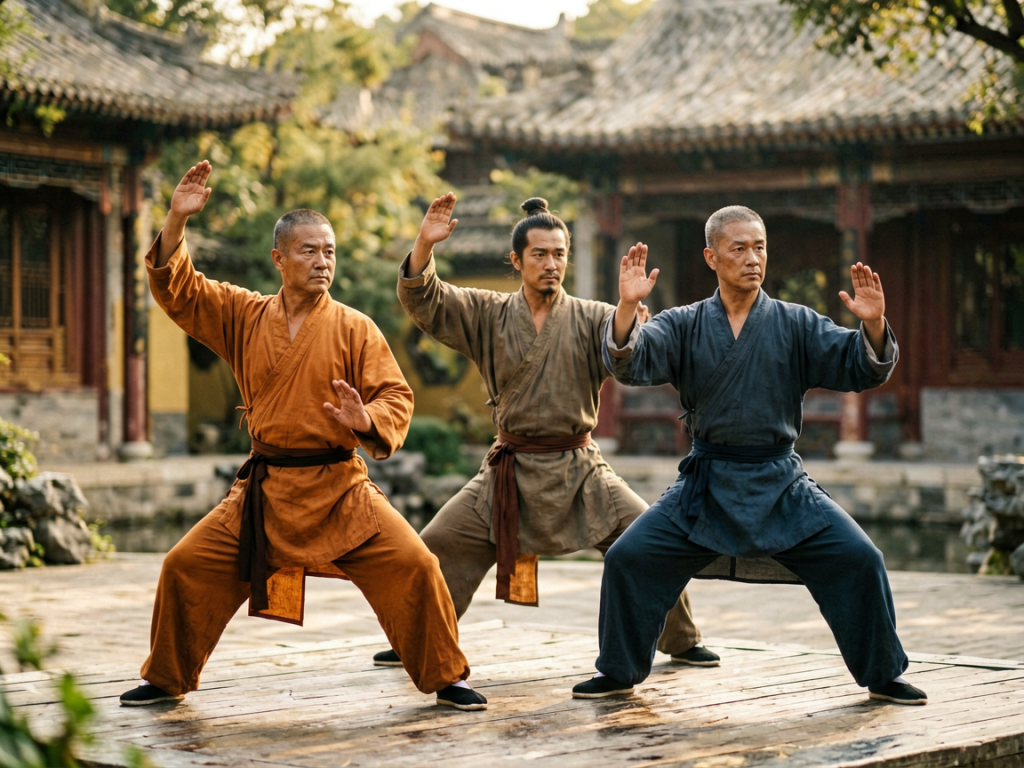
I still remember the first time I stood in the courtyard of the Shaolin Temple in Henan province. It was hot. Like, brutally humid hot. The air smelled of incense and old sweat, which sounds gross until you realize it’s the scent of thousands of years of physical discipline.
A monk swung a staff so fast it cracked like thunder. He wasn’t posing for a movie poster. He was breathing heavy, eyes locked on an invisible opponent. I was just standing there, holding my water bottle, feeling utterly out of place.
That was the moment I realized everything I thought I knew about Chinese martial arts was basically a Disney approximation. People love to argue over which school is “better.” They fight online about Shaolin vs Wudang like it’s a sports rivalry. But the reality is way more nuanced.
I’ve lived in China for eight years now. I’ve watched beginners struggle with basic stances in Beijing parks. I’ve seen masters move with fluid grace that defies physics. And I’ve finally started to understand why these two schools are so different, yet equally vital.
The External Power of Shaolin
If Shaolin is the hammer, Wudang is the water. That’s the easiest way to start wrapping your head around the difference. Shaolin Kung Fu is external. It’s about building muscle, bone density, and explosive power.
When you train at Shaolin, you’re drilling forms. Repetition is king. You’ll spend hours doing horse stances until your legs shake uncontrollably. You’ll punch the air until your knuckles feel like they’re burning. It’s hard work. Painful work, sometimes.
I tried a basic Shaolin conditioning class in Zhengzhou a few years back. My instructor, a burly man named Master Chen, didn’t smile much. He made us run laps. Then we did push-ups on our knuckles. Then more running.
“Strength comes from discipline,” he told me, wiping sweat off his brow. “The body must be strong to hold the spirit.”
This approach is rooted in Buddhism, specifically Chan Buddhism. The temple monks believe that physical suffering purifies the mind. It’s not just about fighting; it’s about forging character. Every strike, every block, every jump is meant to break down your ego.
You can see this influence in the movements themselves. Shaolin techniques are often linear. They go straight from point A to point B. A punch is a punch. A kick is high and fast. It’s efficient, direct, and terrifyingly powerful if executed correctly.
Think of the famous Iron Palm technique. Monks spend years striking sandbags filled with iron filings. Their hands become calloused and tough enough to break bricks. To be fair, I’m no expert, but watching a master demonstrate this without getting hurt is genuinely impressive.
The philosophy here is straightforward: overcome weakness through sheer force of will and physical training. It’s accessible. You don’t need to understand complex metaphysics to start punching. You just need to show up and suffer a little.
The Internal Flow of Wudang
Now, let’s talk about Wudang. If you walk into a traditional Wudang training hall, it feels completely different. The lighting is softer. The music might be playing. There’s less shouting, more breathing.
Wudang is internal. It focuses on Qi (energy), Yin-Yang balance, and Taoist philosophy. The goal isn’t to overpower an opponent but to redirect their energy. It’s about being soft where others are hard.
I visited the Wudang Mountains in Hubei province last autumn. The mist hung low over the peaks, creating this ethereal atmosphere. Practitioners were moving slowly near the Golden Summit. They looked like they were dancing.
At first glance, it seems slow. Boring, even. Why would anyone want to punch like that? But look closer. The movements are circular. They flow into one another without interruption. It’s Tai Chi’s older, cooler cousin.
Master Li, a Wudang practitioner I met during that trip, explained it to me over tea. “Shaolin uses the fist,” he said, stirring his cup. “Wudang uses the finger. Not to hit, but to guide.”
This distinction is crucial. In Wudang, you learn to relax your muscles. Tension kills speed and drains energy. By staying loose, you can react faster than someone who is tensed up and ready to strike.
The famous Wudang Sword is a perfect example. It’s lightweight, flexible, and used for cutting and thrusting with minimal effort. You don’t hack at your opponent; you slice through their defenses with precise, economical movements.
It requires a different kind of fitness. You’re not building bulk. You’re building connectivity. It’s about learning how your joints rotate, how your weight shifts, and how your breath drives your movement.
Some people think internal arts are weak. They’re wrong. When a Wudang master redirects a punch from a larger, stronger opponent, it’s because they’ve spent decades understanding leverage and timing. It’s mental as much as physical.
History and Origins Matter
You can’t separate the styles from their histories. They grew up in different environments with different religious foundations. This shaped everything about them.
Shaolin is tied to the Shaolin Temple, founded in the 5th century. Legend says Bodhidharma taught exercises to monks who were too weak to sit through long meditation sessions. Whether that story is true or not, the connection between Zen Buddhism and martial arts is undeniable.
Wudang traces its roots to Taoism. The mountains are considered sacred, home to deities and immortals. Zhang Sanfeng, the legendary founder, supposedly created Tai Chi after watching a snake fight a crane. The emphasis is on harmony with nature, not domination over it.
This historical split explains why Shaolin looks flashy in movies. It’s dynamic, colorful, and action-packed. Wudang is subtle, meditative, and often misunderstood by Western audiences who expect kung fu to be all explosions and shouting.
But both schools have evolved. Modern Shaolin incorporates gymnastics and acrobatics to entertain tourists. Modern Wudang has adapted for self-defense and health preservation. The lines are blurring.
I’ve seen Shaolin monks perform splits and backflips that defy gravity. I’ve also seen Wudang practitioners deflect blows with minimal movement. Neither is “pure” anymore. Both are living traditions adapting to the modern world.
Which One Should You Choose?
This is the question everyone asks. Should I learn Shaolin or Wudang? Honestly, it depends on what you’re looking for. Don’t pick based on hype. Pick based on your personality.
If you’re competitive, energetic, and like seeing tangible results quickly, try Shaolin. You’ll build strength. You’ll learn to fall safely. You’ll feel a rush of adrenaline when you land a good kick. It’s great for confidence.
If you’re introspective, patient, and interested in mindfulness, choose Wudang. It’s excellent for stress relief. It improves balance and flexibility. You’ll learn to calm your mind while moving your body. It’s slower to master, but the depth is rewarding.
I tried both. At first, I gravitated toward Shaolin because it felt more like “real” fighting. I wanted to feel strong. But after a month, my knees hurt, and I was frustrated by how hard it was to relax.
Then I gave Wudang a shot. The first week, I felt silly. Moving so slowly felt unnatural. But by the third week, I noticed something weird. I wasn’t holding my breath during complex sequences anymore. I was calm. Centered.
My instructor said, “You are learning to listen to your body.” It sounded cheesy, but it stuck. Wudang taught me to respect limits rather than crush them.
The best part? They complement each other. Many serious practitioners study both. External power needs internal structure to prevent injury. Internal energy needs external strength to be effective.
Don’t treat them as enemies. Treat them as two sides of the same coin. Understanding both gives you a complete picture of Chinese martial arts.
The Cultural Context
There’s a lot of commercialization around these schools now. Tourists flock to Dengfeng for Shaolin shows and to Wudanshan for spiritual retreats. It’s easy to get caught up in the tourist trap version.
But dig deeper. Talk to the locals. Ask the monks. You’ll find that for many, this isn’t about combat. It’s about lifestyle.
In China, kung fu is seen as a form of moving meditation. It’s part of daily life for many elders. You see it in parks every morning. Older women doing gentle Tai Chi. Men practicing Taiji sword.
Shaolin has also become a cultural brand. The movies, the video games, the merchandise. It’s everywhere. But behind the brand is a genuine spiritual practice that emphasizes compassion.
Wudang remains more obscure to the general public. It’s associated with Daoist alchemy and longevity practices. It’s quieter, more exclusive. But that doesn’t make it better. Just different.
I’ve found that respecting the tradition means understanding its roots. It’s not just about throwing punches. It’s about embodying values like resilience, patience, and harmony.
My Final Thoughts
So, who wins in the Shaolin vs Wudang debate? Nobody. It’s a false dichotomy. Comparing them is like comparing rock and roll to jazz. One is loud and driving. The other is smooth and complex.
Both require dedication. Both offer profound benefits. And both are deeply connected to Chinese philosophy and history.
If you’re thinking of starting, don’t overthink it. Just pick a school nearby. Try a class. See how your body feels. Do you like the heat of the workout or the cool of the breath control?
I’m no master. I’m just a guy who loves China and its culture. But I know this: training makes you better. It doesn’t matter if you’re hitting a bag or flowing like water.
The real difference is in how you carry yourself afterward. Shaolin teaches you to stand tall. Wudang teaches you to flow with the wind.
Maybe you need both. Maybe you need neither. But whatever you choose, do it with respect. And maybe, just maybe, you’ll find a bit of peace in the chaos of modern life.
That’s worth more than any belt or badge.