You know that feeling when you pull away from the chaotic highway traffic and suddenly, the world just… stops? That’s exactly what happened to me when I arrived in Zhaoxing.
I was driving back into China after a few years abroad. My head was still spinning with European bread and quiet streets. Then I hit Guizhou province. The roads got narrow. The hills got steeper. And suddenly, I was surrounded by green so intense it looked photoshopped.
This isn’t just another tourist trap. I’ve seen enough of those. This is the heart of the Dong people, an ethnic minority group that’s been building incredible wooden architecture for centuries without using a single nail.
If you’re looking for a slice of China that feels alive, not museum-curated, this is it. Let’s talk about why Zhaoxing is worth the journey.
That First Sight of the Drum Towers
I’ll be honest, I was skeptical at first. I’d heard about the famous villages, and usually, that means overpriced souvenirs and staged performances. But then I saw them.
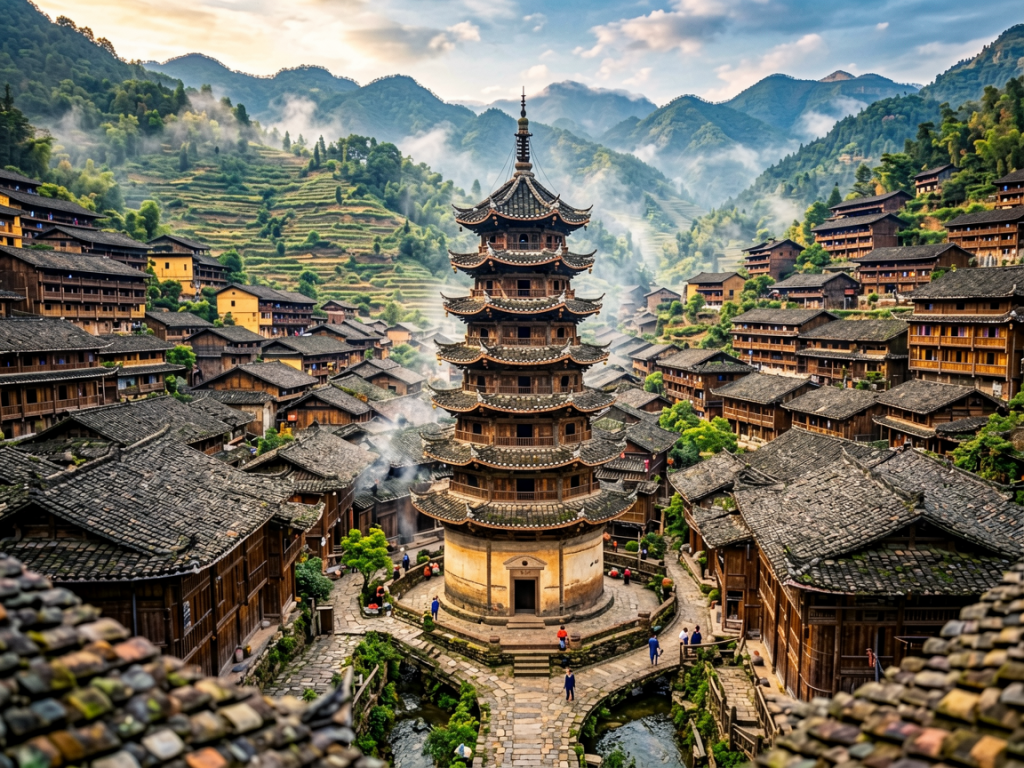
The Drum Towers. They rise out of the center of the village like wooden skyscrapers. There are five of them in Zhaoxing. Each one is distinct, carved with intricate patterns that tell stories of the Dong creation myths.
The tallest one, Xingrong Tower, stands at nearly thirty meters. It’s a masterpiece of traditional engineering. The builders interlock beams and columns using mortise and tenon joints. No glue. No nails. Just gravity and genius.
Standing at the base, looking up, makes you feel small. Not in a bad way. In a humble way. You realize that people built this with their bare hands over months, maybe years.
I spent an hour just wandering around the plaza in front of the towers. Locals were sitting on benches, drinking tea, chatting. Kids were running around with smartphones, which is a funny contrast to the ancient wood surrounding them.
That’s the thing about Zhaoxing. It’s not frozen in time. It’s living history. The old and the new coexist here, awkwardly sometimes, but mostly harmoniously.
Walking the Emerald Staircases
You can’t stay in the village all day. You need to see the rice terraces. They start right behind the houses and climb up the mountainside.
In spring, the fields are filled with water. It reflects the sky, turning the landscape into a giant mirror. In autumn, everything turns gold. I went in early summer, so it was a lush, dripping green.
We rented bikes from a local family near the entrance. They charged us twenty yuan a piece. Fair price, considering they offered us cold bottled water and told us where the best photo spots were.
Getting up the hill wasn’t easy. The paths are steep and uneven. My legs burned within ten minutes. But the view? Totally worth the sweat.
You look down and see the village nestled in the valley like a secret garden. The rivers snake through the rice paddies, connecting the water systems. The Dong people have managed these water sources sustainably for generations.
It’s quiet up there. Just the wind in the bamboo and the distant sound of a cowbell. I sat on a rock for twenty minutes and didn’t move. It was the first time in months I felt completely still.
Don’t rush the hike. There are plenty of villages along the terrace route. Gaoyao and Pingtang are smaller than Zhaoxing but offer equally stunning views. If you have time, visit one of them too.
Dinner, Drink, and Song
After the bike ride, we were starving. Back in the village, we found a restaurant recommended by our guesthouse owner. He said it was “local style,” which usually means spicy, sour, and unforgettable.
The Dong cuisine is heavily influenced by the environment. Since they live in humid mountainous areas, they use lots of fermentation and spices to preserve food and boost health.
I ordered the Sour Fish Soup. It sounds weird if you’re not used to it. The fish is marinated in fermented rice and chili for weeks. When cooked, the broth is tangy, spicy, and rich.
It’s not like the sweet and sour dishes you might know from Western Chinese restaurants. This is complex. It hits your palate from every angle.
We also tried the Free-Range Pork. The meat was dark red and firm. It had a depth of flavor you just can’t get from factory-farmed pigs. Paired with sticky rice and pickled vegetables, it was perfect.
But the real highlight wasn’t the food. It was the singing.
Later that evening, the restaurant host invited us to join a communal singing session. It’s part of the Dong tradition called Grand Songs. These are polyphonic folk songs performed by large groups.
There are no instruments. Just voices. Deep bass notes holding the foundation while higher melodies weave around them. It sounds haunting and beautiful at the same time.
I couldn’t sing a note. I’m tone-deaf. But everyone clapped and cheered anyway. They handed me a cup of rice wine, which is sweet and strong.
We toasted to each other. Strangers became friends in an hour. That’s the warmth of the Dong culture. They welcome outsiders not as tourists, but as guests.
Why This Place Matters Now
I spend a lot of time thinking about what happens to these places when millions of people discover them. Zhaoxing is growing. More hotels are being built. More buses are arriving.
It’s a delicate balance. Tourism brings money, which helps preserve the old houses. But it also brings noise and change.
I’m glad I visited before it became fully commercialized. Or maybe it already is, and I’m just seeing the edges of it.
The key is to respect the culture. Buy things from local artisans, not the big souvenir shops. Eat at family-run restaurants. Learn a few phrases of Dong, even if it’s just hello and thank you.
It makes a difference. People notice when you try. And they respond with kindness.
One old woman I met, who was weaving hemp cloth, smiled when I asked about her technique. She showed me how she prepared the fibers. It took days. I bought a scarf. It cost fifty yuan. But the memory of watching her work is priceless.
Practical Tips for Your Trip
Getting there is part of the adventure. The nearest major city is Kaili. From there, you can take a bus or hire a driver. Buses are cheap but slow. They take about two hours.
Driving yourself gives you flexibility. The roads are winding, though. If you’re not confident with mountain driving, stick to the bus or hire a local driver for the day.
Accommodation ranges from basic guesthouses to boutique hotels. I stayed in a renovated ancestral home. It was rustic, with shared bathrooms, but the character was unmatched.
If you want luxury, there are newer options with air conditioning and private baths. But I’d recommend leaning towards the older, simpler stays. You’re closer to the rhythm of daily life.
Best time to visit? Spring and Autumn are ideal. Summer is hot and humid, but the greenery is peak. Winter is quiet and chilly. The terraces might be empty of water, but the atmosphere is peaceful.
Bring cash. Some smaller vendors don’t accept Alipay or WeChat Pay anymore, or their machines are unreliable due to spotty internet signals up in the hills.
And wear comfortable shoes. You’ll be walking on stone paths and dirt trails. Sneakers are fine, but waterproof hiking boots are better if it rains.
My Final Thoughts
I’m leaving Guizhou with a heavy heart. I could stay here forever. The pace of life is slower. The people are genuine. The landscapes are dramatic.
Zhaoxing isn’t just a destination. It’s an experience. It reminds you that there are parts of the world that haven’t been sold out yet.
We’ve become so accustomed to curated travel experiences. Instagrammable spots. Guided tours. Predictable outcomes.
This place offers none of that. It offers mud, sweat, loud music, strange food, and unexpected friendships.
It’s messy. It’s real. And that’s why I loved it.
If you’re planning a trip to China, skip the standard Beijing-Shanghai-Guilin triangle for a bit. Go south. Go into the mountains. Find the drum towers.
You won’t regret it. Trust me.