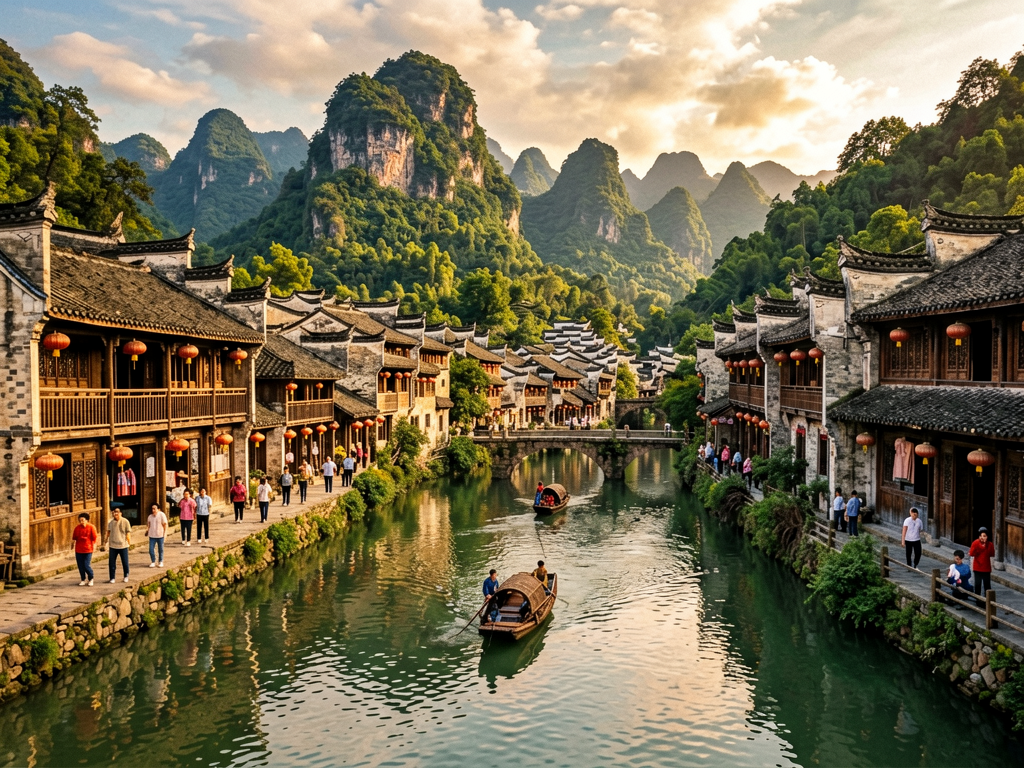
Chasing the Mist on the Tuo River
I’ll be honest. When I first heard about Fenghuang, I pictured a postcard. You know the kind–oversaturated colors, perfect lighting, and zero real-life grit. I was skeptical. Most ancient towns in China feel like movie sets designed for tourists who want a quick photo op before heading back to their hotel air conditioning.
But then I went. And stayed for three days.
There’s a specific moment around 6:00 AM that changes everything. The sun hasn’t quite burned off the mist clinging to the Tuo River yet. The stone bridges look like they’re floating on cotton. The shops are still shuttered, save for the old ladies selling steaming tofu pudding from wooden carts. It smells like wet stone, charcoal, and damp wood.
That’s when you realize this place isn’t just pretty. It’s alive.
We’ve been living in China for eight years now. We’ve walked the Great Wall at dawn and hiked Zhangjiajie until our legs shook. But nothing compares to the slow, quiet magic of waking up in Phoenix Ancient Town. It doesn’t ask for your money immediately. It asks for your patience.
Quick tip: Don’t book the tour bus. Take the train to Jishou East, then catch a local shuttle. It takes longer, but you get to see the actual Hunan countryside rolling by. It’s cheaper, too.
Forget the Main Street, Find the Quiet Alleys
Here’s the thing about Fenghuang that most guides miss. The main street along the river? It’s loud. It’s packed with selfie sticks and hawkers selling identical keychains. You can walk it in ten minutes. You don’t need a map for that.
The real town is behind it.
I found my favorite morning spot by accident. I’d wandered away from the riverfront, past the souvenir shops, into a narrow alleyway where the ground was paved with uneven grey stones. An elderly woman was sitting on a low stool, sorting through dried chilies. She didn’t look up. She just nodded when I passed.
That silence is rare in China’s tourist hubs. In places like Lijiang or Xidi, the commercial energy is so thick you can’t breathe. Here, the pace drags. And that’s exactly why you come.
We spent an entire afternoon just wandering up the hill toward the Chenji House. The climb is steep, especially in July heat. But halfway up, there’s a small tea house with a view that makes you forget your knees hurt. I drank jasmine tea that cost about 15 yuan. It wasn’t the best tea I’ve ever had, but sitting there watching the smoke rise from the cooking fires below? Priceless.
Don’t miss: The Drum Tower. It’s right in the center, but go late at night. The lighting changes, and the crowds thin out. It looks like a lantern hanging in the void.
Eat What Hurts (A Little Bit)
If you think Hunan food is just spicy, you haven’t eaten here. Hunan cuisine–Xiang cuisine–isn’t just hot. It’s fragrant, sour, and aggressive. It wakes you up.
My first meal in Fenghuang was a bowl of Beef Rice Noodles (Niuren Mifen). I ordered it “medium spicy.” Big mistake. The broth was a deep, oily red that shimmered under the streetlights. The beef was tender, sliced paper-thin. But the heat? It hit the back of my throat like a hammer.
I was sweating within five minutes. My lips were numb. I kept drinking anyway.
You have to try the Smoked Tofu. It’s dark, almost black, and chewy in a way that feels wrong until it tastes right. They fry it until it’s crisp on the outside, soft on the inside, then soak it in a spicy chili oil sauce. It’s cheap, too. Maybe 5 yuan for a packet. Perfect for snacking while walking back to your guesthouse.
And don’t leave without trying the Fish Head with Chili Pepper (Duo Jiao Yu Tou). It’s a whole fish head, steamed with heaps of pickled chilies and garlic. You crack the skull open and scoop out the cheeks. The meat is sweet, delicate, and completely overshadowed by the punchy, fermented spice.
Pro tip: Tell the waiter “wei la” (little spicy) if you’re not used to the heat. But really, lean into it. That’s the point.
Where to Sleep (And Why It Matters)
Accommodation in Fenghuang is tricky. If you stay right on the riverfront, you get the views but also the noise. Drunk tourists shouting at 2 AM ruins the romance fast.
We opted for a guesthouse tucked away in the Qinglongxia area, just a five-minute walk from the bridge. It was quieter. The owner, a guy named Lao Li, spoke broken English and excellent Mandarin. He let us sit on his balcony and drink baijiu while he told us stories about the Miao people who built the stilt houses.
Stilt houses, or Diaojiaolou, are the architectural star here. They perch over the water on wooden pillars. In the rain, it sounds like drumming. In the wind, it creaks. It’s immersive.
I highly recommend booking a room in one of these traditional structures. Yes, they might be older. Yes, the plumbing might be temperamental. But waking up to the sound of the river below, with the mist still curling up past your window, is worth every squeaky floorboard.
Budget note: You can get a clean, private room for 200-300 yuan per night. Luxury riverside spots run 800+. I stick to mid-range. The vibe is the same, your wallet is happier.
The Miao Culture You Won’t Find in Books
Fenghuang sits in the Xiangxi Tujia and Miao Autonomous Prefecture. This isn’t just a label. It means the local culture is distinct from Han Chinese norms.
During the weekend, we stumbled upon a small gathering where locals were practicing traditional folk songs. There were no stages, no tickets. Just neighbors sitting in circles, singing in harmonies that sounded hauntingly beautiful. The singers wore embroidered jackets and silver neck rings that chimed when they moved.
I tried to join in, but my voice cracked. The locals laughed, not mockingly, but warmly. Someone offered me a cup of rice wine. It was sweet, sticky, and potent.
This interaction felt real. In many tourist traps, cultural performances are staged for cameras. Here, it felt like we were guests at a family dinner. That’s the difference. That’s the soul of the place.
Respect check: Always ask before taking photos of people, especially elders. A smile and a nod go a long way. If they say no, respect it. No photo is worth breaking that trust.
How to Avoid the Weekend Crush
Look, I’m no expert at crowd control, but I know how to beat them. Fenghuang gets packed. Especially on Saturdays. The riverbanks become a sea of heads.
If you can, go Friday to Sunday. Or Sunday to Tuesday. I prefer the weekday stretch. The vendors set up their stalls slowly. The boats glide by without rushing. You can actually hear yourself think.
If you’re stuck with a weekend schedule, wake up early. Like, 5:30 AM early. By the time the tour groups arrive with their flags and megaphones, you’ll have already seen the sunrise, eaten breakfast, and explored the upper alleys.
Another trick? Rent a bicycle. Not the electric ones–they’re everywhere and annoying–but an old-school manual bike. You’ll zip through narrow paths that buses can’t access. It’s faster, easier than you’d expect, and surprisingly fun.
Warning: The cobblestones are slippery when wet. Wear good shoes. I’ve seen too many tourists twist their ankles running for the boat.
Why I’ll Keep Coming Back
There’s a reason I tell friends to skip the usual suspects. Beijing’s hutongs are lovely, but they’re expensive and crowded. Xi’an’s city wall is iconic, but it’s often choked with traffic noise.
Fenghuang strikes a balance. It’s accessible. You can get there in under four hours from Changsha or Zhangjiajie by car or train. It’s affordable. It’s visually stunning without feeling artificial.
Most importantly, it slows you down.
In a country that moves so fast, where high-speed trains connect cities in hours and digital payments happen in seconds, Fenghuang feels like a pause button. It forces you to walk slower, eat slower, talk slower.
Last week, I sat by the river with a cup of hot tea, watching a fisherman cast his net. He didn’t catch anything. He cast again. And again. He wasn’t in a hurry. Neither was I.
That’s the gift this town gives you. It reminds you that not everything needs to be optimized. Some things just need to be experienced.
So, pack your bags. Leave the itinerary at home. Go to the Tuo River. Get lost in the alleys. Eat something spicy enough to make you cry. And listen to the water.
It’s waiting for you.