The Mist, The Monkey, And The Mystery
I still remember the first time I saw the cliffs of Wuyishan. It wasn’t just the rock; it was the way the morning fog clung to those nine-hundred-foot pillars like wet cotton wool. You’re standing in the Yuhua Stream, bobbing gently on a bamboo raft, and suddenly you realize you’re floating past some of the oldest graves in China.
Most people come here for the tea. Fair enough. Da Hong Pao is legendary, and the roasting process is an art form. But if you stick around for two days, you’ll find the real story isn’t in the cup. It’s up there. In the hollows of those impossible limestone cliffs. These are the Cliff Tombs of the ancient Minyue kings.
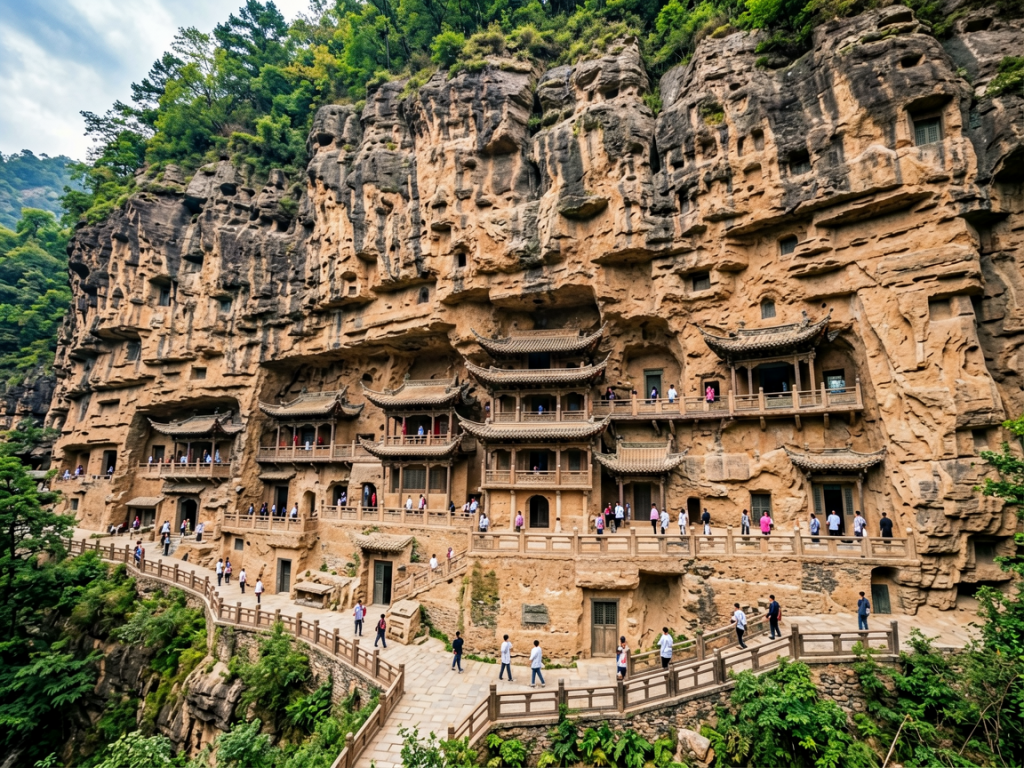
Honestly, it’s a bit spooky. And it’s beautiful. The locals say these tombs were placed there over two thousand years ago during the Han Dynasty. They look like they’ve been glued to the rock face by sheer willpower. I was skeptical at first about how many tourists actually make it up there. Most stay in the resort hotels and sip oolong while watching the sunrise from their balconies.
But trust me, if you hike, you’ll see the park without the crowds. You’ll breathe air that hasn’t been exhaled by ten thousand tour buses. Sound interesting? Good. Let’s get your boots dirty.
Why Two Days Is Enough (And Why You Need Them)
I’ve seen itineraries for Wuyishan that suggest three, four, even five days. That’s overkill unless you plan to open a tea shop. For the history buff and the hiker, two solid days is the sweet spot. It lets you cover the core attractions without rushing. It also gives you time to sit down, drink tea, and let the mountain soak into your bones.
Day one is all about the water and the lower peaks. You need to acclimatize. The humidity here is thick enough to chew. If you jump straight into the high climbs, you’ll burn out before lunch. Plus, the boat ride through Nine-Bend Stream is iconic. It takes about 90 minutes, and yes, it’s touristy. But it’s necessary. You’re seeing the geography that defined the Minyue kingdom.
On day two, you go vertical. This is where you tackle the cliffs. The scenery changes from lush greenery to stark, vertical stone. It’s a different kind of beauty. Less garden, more cathedral. I found myself stopping less often to take photos and more often just staring. The scale of these cliffs makes your problems feel very small. Right?
You won’t regret the pace. In China, speed is often mistaken for efficiency. Here, slowness is the point. The monks who lived in these caves didn’t rush. Neither should you.
Navigating The Bamboo Raft And The River
Let’s talk about the raft. It’s not just a ride; it’s a lesson in patience. The pole-men, or “boat drivers,” aren’t rowing. They’re pushing. It looks easy until you try it yourself, which I did once in my early days in China. I got flipped. Twice. My dignity took longer to recover than my clothes.
The route follows the Nine-Bend Stream. As you drift, keep your eyes on the tops of the cliffs. You’ll spot holes carved into the stone. Some contain coffins. Others are empty caves where hermits meditated. One of the most famous stops is the Tianyou Cave. It’s massive. Like, cathedral-sized. You can walk inside. The air down there is cool and smells faintly of damp earth and old wood.
I recommend hiring a private guide for part of this if you can afford it. The standard audio guide is boring. It reads like a textbook. A local guide will tell you the gossip. Who slept where? Which emperor got jealous? Why is that rock shaped like a turtle? These stories bring the stones to life. Without them, it’s just geology.
Also, watch out for the monkeys. They’re bold here. I had one try to steal my snack bag near the dock. It looked me dead in the eye, chattered, and then dropped the bag like it was too heavy. We’ve all been there. Just keep your food secured. They’re cute until they bite.
Up Where We Belong: The Cliff Tombs Experience
This is the meat of the trip. The Hanging Tombs. Accessing them isn’t trivial. You can’t just walk up. You need permits, you need to hire a specialized guide who knows the climbing routes, and you need a decent level of fitness. I’m no athlete, but I can climb stairs for hours. That’s what this feels like. Endless stairs leading to a ladder leading to a ledge.
We started our ascent at Tianyou Cave. The path winds up the side of the mountain. It’s shaded, which helps, but the humidity stays high. Sweat doesn’t evaporate here; it just sits on your skin. By the time we reached the first tomb, I was drenched. But then we saw it. A wooden coffin, preserved for millennia, resting in a niche high above the river.
It’s eerie. It’s profound. You’re standing on a tiny ledge, looking at death from two thousand years ago. The Minyue kings believed that height brought you closer to heaven. So they buried their dead at the top of the world. Literally.
The climb to the higher tombs involves metal ladders bolted into the rock. Yes, really. They look rusty. They hold your weight. Probably. I gripped the cold steel rungs and moved slowly. My heart was pounding, but not just from the exertion. It was the realization that people did this with bare hands and simple tools. There’s no safety harness. No ropes. Just skill and courage.
If you get scared, look down. Not way down, just a little. The view of the stream below is dizzying. It reminds you why you’re up there. To escape the mundane. To touch the divine. Or maybe just to say you climbed a cliff in Fujian province. Either works.
Pro tip: wear shoes with good grip. I wore sneakers that were fine for walking but terrible for scrambling. I slipped twice. Don’t be me. Buy the proper hiking boots before you arrive in the city.
Tea Tasting: Beyond The Hype
You can’t talk about Wuyishan without talking about tea. But skip the big factory brands. Go to a small family-run shop. I found one tucked away in a side street in the town center. It didn’t have a fancy sign. Just a pot boiling on a stove.
The owner, Uncle Chen, poured me a cup of Rou Gui. It smelled like cinnamon, but sweeter. More complex. The taste? It hit the back of my throat like a warm hug. Then it lingered. That’s the “Yan Yun” or rock rhyme. The mineral taste of the cliffs themselves.
We sat there for an hour. He didn’t try to sell me anything. He just talked about the harvest. How the rain last spring affected the leaves. How the farmers prune the bushes to control growth. It felt intimate. Real. In China, business is personal. If you treat them with respect, they’ll show you their best stuff for free.
Buy a small tin. Bring it home. Brew it in your kitchen. It’ll remind you of the mist on the stream. Of the ladder on the cliff. Of the silence in the cave. It’s better than most souvenirs from other parts of China. Those plastic trinkets gather dust. This stuff gathers memories.
Don’t buy the expensive gift boxes at the airport. The quality drops off a cliff–pun intended–once you leave the mountains. Stick to the local shops. Ask for “Zheng Yan Hong” (True Rock Red). It’s the premium grade. It costs more, but it’s worth every yuan.
Practical Stuff: Getting There And Sleeping
Flights to Wuyishan Airport are frequent from Shanghai and Beijing. It’s a short hop. If you’re coming from Guangzhou, it’s cheaper to fly to Nanping and take the train. The high-speed rail from Fuzhou is quick and scenic. The stations are modern. Clean. Efficient. That’s the China I know now. It’s not the chaotic mess of the nineties.
Where to sleep? Avoid the resorts right next to the scenic area entrance. They’re pricey and noisy. I stayed in a guesthouse in Chong’an Town. It was quieter. The breakfast was better. Congee, pickles, steamed buns. Simple. Delicious. I walked to the park entrance every morning. Twenty minutes. It kept me moving.
Book your permits for the cliff tombs in advance. They limit the number of climbers per day to protect the site. I tried to show up on the day and was turned away. Awkward. Don’t be awkward. Plan ahead. Use a local agent or ask your hotel concierge. They’ll handle it for a small fee.
Cash? We’ve mostly moved on from that. WeChat Pay and Alipay work everywhere. Even the monkey’s cousin, the street vendor selling roasted sweet potatoes. Have your phones charged. Dead phone means no tea tasting, no taxi, no panic button.
The Last Look
I’ll be honest, I’m no expert on archaeology. I don’t know the exact dates of every dynasty. But I know what moves me. Standing on that ledge, watching the sun dip behind the Nine-Bend Stream, I felt a connection to everyone who ever looked at those cliffs and wondered what was in the holes.
Wuyishan isn’t just a destination. It’s a state of mind. It forces you to slow down. To look up. To breathe. The tea helps, of course. But the mountain does the real work.
If you go, leave room for spontaneity. Get lost in the back alleys. Talk to the locals. Sit by the water. You might miss a scheduled tour, but you’ll gain something else. Something harder to put in a guidebook.
That’s the secret of Wuyishan. It doesn’t shout. It whispers. You have to be quiet to hear it. So pack your bags. Charge your camera. Leave your worries at the airport. The cliffs are waiting.
See you up there. Or maybe, just drink a cup and think of us.