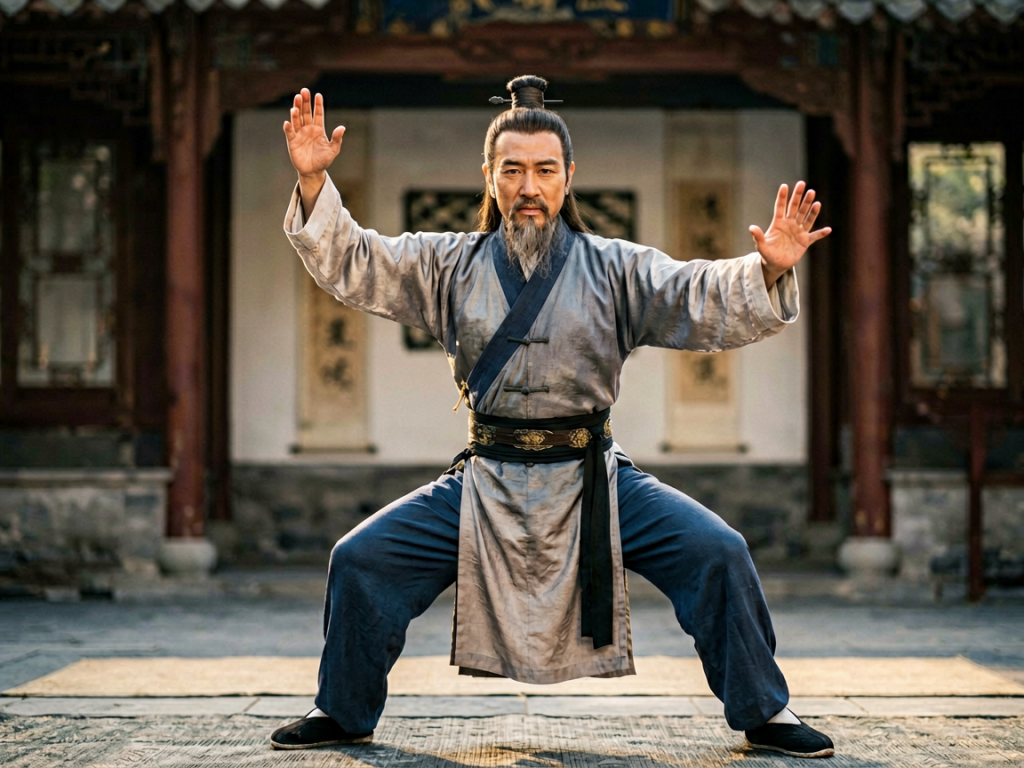
I still remember my first time seeing an elderly man move in the park. It was Beijing, winter, minus ten degrees Celsius. The air was sharp enough to hurt your lungs. But there he was, arms floating like smoke, legs shifting with impossible balance. Everyone else was bundled up, shivering. He looked like he was walking through warm water.
I asked my Chinese neighbor about it later. She just smiled and said, “That’s tai chi.” She didn’t say much else. But she did point out that almost every single person doing it in that square traced their lineage back to one guy. Yang Luchan.
We’ve talked about tai chi being “meditation in motion.” That’s true. But the story of how it got from a single family compound in Hebei province to parks in New York, London, and Sydney? That’s better than any movie script. It’s a tale of bravery, secrecy, genius, and sheer stubbornness.
The Secret Village Nobody Wanted to Share
Back in the early 1800s, tai chi wasn’t something you bought a YouTube subscription for. It was a closely guarded family secret. Specifically, it belonged to the Chen family in Chenjiagou Village. They had perfected this internal martial art over generations. It was deadly, efficient, and apparently, they weren’t sharing.
Yang Luchan was from a nearby town, Yongnian. He wasn’t rich. He wasn’t even particularly strong in the traditional sense. But he was hungry. Hungry to learn, hungry to survive, and hungry to prove himself. Legend says he heard about the Chen family’s skill and decided to go see for himself.
Now, you might think he would have knocked on the door and asked for lessons. He didn’t. That would’ve been suicide. The Chens wouldn’t teach an outsider. So, Yang Luchan did something brilliant. He became their janitor.
He worked in their kitchen. He swept the floors. He carried water. And he watched. Every night, after chores were done, the masters would practice their forms in the courtyard. Yang Luchan stayed awake. He memorized every movement, every shift in weight, every subtle turn of the wrist. He learned by osmosis, basically.
This is the part that always blows me away. Most of us would have quit after a week of scrubbing pots. Yang Luchan stuck around for years. He observed until he could mimic the movements perfectly. Then, he started practicing when everyone else slept. By the time the Chen family realized he knew the art, he was already better than them at some aspects.
The Fight That Changed Everything
So, Yang Luchan leaves Chenjiagou. He heads north to Zhengding. He’s confident. Maybe too confident. He opens a school, claiming he’s the master. Naturally, the local martial artists aren’t having it. They challenge him.
In those days, you didn’t just spar for sport. You sparred for respect, or worse. A loss could mean humiliation or injury. One challenger, a man named Wang, stepped up. Wang was known for his heavy, hard style. Lots of force. Lots of impact.
The fight was short. Wang charged. Yang Luchan didn’t meet force with force. He absorbed Wang’s energy, redirected it, and sent Wang flying across the room. The crowd went silent. Then, another challenger stepped up. Then another. They all fell.
Yang Luchan didn’t beat them because he was stronger. He beat them because he understood physics and leverage in a way the others didn’t. He used their momentum against them. It was like trying to wrestle water. The harder they pulled, the faster they ended up on the ground.
This victory made him famous. “Invincible Yang,” they called him. But here’s the twist: he never kept the secret. Usually, martial artists of this era hoarded knowledge. It was their livelihood. Yang Luchan opened his doors to everyone. Poor farmers, wealthy merchants, soldiers, children. He taught anyone who showed up.
Why? I think he saw tai chi as a tool for health, not just fighting. The Chen style was intense. It involved explosive power and low stances that could wreck your knees if you weren’t conditioned. Yang simplified it. He smoothed out the jerky movements. He made it accessible. He realized that if people could do it every day, they’d get healthier, and the art would survive.
Enter the Imperial Court
You can’t talk about Yang Luchan without talking about the Qing Dynasty. Specifically, the Manchu nobility in Beijing. When Yang moved to the capital, he caught the eye of Prince Yang Shi. This prince loved martial arts but wanted something sustainable for daily practice.
Yang Luchan became the personal teacher for the prince and the imperial guards. Imagine that. Teaching the elite of China a style derived from a rural village. It was a massive cultural shift. The imperial guards were used to stiff, formal drills. Yang introduced them to fluidity. To softness that masked power.
The court loved it. Not just for fighting, though the guards did become incredibly effective. They loved it because it kept them fit without destroying their bodies. It was perfect for older nobles who couldn’t do high kicks anymore.
This exposure changed the style again. Yang Luchan refined it further. He removed the dangerous, overly complex moves. He emphasized large, slow forms. These became what we now know as Yang-style Tai Chi. It’s the version you see in almost every park in China. It’s elegant. It’s gentle. It’s deceptive.
I’ve seen practitioners of this style hold up a heavy stone or push aside a strong opponent with minimal effort. It’s not magic. It’s mechanics. But it looks like magic. The contrast between the soft exterior and the iron interior is what makes it so captivating.
Passing the Torch
Yang Luchan had three sons. All of them inherited his genius. They continued to refine the art. His grandson, Yang Chengfu, took it to the next level. Yang Chengfu standardized the form even further. He created the long form that has nearly 108 movements. It’s the template for most tai chi schools worldwide today.
Without Yang Chengfu’s dedication to consistency, tai chi might have remained a fragmented set of techniques. He ensured that whether you were in Shanghai or San Francisco, the core principles were the same. That’s huge for a global art form.
I’ve met teachers who claim to know “the original” Chen style. And I’ve met Yang style purists who insist theirs is superior. Honestly, it doesn’t matter. What matters is that the family didn’t let pride kill the art. They adapted. They shared. They evolved.
This is the big difference between Yang Luchan and many other martial artists of his time. He didn’t treat knowledge as property. He treated it as a gift. He believed that if you helped someone improve their health or defend themselves, you were doing good. That philosophy spread faster than any fighting technique ever could.
Why It Matters Today
Fast forward to now. Tai chi is practiced by hundreds of millions of people. It’s not just a martial art. It’s a healthcare system. It’s a meditation practice. It’s a social activity.
When I walk through parks in China, I see it everywhere. Young professionals taking a break from work. Elderly couples moving in sync. Kids learning basic steps before they can really read. It’s woven into the fabric of daily life here.
And it’s global. I’ve taught tai chi basics to expats in Berlin and students in Toronto. The response is always the same. Surprise. They expect it to be slow and boring. Instead, they find it challenging. Keeping balance while moving slowly requires insane core strength. It’s deceptively difficult.
Yang Luchan’s contribution wasn’t just creating a style. It was democratizing health and self-defense. He broke down class barriers. In the Chen village, tai chi was for the family. In Zhengding, it was for the brave. In Beijing, it was for the elite. And finally, through his descendants, it became for everyone.
I’m no martial arts grandmaster. I can barely hold a horse stance for thirty seconds without my legs shaking. But I appreciate the discipline it takes. I appreciate the history behind it. When I do tai chi, I’m connecting with a line of people that goes back two centuries. I’m moving like Yang Luchan moved. Like Yang Chengfu moved.
There’s a profound humility in this art. You can’t force it. You have to yield. You have to listen to your body and the space around you. In a world that’s constantly shouting, telling us to push harder and go faster, tai chi whispers. It tells us to slow down. To find balance. To use less effort to achieve more result.
That’s why Yang Luchan remains such a pivotal figure. He wasn’t just a fighter. He was a philosopher in motion. He understood that true strength isn’t about crushing others. It’s about mastering yourself. And then, generously, helping others do the same.
Next time you’re in a park and see someone floating through a form, take a closer look. Remember the janitor from Hebei who watched through keyholes. Remember the prince who learned to yield. Remember the grandson who standardized the movements for the world.
You’re not just watching exercise. You’re watching history come alive. And if you’re lucky, you might just try it. I promise, it’s easier than you think. And once you start, you’ll never look at movement the same way again. Trust me on that one.