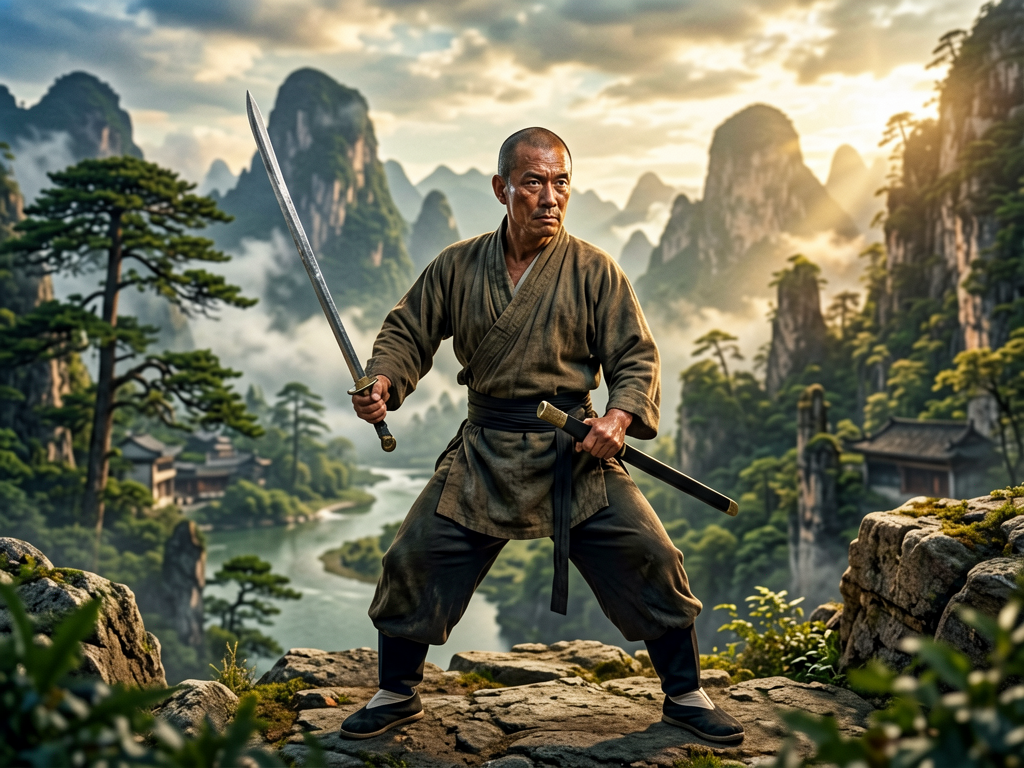
Honestly, I used to think I knew everything about Wong Fei-hung. I grew up watching Jet Li fly through the air in *Once Upon a Time in China*. I watched Donnie Yen flip over rooftops in those gritty wuxia films. It was spectacular cinema, sure. But it wasn’t real life. When I first moved to Guangzhou eight years ago, I carried that movie fantasy in my head.
I expected to find a mystical warrior’s tomb somewhere near the Pearl River. I imagined monks guarding ancient secrets behind closed doors. What I found instead was a lot of concrete, some very tired old men, and a history that’s far more complicated than any scriptwriter could imagine.
The legend of Wong Fei-hung is huge. He’s the face of Southern Kung Fu. But if you want to understand what he actually stood for, you have to strip away the CGI. You have to look at the grit, the politics, and the physical reality of martial arts in 19th-century Guangdong. Let’s talk about the man behind the myth.
The Myth vs. The Man
First off, let’s clear the air. The Wong Fei-hung you see in pop culture is a superhero. He’s a healer, a boxer, and a national hero all rolled into one. He fights foreign invaders with a single chopstick. That’s fun. But the real Wong Fei-hung was a doctor. Specifically, a traditional Chinese medicine practitioner.
He ran a clinic called Wing On. He treated people. He set bones. He prescribed herbs. His martial arts skills weren’t just for show; they were practical tools for self-defense in a chaotic city. Imagine being a doctor in late Qing Dynasty Guangzhou. You deal with cholera outbreaks, gang violence, and corrupt officials daily.
I visited the Wong Fei-hung Memorial Hall in Foshan last autumn. It’s small. It’s quiet. There aren’t many tourists there, which I appreciate. Most people flock to Shanghai or Beijing for their history tours. Guangzhou gets overlooked, but it’s the heart of Lingnan culture. The memorial doesn’t try to sell you on magic. It shows you his medical texts. It highlights his charitable work.
The statue outside is impressive, standing tall with his signature long beard. But inside, the story is humble. Wong Fei-hung wasn’t trying to overthrow the empire. He was trying to save his community. He believed in education and physical health. He taught students that kung fu wasn’t just about beating up bad guys. It was about building character.
This distinction matters. Modern movies focus on the fight choreography. They make the movements look effortless and acrobatic. Real kung fu is hard. It’s heavy. It’s about structure, balance, and power generation. Wong Fei-hung mastered the Hung Gar style. It’s known for its strong stances and powerful hand techniques. It’s not flashy. It’s effective.
What Is Real Hung Gar?
If you’ve never seen Hung Gar, you’re missing out on some of the best traditional martial arts training in the world. I started taking lessons here a few years back. My sifu, Uncle Chen, is a third-generation student of the art. He’s tough but fair. He doesn’t care if you can do a backflip. He cares if you can hold a horse stance for ten minutes without shaking.
Horse stance, or *Ma Bu*, is the foundation. It looks simple. You squat down with your legs wide and your back straight. Sounds easy, right? Try holding it for five minutes. Your thighs will burn. Your knees will scream. You’ll want to stand up. That’s the point.
Uncle Chen says, “The body must be like a mountain.” Stability is key. In the movies, fighters leap around like kangaroos. In real Hung Gar, you plant your feet. You become unmovable. This wasn’t just theory for Wong Fei-hung. He needed this stability to defend himself against multiple attackers. He needed to be able to absorb a hit and keep fighting.
The training is repetitive. You practice the same punch, the same block, thousands of times. It’s boring at first. I almost quit after two weeks. My arms felt like jelly. But then, something clicked. I started feeling the energy move through my body. The techniques stopped feeling like isolated moves. They became fluid. It’s like learning a new language. At first, you stumble over every word. Then, suddenly, you’re having conversations.
Wong Fei-hung refined these techniques. He didn’t invent them, but he perfected them. He integrated medical knowledge into his fighting style. He understood anatomy better than most modern fighters. He knew exactly where to strike to disable an opponent quickly. This pragmatism is what separated him from the showmen.
We practiced the Tiger Claw form one rainy afternoon in Foshan. The temple courtyard was slick with water. Uncle Chen moved with surprising speed for a man in his sixties. His hands were sharp. His eyes were focused. He explained that the tiger represents aggression and power. The crane represents balance and evasion. Wong Fei-hung embodied both.
The Politics of Martial Arts
It’s easy to romanticize the past. But 19th-century Guangzhou was dangerous. Gangs controlled the docks. Foreign powers had their concessions. Corruption was rampant. Martial arts schools weren’t just gyms; they were political organizations. They provided protection for locals. They also competed for territory.
Wong Fei-hung was caught in the middle. He tried to keep his school neutral. He wanted to teach, not to rule. But neutrality is hard to maintain when people are shooting at each other. He had to navigate complex relationships with local authorities and underground societies.
I read his biographies in a dusty bookshop in the old city district. The stories are full of intrigue. There were rivalries with other masters. Some were friends. Others were enemies. The line between the two often blurred. In one famous anecdote, Wong Fei-hung defeated a challenger without throwing a single punch. He used psychology and timing instead.
This aspect of his life is rarely shown in films. Movies need action. Real life needs strategy. Wong Fei-hung was a strategist. He understood that the best fight is the one you avoid. He used his reputation to deter trouble. When trouble came anyway, he handled it efficiently.
During my visits to local community centers, I’ve met descendants of his students. They still practice the art. They wear different clothes now, of course. They train in modern dojos instead of wooden temples. But the core principles remain. Respect for the teacher. Discipline in practice. Humility in victory.
One student, Lin, told me that he practices Hung Gar to stay grounded. He works in tech. His job is stressful. The physical training helps him disconnect. It’s a modern application of an ancient art. Wong Fei-hung would probably approve. He always believed in adapting tradition to meet contemporary needs.
Why It Matters Today
So, why should you care about a guy who died over a century ago? Because the spirit of Wong Fei-hung is still alive in Guangzhou. You can feel it in the morning parks where elders practice Tai Chi. You can hear it in the rhythmic clapping of drummers during festivals. You see it in the resilience of the people who call this city home.
Chinese culture is often misunderstood abroad. People see the kung fu movies and think it’s all about violence. Or they see the historical dramas and think it’s all about court intrigue. Neither captures the full picture. The real story is about ordinary people doing extraordinary things. It’s about community, health, and integrity.
Wong Fei-hung represents the best of Cantonese values. He was hardworking. He was compassionate. He was skilled. He didn’t seek fame. He sought purpose. In a world that’s increasingly digital and detached, those qualities are refreshing.
I often walk along the Huangsha Market area. It’s loud and chaotic. Fishermen sell fresh catch. Vendors shout prices. It’s the real Guangzhou. It’s not polished. It’s not tourist-friendly. But it’s authentic. And that’s what Wong Fei-hung was about. Authenticity.
When you visit Guangzhou, don’t just go to the Canton Tower. Take a trip to Foshan. Visit the ancestral halls. Talk to the old masters. Ask about Wong Fei-hung. You might not get a movie star answer. You’ll get a human one. And that’s worth more.
There’s a phrase in Hung Gar: “Iron Palm, Soft Heart.” It means you develop strength on the outside, but kindness on the inside. Wong Fei-hung lived by this code. He fought to protect the weak. He healed those in need. He balanced force with compassion.
That’s the legacy we should remember. Not the flying kicks. Not the magical weapons. Just a good man doing his best in a hard world. It’s a simpler story. But it’s truer. And sometimes, truth is more powerful than fiction.
Next time you watch a kung fu movie, think about the roots. Think about the hours of training. Think about the doctors who became warriors. Wong Fei-hung wasn’t just a fighter. He was a healer. And that’s a role model anyone can respect.
I’m still training. My horse stance isn’t perfect yet. My knees still shake. But I’m getting better. And every time I step onto the mat, I feel a connection to a long line of practitioners. It’s a thread that runs through history. It connects us to Wong Fei-hung. And it keeps the art alive.
Trust me, it’s not about being the best. It’s about being consistent. It’s about showing up. That’s the real secret of Cantonese kung fu. And that’s the real story of Wong Fei-hung.