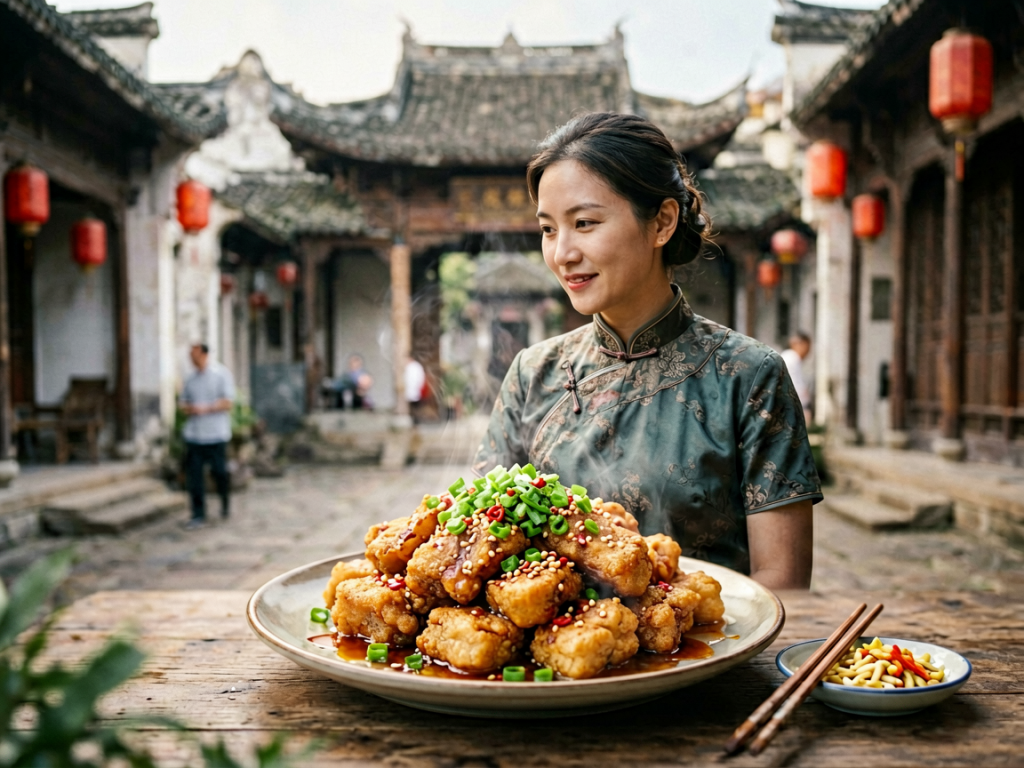
I’ll be honest, I thought I had seen it all. I’ve eaten my way through the humid night markets of Guangzhou, navigated the chaotic alleyways of Xi’an at dusk, and even tried to order dumplings in Beijing while dodging tourists. But nothing, and I mean absolutely nothing, prepares you for the sheer electric chaos of Changsha at 3 AM.
You might assume that after midnight, cities sleep. In Changsha, the city doesn’t sleep; it wakes up, puts on its brightest neon lights, and starts shouting at you to come eat.
This isn’t just about hunger. It’s a cultural phenomenon. It’s a lifestyle. And if you haven’t experienced the “ye xiao” (midnight snack) culture here, you’re missing out on the true soul of Hunan province.
The Heat Never Sleeps
Let’s talk about the weather, or rather, the lack of cooling down. Changsha is known as one of China’s four furnaces. The summers are brutal, sticky, and relentless. But the nights? The nights are where the magic happens because people refuse to stay inside.
When the sun dips below the skyline around 9 PM, the air conditioning hums quietly indoors, but outside, the streets come alive. I remember my first week here, walking around Wuyi Square at midnight, expecting silence. Instead, I was hit by a wall of heat, noise, and the pungent, mouth-watering aroma of chili peppers frying in oil.
Sure, it’s hot. But nobody cares. Why would they? There are plastic stools everywhere. Tiny, flimsy yellow ones that seem to materialize from the pavement itself. You sit down, you order, and you sweat. That sweat is basically part of the meal experience here.
I’m no expert on meteorology, but I can tell you that the humidity makes the spice hit different. It sticks to your skin. It gets into your lungs. It forces you to slow down. You can’t rush a bowl of spicy noodles when your face feels like it’s on fire. You have to sip the rice wine. You have to laugh with the strangers next to you.
Crayfish: The Local Currency
If you want to understand Changsha, you need to understand crayfish. Locals call them “xiao long xia.” They are the undisputed kings of the midnight snack scene. And I don’t just mean the boiled kind. We’re talking about a whole ecosystem of flavors.
I still remember the first time I tried them. A group of locals dragged me to a small stall near the Xiang River. The owner handed me a pair of gloves–plastic, thin, and completely useless against the spice–and a bucket of bright red crustaceans. The smell was intoxicating. Garlic, cilantro, dried chilies, and star anise mixed with the briny scent of the water.
The process is messy. You have to suck the head to get the flavorful roe, which is often described as the best part. Then you peel the tail meat. It takes time. It requires patience. And that’s the point. You aren’t eating to fuel up; you’re eating to hang out.
I’ve had crayfish in Shanghai, and I’ve had them in Beijing. They’re good there. But in Changsha? They’re a religion. The variations are endless. There’s the classic garlic butter style, which is rich and creamy. There’s the spicy oil-braised version, which will make your tongue numb for hours. And then there’s the cold, marinated kind, served with ice, which is refreshing despite the chili flakes.
To be fair, peeling crayfish is tedious. I spent two hours one night just trying to get the shell off without ruining the meat. My fingers were stained orange, my shirt had a splash of sauce on it, and I was sweating profusely. Did I regret it? Not for a second. The meat was sweet, firm, and packed with flavor that lingered long after the last bite.
Prices are surprisingly reasonable too. You can fill a large bucket for two people for around 100 to 150 RMB ($14-$21 USD). Compared to the effort of cleaning and eating them, it’s a steal. It’s cheap luxury, raw and unrefined.
Density and Accessibility
What really sets Changsha apart from other major Chinese hubs like Chengdu or Wuhan is the density. In Chengdu, the snack spots are spread out across different districts. In Changsha, everything seems to cluster in the city center.
Wuyi Square, Pozi Street, Taiping Old Street–they are all within walking distance of each other. This means you can hop from one stall to another without needing a taxi or subway ride. It creates a seamless flow of food tourism.
I once walked from a crayfish place to a nearby street food vendor selling stinky tofu in about ten minutes. The transition was jarring in the best way possible. One moment, I was covered in spicy oil; the next, I was holding a block of fermented bean curd that smelled like old socks but tasted like umami heaven.
The accessibility lowers the barrier to entry. You don’t need a reservation. You don’t need to dress up. You just show up. If a line forms, you join it. That’s the rule here. Lines indicate quality. If a stall is empty at 2 AM, walk past it. If it has a crowd of students, office workers, and couples sharing earphones, that’s where you go.
It’s easier than you’d expect to find your way around. Most vendors speak enough basic English to point you at the menu, or they just point to the most popular dish. I usually just smile, nod, and say “zhe ge” (this one). It rarely goes wrong.
The Drink Culture: Beer and Soju
Food is half the battle. The other half is what you drink to cool down the fire. Changsha has its own local beer brand, Shuanghui, but the real stars are the soju bottles and the craft beer bars that have popped up in the last few years.
I was genuinely surprised to find how sophisticated the drinking scene has become. It’s not just about chugging cheap beer anymore. There are now bars serving experimental craft beers paired with spicy snacks. It’s a modern twist on a traditional habit.
But stick to the basics for your first night. Order a bottle of local soju. It’s clear, potent, and surprisingly smooth if you mix it with lemon soda. The locals call it “qing jiu,” and it’s the perfect companion for late-night conversations.
One night, I sat with a group of university students near Hunan University. They invited me to join their table after noticing I was eating alone. We didn’t share a common language, so we communicated through gestures, laughter, and clinking glasses. They showed me how to properly toast, how to hold the glass with both hands as a sign of respect.
It was a moment of genuine connection. In a city of millions, anonymity is easy. But at 3 AM, over a plate of spicy duck necks, barriers dissolve. Strangers become friends. The shared experience of heat and spice creates a bond that’s hard to replicate anywhere else.
A City That Thrives on Nightlife
Changsha isn’t just a food city; it’s a media and entertainment hub. With Hunan TV broadcasting some of China’s most popular variety shows, the city has a unique energy. People here are expressive, loud, and proud.
This attitude bleeds into the nightlife. The music is louder, the lights are brighter, and the people are more willing to engage with you. I’ve traveled to many cities in Asia, and Changsha feels particularly alive at night. It’s not touristy in a staged way. It’s authentic.
The streets are filled with street performers, DJs playing in open-air plazas, and karaoke rooms spilling sound onto the sidewalks. It’s chaotic, yes, but it’s a controlled chaos. You know exactly where the boundaries are. Eat, drink, sing, repeat.
I love this place because it doesn’t take itself too seriously. People will dance in the street. They’ll argue passionately about the best way to cook tofu. They’ll invite you into their circle without hesitation. It’s welcoming, even if it’s overwhelming at first.
If you’re looking for a quiet, reflective dinner, go elsewhere. But if you want to feel alive, to taste the intensity of Hunan spice, and to meet people who are living life to the fullest, Changsha is your destination.
Final Thoughts: Go Hungry, Stay Late
I could write pages about the history of the Xiang River or the architecture of Yuelu Academy. But truthfully, the real story of Changsha is told in the steam rising from a pot of spicy crayfish at midnight.
It’s about resilience. It’s about community. It’s about finding joy in the small, spicy moments of life. The city punches above its weight class compared to megacities like Shanghai or Shenzhen. It’s gritty, it’s loud, and it’s delicious.
So, pack your bags. Leave your diet plans at home. Wear clothes that can handle a spill. And prepare to eat until you can’t move. Changsha is waiting for you, and it’s not going to sleep anytime soon.
Trust me, you’ll thank yourself in the morning. Or at least, you’ll have a great story to tell. That’s worth the hangover alone.