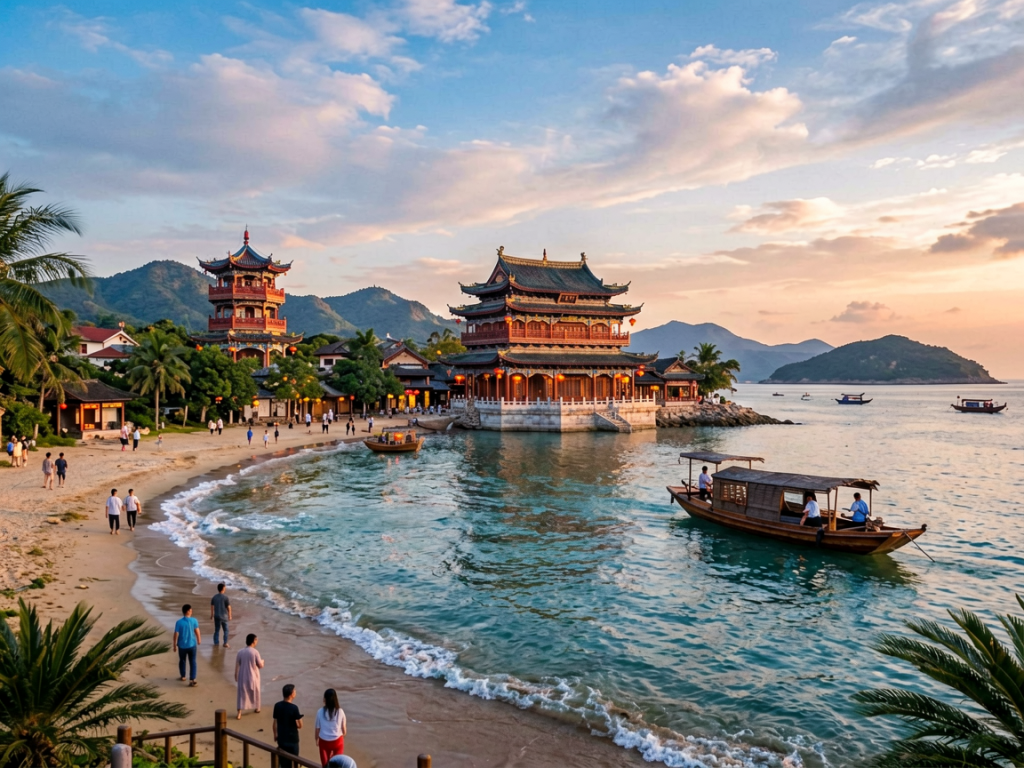
Here’s the thing about Sanya. You’ve probably seen the brochures. Turquoise water. White sand. Palm trees swaying in slow motion. It looks like paradise, right?
I’ll be honest, when I first heard people call Sanya “China’s Hawaii,” I rolled my eyes. It sounded like marketing hype. The kind of label slapped on anything with a beach to make it sound exotic. But after spending two weeks there last winter, escaping the freezing gray of Beijing, my opinion shifted.
Sanya isn’t Hawaii. It’s better than Hawaii in some ways, and completely different in others. It’s not just a resort strip. It’s a cultural melting pot where tropical humidity meets deep Chinese tradition. And if you’re planning a trip, you need to understand what makes this place tick before you pack your bags.
The Heat Hit Me Like a Wet Towel
I arrived in late December, which is technically winter in China. Or so I thought. Stepping off the plane at Sanya Phoenix International Airport felt like walking into an oven that had been left running since Tuesday.
The air is thick. You know that feeling when you walk out of a sauna? That’s the humidity here. It’s ninety percent water vapor mixed with salt air and coconut oil. My shirt stuck to my back within ten minutes of leaving the terminal.
This is why locals call it the “Southernmost City.” It’s not just a geographic fact; it’s a lifestyle warning. You don’t wear jeans here. You don’t even really wear long pants. Shorts, tank tops, flip-flops. That’s the uniform.
The sun is aggressive, too. It’s not the gentle glow you get in Europe. It’s a spotlight. I learned the hard way that SPF 50 isn’t a suggestion. It’s a requirement. One afternoon, I skipped reapplying sunscreen because I was busy flirting with a local fisherman’s wife. Bad move. By sunset, I was peeling like a bad tattoo. Lesson learned.
Dadonghai vs. Yalong Bay: Picking Your Battleground
If you look at any map of Sanya, you’ll see four main bays. They’re spaced out along the coast, each with a different vibe. Choosing where to stay is the first real decision you’ll make, and it dictates everything else.
I stayed in Dadonghai first. It’s the original resort area. It’s loud, it’s lively, and it’s right in the middle of the action. You have restaurants spilling onto the sidewalk. Street vendors selling grilled squid. Music thumping from hotel bars until two in the morning.
I loved it. It felt authentic. I walked down to the beach every evening, grabbed a cold beer from a plastic stool vendor, and watched the sunset paint the sky in violent shades of orange and purple. It wasn’t perfect. The water was a bit cloudy near the shore, and the beach got crowded with locals in summer.
Then I moved to Yalong Bay. This is where the five-star hotels live. Think Ritz-Carlton, Marriott, Shangri-La. The architecture is sleek, the landscaping is manicured, and the beach is pristine. The sand here is fine, white powder. The water is clearer, deeper blue.
But here’s the catch. Yalong Bay is expensive. And it’s quiet. Too quiet for me. I missed the noise. I missed the chaos. I missed being able to walk out my door and find a noodle shop open at midnight.
There’s also Haitang Bay, further east. It’s the newest development. Huge resorts, duty-free shopping malls, and very little beach access because of the rocky coastline. I visited once. The view was nice, but I couldn’t swim. So I left. Stick to Dadonghai or Yalong if you want actual beach time.
The Food Scene Isn’t Just Seafood
Everyone talks about the seafood in Sanya. And sure, it’s good. But it’s not just about lobster and crab. Yes, you can eat giant mud crabs for thirty bucks. Yes, they’ll cook them right in front of you with garlic and vermicelli noodles. It’s delicious.
But the real magic happens in the night markets. I spent three nights at the Second Market in Dadonghai. It’s a labyrinth of stalls grilling skewers, frying bananas, and boiling tropical fruits.
I tried something called “coconut chicken hotpot.” It sounds weird. Boiling chicken in coconut water? But it’s tender, sweet, and refreshing. You dip the meat in a savory sauce afterwards. It’s the perfect cure for the humidity.
And you have to try the tropical fruits. Mangoes here are insane. Sweet, juicy, and cheap. I ate so many mangoes I started dreaming in yellow. Pineapples, papayas, rambutans–they grow wild here. I saw a guy selling cut fruit on the side of the road for five yuan. I bought it. It was the best snack of my trip.
Don’t skip the local breakfast either. Go for “Hainan noodles.” Thin rice noodles in a light broth, topped with minced pork, bamboo shoots, and fresh herbs. It’s light, comforting, and costs less than a dollar. I had it almost every morning. My weight didn’t change much, but my heart did.
Culture Shock in Paradise
Sanya isn’t just a beach town. It’s part of Hainan Province, which has its own distinct culture. The Li and Miao ethnic groups live in the mountains inland. Their traditions, music, and clothing are vibrant and deeply rooted.
I took a day trip to the Tianya Haijiao scenic area. The name translates to “Ends of the Earth.” It’s dramatic. Jagged rocks crashing into the ocean. Tourists carving their names into stones, claiming they’ve reached the edge of the world. It’s cheesy, but the scenery is powerful.
You’ll notice the language difference, too. While Mandarin is spoken everywhere, you’ll hear Hainanese dialect in the markets. It sounds fast and tonal. I couldn’t understand a word, but the owners laughed when I tried to order. Hospitality is huge here. People are genuinely happy to see outsiders.
Unlike Shanghai or Beijing, where everyone is rushing to the next meeting, Sanya moves slower. People sit on plastic chairs outside cafes for hours. They watch the waves. They chat. There’s no guilt in doing nothing. I liked that. I needed that.
The Price Tag Won’t Break You
Let’s talk money. Sanya used to be exclusive. Expensive. Only for the wealthy. That’s changed. Now, it’s accessible. You can find a decent room for sixty dollars a night. A meal for ten. A taxi ride for five.
Of course, the luxury hotels still charge premium rates. But you don’t need to stay in them to enjoy the coast. I rented a small apartment near the university district. It was clean, had AC, and was ten minutes from the beach by bike.
Bargaining is expected in the markets, but not in the hotels or nice restaurants. Be careful with street vendors selling “authentic” souvenirs. Most of it is made in Guangdong anyway. Buy the fruit. Leave the jade.
Tipping isn’t a thing. Don’t do it. It confuses people. Just pay the bill and walk away. If the service was good, say “xiexie.” It means thank you. It works everywhere.
Is It Really China’s Hawaii?
So, back to that label. Is Sanya China’s Hawaii? Not exactly. Hawaii is volcanic, rugged, and multicultural in a very Pacific Islander way. Sanya is tropical, flat, and distinctly Chinese.
But the spirit is similar. It’s a place where people go to escape. To forget their jobs, their deadlines, their worries. The ocean doesn’t care if you’re rich or poor. It washes over everything equally.
I found myself sitting on a rock, watching fisherman mend their nets. The sky was clear. The water was calm. For the first time in years, I didn’t feel the urge to check my phone. I just existed. That’s the real value of Sanya.
It’s not about checking off landmarks. It’s about slowing down. It’s about tasting the coconut, feeling the heat, and letting the island breathe into you.
If you go, don’t rush. Book a room with a balcony. Sit there in the morning. Drink coffee. Watch the sunrise. It’s worth every penny.
I’m leaving soon. I’ll miss the humidity. I’ll miss the mangoes. I’ll miss the noise of the night market. But mostly, I’ll miss the peace. Sanya taught me that paradise isn’t a place on a map. It’s a state of mind. And thanks to the coconuts, I’m taking that mindset home with me.
Just remember to bring sunscreen. And maybe a fan. Trust me, you’ll need both.