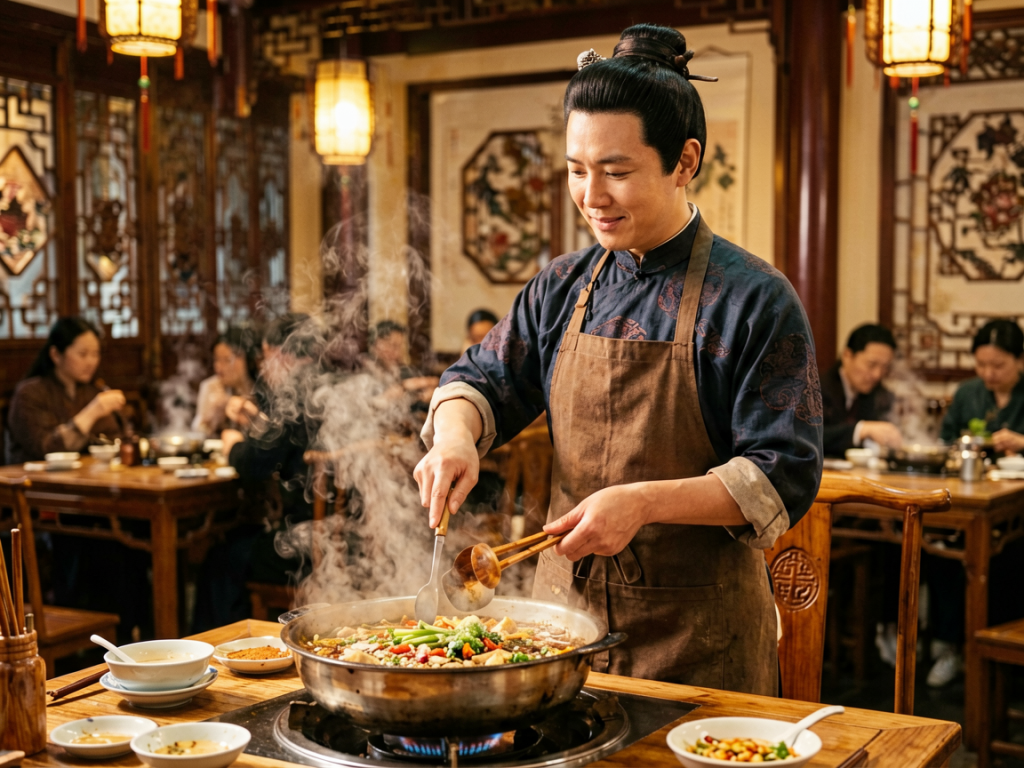
I still remember my first time walking into a proper Sichuan hotpot place in Chengdu. The air was thick with the scent of star anise, dried chilies, and boiling broth. I sat down, feeling a mix of excitement and sheer terror. Then, the waiter appeared.
He didn’t ask for my order. He didn’t hand me a menu. Instead, he thrust a flimsy, neon-yellow plastic sheet at me. It was an apron. Well, technically it wasn’t even tied around my neck. It just draped over my shoulders like a sad cape.
I looked at him, confused. “Do I wear this?” I asked, pointing at the yellow plastic. He smiled, nodded once, and disappeared into the kitchen. That simple moment marked the beginning of my education in hotpot culture. If you’re planning to eat in China, you need to know why that apron matters. And more importantly, how to survive the meal without turning your shirt into a disaster zone.
The Apron Isn’t Just Protection, It’s Hospitality
Let’s get one thing straight. That cheap plastic apron isn’t there because they think you’re clumsy. It’s there because they care. In Chinese culture, hospitality means taking care of your guest’s comfort before they even sit down. They want you to enjoy the food, not worry about splashing oil on your nice button-down.
When you walk into a mid-range or high-end hotpot restaurant, staff will usually help you put it on. Sometimes they tie it loosely behind your back. Other times, they just drape it over your head and let gravity do the work. Either way, put it on. Don’t wave it off. Waving it off tells them you don’t appreciate their effort.
I’ve seen foreigners try to eat spicy mala hotpot without an apron. It’s a brave move. But trust me, it’s also a stain waiting to happen. Once that red chili oil hits your white cotton shirt, it’s gone. You might as well wear a bib from day one. The apron is your shield. Accept it with grace.
And here’s a tip: check the fit before you start cooking. If the apron is too small, it won’t cover your lap. If it’s too big, it might fall into the pot. Yes, that happens. People drop aprons into boiling broth all the time. It’s embarrassing. Adjust it early so you can focus on the food.
The Pot Is Your Battlefield
Once you’re belted in, the real fun begins. You’ll notice the pot in front of you isn’t just one flavor. It’s split down the middle. This is called a yin-yang pot. One side is usually mild–maybe tomato, mushroom, or plain bone broth. The other side is fiery. For Sichuan style, that means numbing peppercorns and enough chilies to make your eyes water.
This setup exists for a reason. Not everyone can handle the heat. If you’re a foreigner, start with the mild side. Cook your meats there first. Get your taste buds adjusted. Then, if you’re feeling brave, dip a piece of beef into the spicy side. See how it goes.
I love the social aspect of this. It forces you to pay attention to your friends. “How’s the spice level for you?” someone will ask. You’ll nod vigorously. Then they’ll ladle some mild broth into your bowl. It’s a dance. It’s conversation. It’s community.
But watch out for cross-contamination. Never put raw meat directly from your plate into the spicy side if others are eating from the mild side. Use separate chopsticks for raw and cooked food. Most places provide two sets. If they don’t, ask. It’s not rude. It’s hygiene.
Chopsticks: The Double-Edged Sword
You’ve got your apron. You’ve got your pot. Now pick up the chopsticks. This is where most people struggle. Hotpot chopsticks are long. Really long. They’re designed to keep your hands away from the boiling liquid.
Hold them firmly. Not too tight, but don’t let them flop around. You’re fishing for duck intestines and tripe here. Precision matters. These ingredients cook fast. Duck intestines take maybe ten seconds. Tripe takes five. If you leave them in longer, they turn into rubber bands. No one wants chewy rubber intestines.
I remember watching a local guy in Chongqing pull a piece of lotus root out of the pot. He blew on it gently. It was perfectly crisp. I tried the same. I left mine in for twenty seconds. It was soggy. He laughed. I ate it anyway. It wasn’t terrible. Just different.
Another rule: don’t stir the pot aggressively. We’ve all been there. You’re trying to find your beef. You start swirling the chopsticks around. You create a whirlpool. The broth splashes. Everyone gets hit. Stop stirring. Pick, don’t sweep. It’s calmer. It’s cleaner. It’s smarter.
The Sauce Station: A Puzzle to Solve
After you’ve cooked your first few bites, you’ll head to the sauce bar. This is a station with small bowls, spoons, and shelves full of condiments. Sesame paste, garlic, cilantro, scallions, oyster sauce, vinegar, chili oil. It looks overwhelming. It feels like a chemistry lab.
Don’t panic. There’s no single correct answer. Your sauce is your signature. But there are classics. In Beijing, people mix sesame paste with fermented bean curd and chili oil. It’s rich and nutty. In Sichuan, people often use garlic, cilantro, and a bit of soy sauce. It’s fresh and sharp.
Start small. Put a little base in your bowl. Taste it. Add more. Don’t dump half the bottle of chili oil in at once unless you want your mouth on fire. I made that mistake once. My lips swelled up. I couldn’t talk. I just pointed at the water dispenser and drank until the pain faded.
Ask for help if you’re stuck. The staff at the sauce station see thousands of foreigners. They know what tastes good. Ask, “What do you recommend?” They’ll likely smile and point to the garlic. Or the cilantro. Follow their lead. You’ll thank them later.
Pacing Yourself Is Key
Hotpot meals are marathons, not sprints. You’re sitting around a boiling pot for hours. The conversation flows. The drinks flow. The food flows. But if you eat too fast, you’ll get full too soon. Or worse, you’ll burn your mouth.
Take breaks. Talk. Listen to the bubbling sound. Watch the steam rise. It’s meditative, really. I’ve had some of my best conversations while waiting for pork belly to cook. Slow down. Enjoy the process. The food is delicious, but the company is the real treat.
Also, balance your intake. Don’t just eat meat. Mix in some vegetables. Tofu. Noodles. Mushrooms. They soak up the broth. They add texture. They cool down the heat. I love eating glass noodles at the end. They’re slippery and savory. Perfect finish.
The Bill and The Aftermath
Eventually, the pot empties. The broth is cloudy with spices and bits of food. You’re stuffed. Happy. Maybe a little sweaty. The waiter comes to settle the bill. Usually, you split it evenly. Or whoever invited pays. It depends on the group dynamic.
Check the bill for extra items. Sometimes they charge for the soup base. Or for dipping sauces. Or for drinks. It’s rare, but possible. If you’re unsure, ask. Better to clarify now than argue later.
After the meal, you’ll feel warm. That’s normal. The spicy broth raises your body temperature. Drink some tea. Sweet tea is great for cooling down. Or try sour plum drink. It’s tangy and refreshing. It cuts through the grease.
And that apron? Take it off. Fold it neatly if you can. Leave it on the table or hand it to the waiter. Don’t crumple it up and throw it on the floor. Small gestures matter. They show respect for the staff and the space.
Eating hotpot in China isn’t just about food. It’s about connection. It’s about sharing heat, flavor, and life. The apron is just the start. Wear it proudly. Dive in. And don’t forget to laugh when you spill a little broth. That’s part of the experience. That’s how you become a local.