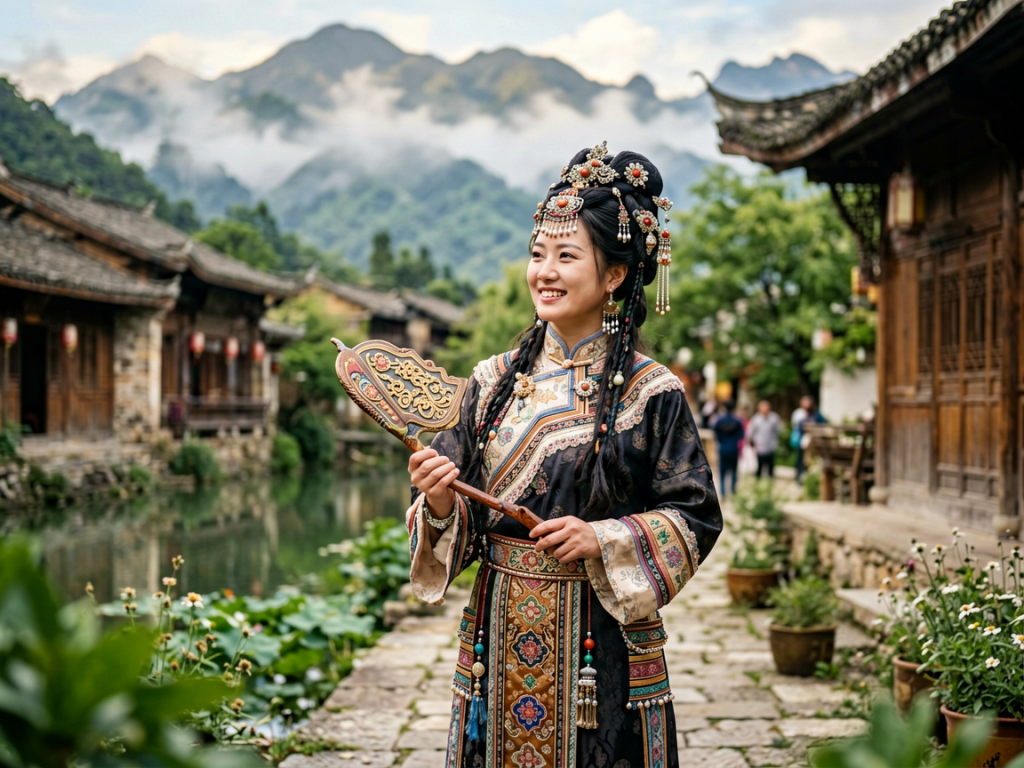
I’ll be honest. When I first heard people talk about Lijiang, I pictured cobblestone streets packed with tourists, overpriced yak meat skewers, and a general sense of commercial fatigue. And sure, the Old Town does have that vibe during the peak season. But here’s the thing: that’s only half the story.
If you’re willing to walk five minutes past the main squares, or better yet, hop on a bus for an hour, you find a different world entirely. This is the home of the Naxi people. It’s a culture that’s been around for centuries, surviving empires, revolutions, and now, aggressive tourism. It’s alive, breathing, and deeply fascinating.
The Old Town Is Just The Lobby
Think of Lijiang’s Old Town like the lobby of a fancy hotel. It’s beautiful, sure. The architecture is intricate, the waterways are picturesque, and the photos are Instagram-worthy. But you don’t stay in a hotel just to hang out in the lobby, right? You go to the rooms, or better yet, the local neighborhoods.
I spent my first week in Yunnan wandering those main squares. I bought some silver jewelry I probably didn’t need and ate dinner at a restaurant where the menu was in three languages but the food was lukewarm. It wasn’t bad. It was just… empty.
The real magic happens when you step away from the Square Waterwheel. That’s the landmark everyone takes selfies with. Once you turn your back on it, the crowds thin out. The noise fades. And suddenly, you’re in a place where time moves at a different pace.
This shift in perspective is crucial. Most visitors treat Lijiang as a destination to check off their bucket list. They see it as a backdrop for their vacation photos. But if you approach it as a gateway to Naxi heritage, everything changes. The stones under your feet tell stories. The water flowing through the channels has sustained families for generations.
Music That Sounds Like History
I still remember the first time I heard the Naxi Ancient Music Orchestra. It wasn’t in a stadium. It was in a small, dimly lit hall near the edge of the Old Town. The air was thick with incense and anticipation.
I was skeptical. I’ve sat through plenty of “traditional” performances across Asia that felt more like theater than tradition. You know the type. Costumes are bright, dancers move in perfect sync, and the music sounds like a polished cover band.
This was nothing like that. The musicians were mostly elderly men, some in their seventies. They sat on simple stools, holding instruments that looked ancient. There was no stage lighting, no spotlight. Just warm, ambient light from candles.
When they started playing, the sound was haunting. It was slow, deliberate, and incredibly complex. The strings hummed with a resonance that seemed to vibrate in my chest. It sounded like wind moving through old pine trees. It sounded like history speaking directly to you.
I asked one of the musicians later if he enjoyed performing. He smiled, his face lined with years, and said he did it because the music was dying. He wanted the younger generation to hear it before it vanished completely. That hit me hard.
It’s easy to dismiss traditional music as a relic of the past. But listening to Naxi ancient music, you realize it’s a living archive. Every note carries the weight of centuries. It’s not just entertainment; it’s a preservation effort.
If you go, don’t just watch. Listen. Let the music wash over you. It’s a rare chance to connect with a spiritual tradition that predates most modern religions. It’s humbling.
Decoding the Dongba Script
Now, let’s talk about language. Or rather, the lack of a standard written one. The Naxi people are unique in China because they traditionally didn’t have a widespread phonetic script. Instead, they used Dongba symbols. These are pictographic characters that look a bit like early hieroglyphs.
I visited a small workshop in Baisha Village, about twenty kilometers north of Lijiang. The artist there, Master Dong, showed me how he carved these symbols into wood. It’s painstaking work. Each character represents a concept, an object, or an action.
He drew a picture of a horse, then a mountain, then a cloud. He explained that the order matters. The context changes the meaning. It’s not just drawing; it’s a sophisticated system of communication.
Most Naxi people today speak Mandarin or the local dialect. They might read a little English if they work in tourism. But the Dongba script is kept alive by priests, scholars, and a few dedicated artists.
I tried to write my name in Dongba. It looked ridiculous. A stick figure holding a bag of money, maybe? Or perhaps a person sitting on a chair? I’m not sure. But the attempt made me appreciate the complexity of the system.
What’s interesting is that Dongba is one of the last living pictographic scripts in the world. You don’t see this kind of thing anymore. Writing has evolved to become more abstract and efficient. But there’s a charm to seeing a picture of a tree represent the word “tree.”
Visiting a Dongba museum or a workshop gives you insight into how this culture organized its thoughts. It’s not just about art; it’s about worldview. The symbols reflect a deep connection to nature and spirituality.
Villages With Soul
Baisha Village is where I found my favorite part of the Naxi experience. While Shuhe gets a lot of attention for its cafes and boutique hotels, Baisha feels more authentic. It’s smaller, quieter, and less polished.
I spent an afternoon there just walking around. The streets are narrow and paved with gray stones. Houses are made of rammed earth and wood, typical of the region. Some have faded murals on the walls, remnants of the Ming Dynasty.
I stopped for lunch at a family-run restaurant. The owner, an older woman named Auntie Li, welcomed me like I was a long-lost relative. She served me wild mushroom hotpot. The broth was rich and earthy. The mushrooms were fresh, picked that morning from the nearby mountains.
We couldn’t communicate well in English, so we talked in gestures and broken phrases. She showed me photos of her grandchildren in Kunming. I showed her pictures of my dog back home. We laughed. It was a simple interaction, but it felt genuine.
In Lijiang’s Old Town, service is often transactional. You pay, you get food, you leave. In Baisha, hospitality is relational. People want to connect. They want to share their lives.
Another village worth visiting is Shaxi, though it’s a bit further away. If you have time, take the detour. The stone square there is one of the best-preserved on the Tea Horse Road. It’s a reminder of the trade routes that once connected China to Tibet and beyond.
Traveling to these villages isn’t just about sightseeing. It’s about supporting communities that are trying to preserve their identity. When you buy a handmade craft or eat at a local home, you’re contributing to the sustainability of their culture.
The Living Language of Nature
The Naxi worldview is deeply rooted in nature. They don’t see themselves as separate from the environment. They see themselves as part of it. This philosophy influences everything from their agriculture to their rituals.
I hiked up to Jade Dragon Snow Mountain one weekend. The views are spectacular, obviously. But what struck me was the reverence locals show for the mountain. It’s not just a ski resort or a hiking trail. It’s sacred.
Many Naxi perform rituals to honor the mountain spirits. These aren’t grand public events. They’re private, intimate ceremonies conducted by priests. You might see a small altar at the base of a trail, adorned with colored flags and offerings.
This respect for nature is becoming increasingly relevant. As climate change accelerates, indigenous knowledge offers valuable insights into sustainable living. The Naxi have managed their ecosystems for centuries without destroying them.
Learning about this philosophy changed how I traveled in Yunnan. I started paying more attention to the land. I noticed how farmers terraced the hillsides to prevent erosion. I saw how water was shared among communities.
It’s a lesson in humility. We often think we can conquer nature. But the Naxi teach us that we need to coexist with it. Their survival depends on it.
Why You Should Go Deeper
Lijiang is famous for a reason. It’s beautiful. It’s convenient. It’s accessible. But if you stop there, you’re missing the point.
The Naxi culture is resilient. It has adapted to modernity while keeping its core values intact. From the ancient music to the pictographic script, every element tells a story of survival and pride.
I used to think of travel as a way to escape my daily life. Now, I see it as a way to expand my understanding of the world. Meeting Naxi people, hearing their music, and learning about their history has enriched my life in ways I didn’t expect.
You don’t need to be an expert in Chinese history to appreciate this. You just need to be curious. Be willing to step off the beaten path. Talk to locals. Ask questions. Listen.
The crowds in Lijiang’s Old Town will always be there. But behind them lies a world of depth, beauty, and humanity. It’s waiting for you to discover it. Trust me, it’s worth the effort.