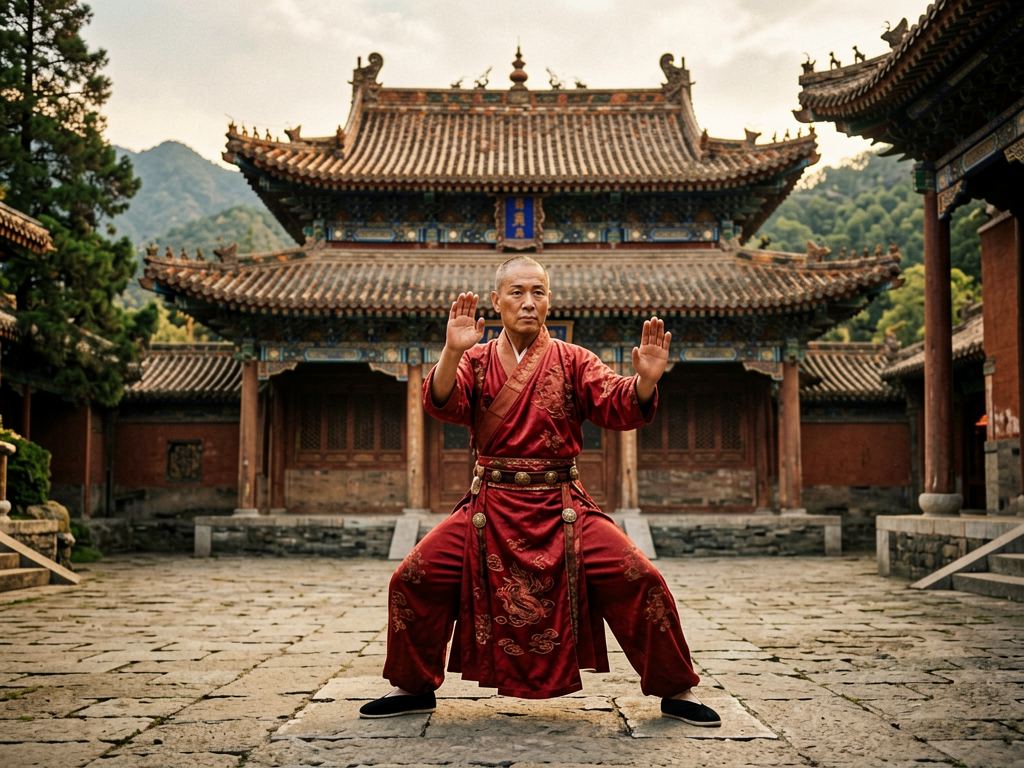
Look, I’ve been living in China for eight years now. I’ve hiked the mountains around Mount Hua until my legs shook. I’ve eaten street food that made me question my life choices, and I’ve spent countless afternoons sitting in tea houses just watching the world go by. But mostly, I’ve been obsessed with the martial arts.
You know the stereotype. The monks in saffron robes moving like water. The iron palms. The staff techniques that look like they were choreographed for a Hollywood blockbuster. It’s a beautiful image. It’s also largely a myth, or at least, a heavily diluted version of reality.
For years, I wandered around Shaolin Temple in Dengfeng, looking for the “real” masters. I wanted to learn the stuff they didn’t teach tourists. I wanted the open-hand combat that was supposedly lost to time. I wanted to understand why these places, once centers of lethal military training, now seem more focused on selling merchandise than mastering violence.
Here’s the thing. They didn’t stop teaching it because they forgot. They stopped because the world changed, and survival meant adapting. The shift from combat to performance wasn’t an accident. It was a strategic retreat. And honestly, it’s a much smarter move than sticking to a dying tradition.
The Military Roots Were Never About Honor
I’ll be honest, when I first started this journey, I romanticized the Shaolin monks. I thought they were warrior-monks protecting the empire with holy fury. That’s a nice story. But history is rarely that clean.
The original Shaolin martial arts weren’t developed for spiritual enlightenment. They were developed for survival. In the Tang Dynasty, when the empire was crumbling, the monks actually helped the future emperor Li Shimin defeat his rivals. Legend says they used 13 monks to capture a rebel leader. That’s not a spiritual exercise. That’s a mercenary contract.
Once that help was given, the emperor repaid them with land and resources. But he also gave them a warning. Keep your martial arts internal. Don’t show off. Don’t build an army. If you do, you’ll be erased.
So, the monks went underground. They hid their skills within the temple. For centuries, the martial arts were strictly for internal defense. You didn’t teach strangers. You didn’t teach tourists. You taught your own. And even then, only the most dedicated few.
This context is crucial. It explains why the open-hand combat seemed so intense back then. It wasn’t about health. It was about staying alive in a chaotic world. When you’re fighting for your life, you don’t care about form. You care about effectiveness.
The Performance Trap
Fast forward to the 1980s. The world changed. The Cold War was ending. China was opening up. Suddenly, the West was fascinated by China. And what was the most exportable part of Chinese culture? The martial arts.
I remember watching Jet Li’s Shaolin Temple when I was a kid in the US. It blew my mind. The flips, the staff work, the sheer athleticism. It made me want to fly to China and train. So, I did. And what I found was… different.
The Shaolin Temple had become a theme park. The monks were performers. They had routines. They had choreography. They had shows at 10 AM and 2 PM. If you wanted to see the “real” stuff, you had to dig deep. But even then, the “real” stuff was often just modified for show.
Why? Because open-hand combat is messy. It’s brutal. It’s not pretty. You can’t sell tickets to a show where people are breaking each other’s fingers in the front row. You sell tickets to the spinning back kicks and the synchronized staff formations.
I met a master in Henan who laughed when I asked him to demonstrate a lethal strike. He said, “If I do that, you’ll need a hospital. If I do this,” he showed me a slow, flowing form, “you’ll buy a souvenir.”
It’s a cynical take, sure. But it’s true. The monasteries had to pivot. Tourism brought in money. Money kept the temples standing. The government encouraged it. The monks became entertainers, not warriors.
This isn’t unique to China. Think about boxing. In the 19th century, prizefighting was brutal and unsanctioned. Today, it’s a regulated sport with gloves and rounds. We sanitized it to make it acceptable. The monks did the same. They sanitized their combat to make it acceptable for a global audience.
The Political Pressure Cooker
But there’s another reason. A darker one. The political environment in China has always been sensitive about armed groups. Any organization that teaches people how to fight effectively is a potential threat.
I had a long chat with a former monk in Yunnan. He told me that in the 1950s, many martial arts schools were shut down. Their masters were labeled as feudal remnants. The knowledge was suppressed. It was only in the 1980s that things started to open up again.
Even now, there are limits. The government promotes “Wushu” as a sport. It’s athletic, it’s safe, it’s non-threatening. But traditional combat arts? The ones that teach you how to disarm a soldier or break a joint? Those are closely watched.
I tried to find a teacher in Beijing who could teach me actual self-defense. The guy I met was excellent. He was a former special forces instructor. But he refused to teach me. He said, “I can show you moves. But if you use them, you go to jail. If I teach you, I go to jail. So, we’ll just talk about history.”
It’s a pragmatic choice. The monks know this. They’ve survived dynasties, wars, and revolutions by staying low. Teaching open-hand combat openly is a risk they can’t afford. So, they focus on what’s safe. Meditation. Health qigong. Performance Wushu.
The Rise of Internal Arts
Interestingly, this shift led to the rise of internal arts like Tai Chi and Baguazhang. These styles are less about brute force and more about leverage, balance, and energy. They’re easier to market. They’re easier to teach to a 60-year-old tourist. And they’re less likely to get you in trouble with the authorities.
I spent six months practicing Tai Chi in Hangzhou. It was beautiful. The lake, the mist, the slow movements. But let’s be clear. It’s not the same as the open-hand combat of the Shaolin monks. It’s a different philosophy. It’s about harmony, not violence.
Does that make it less valuable? No. In fact, I think it’s more valuable for modern life. We don’t need to fight. We need to manage stress. We need to stay healthy. The internal arts provide that. The open-hand combat provides survival skills that most of us will never need.
But for those of us who crave the raw, visceral experience of martial arts, it’s frustrating. We want the fire. We want the intensity. And we’re told that’s not what’s available anymore.
Where to Find the Real Thing
So, is the open-hand combat dead? No. It’s just hidden. It’s moved out of the tourist traps and into the private gyms. It’s in the underground fight clubs in Shanghai and Shenzhen. It’s in the private teachings of masters who are willing to take the risk.
If you’re serious, you have to look beyond the temple gates. Go to the local communities. Find the older guys who train in the parks at dawn. They’re not performing. They’re practicing. And they’re often more skilled than the monks on TV.
I found a small school in Chengdu that teaches traditional Shuai Jiao (Chinese wrestling) and Baguazhang. No tours. No merchandise. Just hard, honest training. The master was grumpy. He didn’t speak English. But he respected my effort. We trained for three months. It was the most honest martial arts experience I’ve ever had.
It wasn’t flashy. There were no spinning kicks. Just grappling, throws, and striking. It was exhausting. It was painful. And it was real.
The Future of Chinese Martial Arts
So, why did the monasteries stop? They didn’t stop. They evolved. They recognized that the world doesn’t need warrior-monks anymore. It needs cultural ambassadors. It needs healers. It needs entertainers.
Is that a betrayal of the past? Maybe. But it’s also a form of preservation. If they had stuck to the old ways, they would have been crushed by history. Instead, they adapted. They survived.
And for those of us who love Chinese culture, that’s a good thing. We get to see the beauty of the performance. We get to experience the philosophy of the internal arts. And if we’re lucky, we can find the few masters who still keep the flame of combat alive.
It’s not the Shaolin of the movies. It’s quieter. It’s more complex. It’s more human. And honestly, I think I prefer it that way. The myth is fun. But the reality is where the truth lives.
Next time you’re in China, skip the show. Go find the old men in the park. Ask them about their training. You might just learn something that no tour guide will ever tell you.