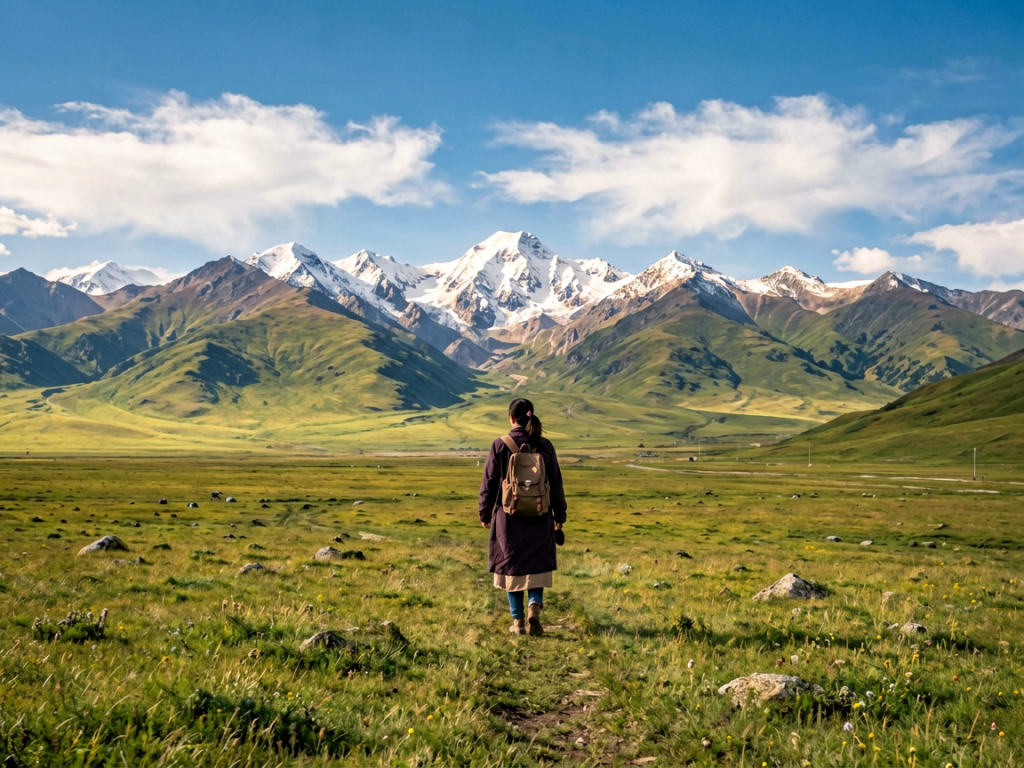
Look, I’ll be honest. When I first told people in Beijing I was heading to Inner Mongolia, they usually made a face. Not a bad face, just a confused one. They asked if I was going there to hunt wolves or drink raw blood. I laughed, but they weren’t entirely wrong. The reputation of the steppes is wild, rugged, and decidedly un-refined.
That’s exactly why you need to go.
Most travelers in China stick to the high-speed rail loop. They hit Xi’an for history, Chengdu for pandas, and Shanghai for neon lights. It’s efficient. It’s safe. It’s also incredibly predictable. If you want to see what China actually looks like when you step off the grid, you head north. You head to the grasslands.
I’ve lived in China for eight years. I’ve eaten street food in every province from Hainan to Heilongjiang. But nothing compares to the vast, empty silence of the Hulunbuir steppe. It changes you. It slows you down. It makes your daily worries about deadlines and rent feel ridiculously small.
But here’s the thing. Going there isn’t like going to Hangzhou. You can’t just hop on a metro. You need a plan. You need to know what to expect, because the infrastructure is sparse, the weather is brutal, and the culture is deeply traditional. This guide is for the first-timer who wants to do it right, without looking like a total lost tourist.
Timing is Everything (Or You’ll Freeze)
First things first. Don’t go in winter unless you’re crazy. And I don’t mean “I have a thick coat” crazy. I mean “my toes turned black and I lost feeling in my nose” crazy.
The best time to visit is June through August. Yes, it’s peak season. Yes, there will be other people. But the grass is green, the weather is pleasant, and the yurts are accessible. If you go in October, you’re looking at frost and grey skies. If you go in January, you’re looking at -30 degrees Celsius. That’s -22 Fahrenheit. It’s not a vacation; it’s a survival test.
I went in late June. The air smelled like wild thyme and wet earth. The sky was so blue it hurt to look at. The locals call this “the breathing season.” Everything wakes up. Calves are born, horses run free, and the nomadic families move their herds to the higher pastures.
Book your accommodation early. The popular spots like Ergun or Hailar fill up fast during summer. I’ve seen decent guesthouses rent out months in advance. If you wait until you arrive, you’ll end up staying in a damp basement in a town you’ve never heard of. That’s not the vibe you’re going for.
Getting There Without Losing Your Mind
Inner Mongolia is huge. Like, “size of France” huge. The most accessible entry point is Hailar, which is the gateway to Hulunbuir. You can fly into Hailar Manzhouli International Airport. It’s a small airport, but it handles direct flights from Beijing, Shanghai, and Guangzhou.
Alternatively, you can take the high-speed train from Beijing to Hailar. It takes about six hours. It’s comfortable, cheap, and gives you time to watch the landscape shift from urban sprawl to endless green. I prefer the train. It feels more deliberate. You’re leaving the city behind.
Once you’re in Hulunbuir, you need a car. This is non-negotiable. Public transport in the grasslands is practically non-existent for tourists. You can hire a driver, which is the safest and easiest option. Expect to pay around 800 to 1,000 RMB per day for a car and driver. It sounds like a lot, but split between four people, it’s reasonable. Plus, the driver knows the roads, the weather, and where to find the best dairy products.
If you’re confident driving, you can rent a car. But be careful. The roads are often just dirt tracks. One wrong turn and you’re stuck in mud for hours. I know a guy who got stuck near Genhe. He had to wait three days for a truck to pull him out. Don’t be that guy. Hire a driver.
Living Like a Nomad (But With Wi-Fi)
Okay, let’s talk about the big question. Are you staying in a hotel or a yurt?
Here’s the truth. The traditional felt yurts are beautiful. They’re authentic. They’re also drafty, noisy, and have communal toilets that are less “communal” and more “desperate.” If you’re looking for luxury, skip the yurt. Stay in a guesthouse in the town.
But if you want the full experience, book a “luxury yurt” camp. These are the new trend. They’re basically glamping sites. You get a proper bed, a hot shower, and central heating. The yurt is just the roof. You sleep in comfort but wake up to the view of the herd.
I stayed at a camp near the Ergun River. It was expensive, maybe 600 RMB a night, but it was worth every penny. The host, a Mongol woman named Altan, spoke enough English to make herself clear. She taught me how to make cheese from scratch. It’s a simple process. You boil the milk, add a starter, let it sit, and then strain it. The result is tangy, dense, and incredibly rich. It tastes like sunshine and grass.
Don’t just sit in the yurt. Talk to the hosts. Ask about their herds. Ask about the history. Mongols are incredibly hospitable. They’ll offer you butter tea, which tastes like salty milk soup. It’s an acquired taste. My first sip, I almost spat it out. Now, I crave it.
Food: More Than Just Lamb
You’ve heard the jokes. “Eating lamb in Inner Mongolia is so common, they probably use it to pave the roads.” It’s funny, but it’s also true. Lamb is everywhere. It’s grilled, boiled, dried, and stewed.
The best lamb is hand-grabbed mutton, or “shouzhua yangrou.” It’s boiled with minimal seasoning, just salt and cumin. You pick it up with your hands and eat it. It’s tender, juicy, and doesn’t taste gamey at all. The key is the freshness. If the sheep has been eating grass for the last three months, the meat is sweet. If it’s been in a feedlot, it’s tough. Stick to the local spots.
But don’t limit yourself to meat. Try the milk fan, or “naiquan.” It’s a thin, crispy pancake made from fermented milk. It’s slightly sour and very crunchy. I ate it with jam for breakfast every day. It was my favorite thing in the world.
And yes, you will be offered horse milk wine. It’s fermented mare’s milk. It’s low alcohol, tangy, and fizzy. It’s surprisingly refreshing. I drank three bottles in one night and felt nothing but warmth. It’s a cultural staple. Don’t refuse it. It’s rude.
The Soul of the Steppe
What makes Inner Mongolia special isn’t just the scenery. It’s the pace. In the cities, everyone is rushing. In the grasslands, time moves differently. The herders don’t check their phones every five minutes. They watch the sky. They listen to the wind.
I spent an afternoon just sitting on a hill, watching a herd of horses cross the valley. There were maybe fifty of them. They moved like water, fluid and effortless. The sound of their hooves was a dull rumble, like distant thunder. I sat there for two hours. I didn’t take a single photo. I just watched.
That’s the gift of this place. It forces you to disconnect. The Wi-Fi is spotty. The cell service is non-existent in many areas. You’re forced to be present. It’s uncomfortable at first. You’ll reach for your phone out of habit. Then, you’ll realize you don’t need it.
The Mongol people respect nature deeply. They don’t conquer it; they live with it. This philosophy is palpable. When you walk on the grass, you feel a sense of peace. It’s hard to explain to someone who hasn’t been there. You have to feel the vastness to understand it.
Practical Tips You Won’t Find in the Brochures
Bring cash. Many rural vendors don’t accept WeChat Pay or Alipay. They want RMB notes. Keep small bills for snacks and tips.
Dress in layers. The weather changes fast. It can be 25 degrees Celsius at noon and drop to 5 degrees at night. Rain can happen any time. Bring a waterproof jacket.
Respect the culture. Don’t step on the threshold of a yurt. It’s considered bad luck. Don’t point at the mountains or rivers with your finger. It’s disrespectful. Just nod and smile.
Inner Mongolia isn’t for everyone. It’s not comfortable. It’s not convenient. But if you’re looking for something real, something that sticks with you long after you leave, go there. You’ll come back changed. You’ll miss the silence. You’ll miss the lamb. You’ll miss the feeling of being small in a big, beautiful world.
Trust me, it’s worth the hassle.