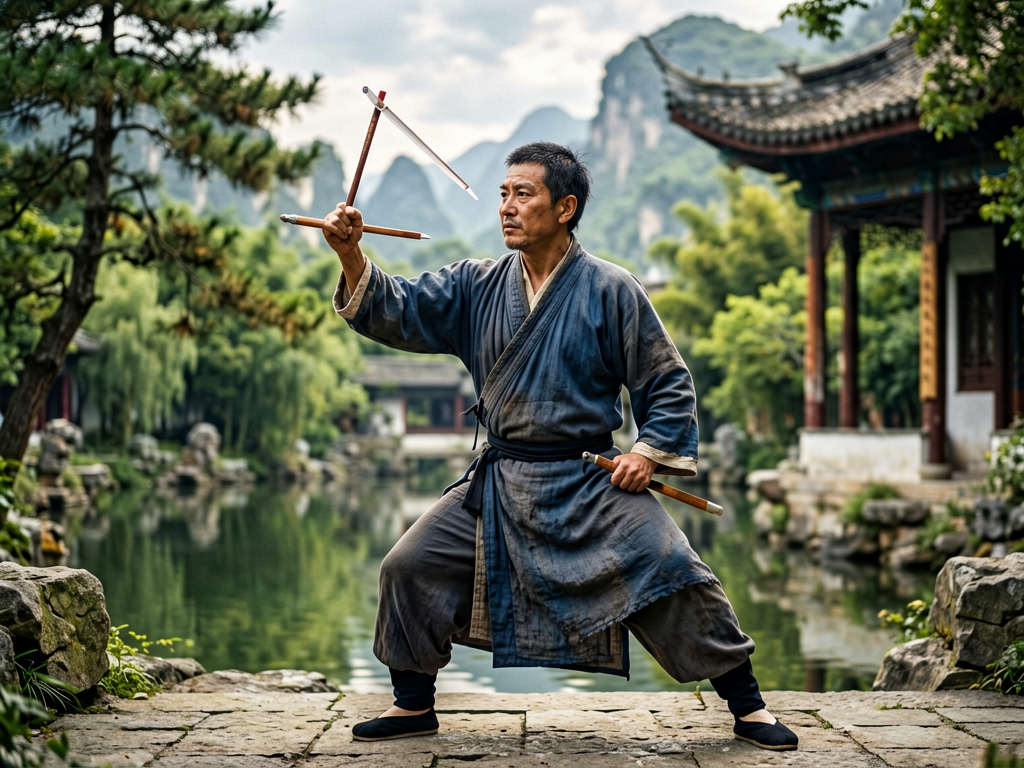
The Smell of Incense and Iron
I still remember the first time I stepped into a small, unmarked gym in Guangzhou. It was humid, naturally. The air hung heavy with the scent of old wood, sweat, and that sharp, metallic tang of iron supplements. There were no mirrors on the walls. No shiny equipment. Just a row of wooden dummies lined up like silent sentinels.
I was there to learn. Or at least, to understand what all the fuss was about. I’d seen the movies, obviously. Who hasn’t? But seeing the real thing? That was different. The masters there didn’t talk much. They moved with a quiet, terrifying efficiency. It wasn’t the flashy, high-kicking stuff you see in Hollywood blockbusters. It was grounded. Brutal. Efficient.
And then it hit me. This wasn’t just exercise. This was history. This was a living, breathing philosophy that had survived dynasties, wars, and now, the internet age. But for a lot of young people, Wing Chun was just… old. It was their grandpa’s hobby. It was dusty. It was irrelevant.
That was before Donnie Yen really took the wheel. Or rather, before we realized he’d been holding the reins all along.
Look, I’m no martial arts expert. I can barely do a proper push-up without my back complaining. But I know what I see when I watch a screen. And I know what I feel when I watch a master teach a student. Donnie Yen didn’t just act in these movies. He breathed life into a style that many thought was dying.
From B-Movie Villain to National Hero
Let’s rewind a bit. If you grew up in the 90s, you probably remember Ip Man as a side character. Maybe a wise old master in the background. Or a villain who needed to be taken down by the protagonist. The narrative was simple: Western boxing or Shaolin kung fu was the mainstream. Wing Chun was the niche, the underground, the secret art.
Donnie Yen changed that. Not with a speech. Not with a manifesto. But with a series of films that redefined the entire genre.
I remember sitting in a cinema in Shanghai for the first Ip Man movie. The theater was packed. You could hear the audience gasp during the fight scenes. Not because they were shocked by gore, but because they were witnessing something they hadn’t seen before. It was technical. It was precise. It was beautiful.
Before Yen, Wing Chun fights in movies were often clumsy. The actors would wind up for punches like they were throwing hammers. Donnie brought the real thing. He used the wooden dummy not as a prop, but as a dance partner. He showed us that speed isn’t about moving your arms fast. It’s about being in the right place at the right time.
To be fair, he didn’t invent these techniques. The masters in those Guangzhou gyms have been perfecting them for decades. But Donnie gave them a voice. He gave them a stage. And suddenly, Wing Chun wasn’t just a way to hit people. It was a way of thinking.
I spoke to a young student at a club in Beijing last year. He’s twenty-two. He works in tech. He spends his days coding and his nights practicing Chi Sao. When I asked him why he chose Wing Chun, he didn’t talk about self-defense. He talked about focus. He said it’s the only thing that makes the noise in his head stop.
Sound interesting?
The Myth of the Wooden Dummy
There’s a scene in Ip Man 2 that I think about often. Donnie’s character is struggling with the wooden dummy. He’s frustrated. He’s angry. He’s hitting it like it owes him money. The master watches. Then he steps in. He doesn’t yell. He doesn’t lecture. He just demonstrates.
He hits the dummy with a soft, almost gentle touch. But the sound? It cracks. It’s a lesson in physics, wrapped in martial arts. It’s about structure. It’s about using your body as a single unit, not a collection of separate limbs.
This is where Donnie’s performance shines. He doesn’t just show the technique. He shows the failure. He shows the frustration. He shows the learning curve. And that resonates with a modern audience that’s used to instant gratification.
We live in a world of quick fixes. Diet pills. Fast fashion. Instant messaging. Donnie Yen’s Ip Man is the antithesis of that. It’s slow. It’s deliberate. It’s hard work. And yet, it’s incredibly satisfying to watch.
I tried a wooden dummy once. My hands were swollen for three days. I couldn’t hold a chopstick. But I got it. I finally understood what the masters were talking about. It’s not about strength. It’s about alignment. It’s about channeling energy from your feet, through your hips, into your hands.
Donnie captured that struggle. He made it relatable. He made it human. And in doing so, he made Wing Chun cool again. Not because it’s trendy. But because it’s real.
Chi Sao: The Dance of Sticking Hands
If you’ve ever watched a Wing Chun practitioner, you’ve probably seen Chi Sao. Sticking hands. It looks like a messy, chaotic hug. But it’s actually a sophisticated drill for sensitivity and reflex.
In the movies, Donnie makes it look effortless. Two fighters move together, testing each other’s balance and intent. It’s a conversation. A fight without the violence. A dialogue of touch.
I’ve seen this in real life, too. In Chengdu, I watched a group of elderly men practice Chi Sao in the park. They moved slowly, gracefully. They weren’t trying to hurt each other. They were trying to feel each other. It was mesmerizing.
But it’s in the films that the younger generation truly connects with it. The scenes are choreographed with such precision that you can see the theory in action. You can see how a slight shift in weight changes everything. You can see how a small adjustment in the elbow position creates a powerful strike.
It’s educational. It’s entertaining. It’s inspiring.
And it’s spread like wildfire. I’ve seen TikToks of teenagers practicing Chi Sao in their bedrooms. I’ve seen YouTube tutorials analyzing Donnie’s footwork. It’s no longer just a martial art for monks or old men. It’s a global phenomenon. And Donnie Yen is the face of it.
More Than Just Fists
Here’s the thing. Donnie Yen didn’t just revive Wing Chun. He revived the respect for traditional martial arts in general. In a world dominated by MMA and mixed martial arts, where everything is about power and speed, Wing Chun offers something else. It offers strategy. It offers patience.
I’m no expert, but I’ve noticed a shift. When I travel now, I see more dojos. I see more young people asking about kung fu. I see more interest in the philosophy behind the moves. It’s not just about winning a fight. It’s about understanding yourself.
Donnie’s films tap into that. They show Ip Man not just as a fighter, but as a teacher. A father. A husband. A man of integrity. He respects his opponents. He teaches his students with compassion. He stands up for his community.
These are values that transcend martial arts. They’re universal. And they resonate deeply with a generation that’s searching for meaning in a chaotic world.
I’ve talked to fans in Hong Kong, in London, in Los Angeles. They all say the same thing. Donnie Yen made them care. He made them curious. He made them want to learn.
It’s not just about the fights. It’s about the man behind the fists. And that’s a story worth telling.
The Legacy Lives On
So, why Donnie Yen? Why him?
Because he’s the bridge. He’s the link between the old world and the new. He respects the tradition, but he’s not stuck in it. He understands the language of cinema, and he uses it to tell stories that matter.
He’s not just an actor. He’s a martial artist. He’s a choreographer. He’s a director. He wears many hats, and he does them all with grace and skill.
And he’s made Wing Chun cool again. Not by changing it. But by showing us what it really is. It’s not a relic. It’s not a museum piece. It’s a living, breathing art form. And it’s more relevant than ever.
I’ll be honest, I was skeptical at first. I thought it was just another action movie franchise. But the more I watched, the more I learned. The more I practiced. The more I understood.
And now, when I see a young person practicing Wing Chun in a park, I don’t see an old man’s hobby. I see a legacy. I see a future. I see Donnie Yen’s influence.
It’s pretty amazing, really.