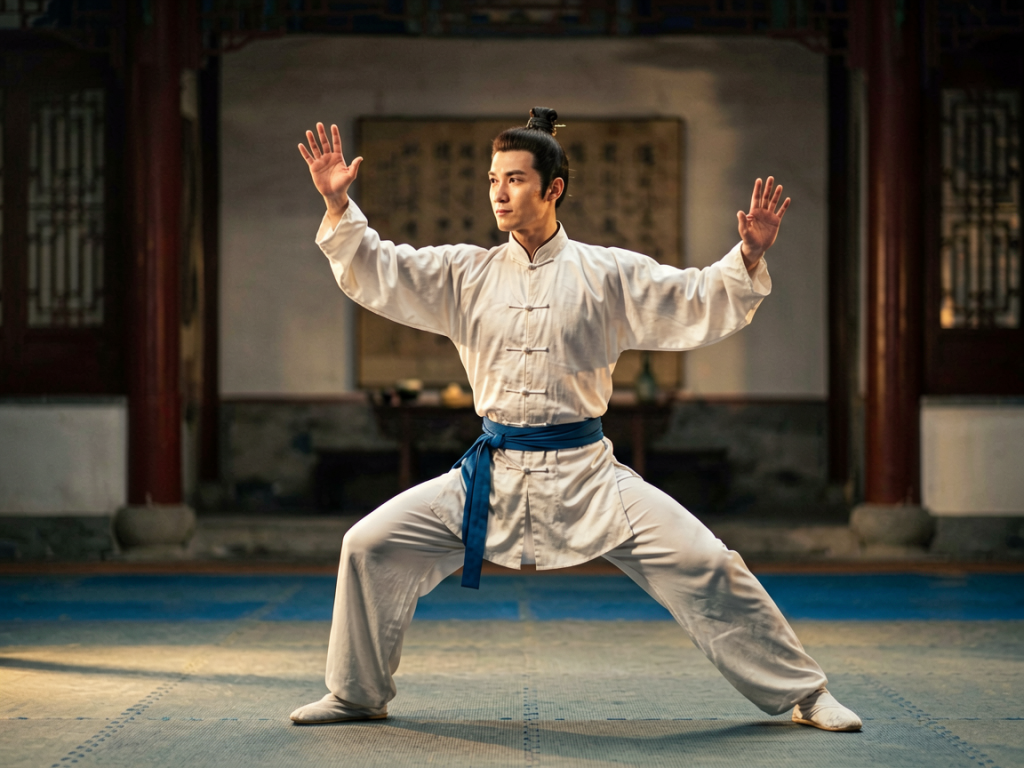
Look, I’ll be honest with you. When I first arrived in Beijing eight years ago, I assumed all Chinese martial arts were basically the same. I saw guys in white uniforms doing slow, graceful movements in the park at dawn. Then I saw other guys in black uniforms throwing each other across concrete like ragdolls. I thought it was all one big, confusing package.
It’s a common mistake for outsiders to make. You see the silk robes, the dragon tattoos, and the wuxia movies, and you assume it’s all magic. But the truth is, the divide between what we call “internal” and “external” martial arts is deeper than just different techniques. It’s about philosophy, physiology, and how you view the world.
If you’re looking to start training, or if you’re just curious about the culture behind the kicks and punches, understanding this split is crucial. It’s not just academic. It changes how you move, how you breathe, and how you handle stress. I’ve spent years watching, practicing, and failing at both. Here’s what I’ve learned.
The Physicality of External Arts
Let’s start with what most people think of when they hear “martial arts.” External arts, or Waijia, are what you see in the movies. They’re explosive. They’re loud. They’re about power.
Think of Shaolin Kung Fu. It’s the poster child for external training. The goal here is to build physical strength, speed, and flexibility. You drill your kicks until your hamstrings scream. You practice your punches until your knuckles callous over. The emphasis is on using your body as a weapon.
I remember spending a rainy Tuesday afternoon in Henan province, right outside the Shaolin Temple. I watched a group of young monks practice their forms. They moved with terrifying speed. One moment they were still as statues, the next they were a blur of motion. The sound of their feet hitting the floor echoed like gunshots.
There’s no subtlety here. It’s about efficiency and force. You learn to generate power from your legs, rotate your hips, and strike with precision. It’s athletic, demanding, and incredibly rewarding if you enjoy physical challenges.
But here’s the thing. External arts require a lot of recovery time. You’re pushing your body to its limits. If you’re over fifty, or if you’ve got bad knees, you might not want to spend three hours a day jumping and kicking. That’s not a judgment, just a practical reality.
I tried a basic Shaolin form once. It was exhausting. My legs shook for two days. But I loved the feeling of empowerment. It felt like I was building a fortress around myself. If you want to feel strong, capable, and physically sharp, external arts are hard to beat.
The Quiet Power of Internal Arts
Now, let’s shift gears. Internal arts, or Neijia, are a whole different beast. The big three here are Tai Chi, Xing Yi, and Bagua. These styles are often called “moving meditation,” but that term is a bit overused and misleading.
Internal arts aren’t just about relaxation. They’re about structure, alignment, and intent. The power doesn’t come from muscle mass or explosive speed. It comes from the ground up, through a relaxed body, and out through the hands.
I spent six months in Chengdu learning Tai Chi under a master named Master Li. He was tiny, barely five feet tall. But when he demonstrated a push, I felt like I was leaning against a tree trunk. I couldn’t move him an inch. It was infuriating and fascinating.
He told me that my tension was my enemy. In external arts, tension is good. It adds power. In internal arts, tension blocks the flow of energy, or Qi. You have to relax your shoulders, drop your hips, and let your weight sink.
It sounds simple, right? It’s not. I stood in a horse stance for twenty minutes every day. My thighs burned. My mind wandered. But slowly, I started to feel something different. It wasn’t just muscle fatigue. It was a sense of connection. I could feel the ground beneath my feet. I could feel the air moving around me.
The movements are slow, but don’t be fooled. The difficulty lies in maintaining that relaxed alertness. You’re not just going through the motions. You’re visualizing the energy moving through your meridians. You’re coordinating your breath with your movement.
Many people come to Tai Chi for health. And it is great for health. It improves balance, reduces stress, and lowers blood pressure. But the martial application is still there. It’s just hidden. You learn to redirect an opponent’s force rather than meeting it head-on. It’s the concept of using water to overcome rock.
Philosophy and Origins
You can’t really separate the styles from their roots. External arts are heavily influenced by Buddhist monastic traditions. Shaolin monks developed these styles to protect their temple and to maintain their physical health for long periods of meditation. It was practical survival.
Internal arts, on the other hand, have deep ties to Daoism. The philosophy of Wu Wei, or effortless action, is central to Tai Chi and Bagua. You don’t force things. You go with the flow.
I met a Bagua Zhang practitioner in Shanghai who explained this to me over tea. He said that external arts are like a hammer. They break through. Internal arts are like a drill. They penetrate. The hammer is loud and obvious. The drill is quiet but goes deeper.
This philosophical difference shapes the training. External arts often involve sparring early on. You learn to fight. Internal arts spend years on standing meditation and solo forms. You learn to be. The fighting comes later, once your structure is solid.
To be fair, this is a generalization. There are external styles that emphasize softness, and internal styles that are quite aggressive. But the core intent remains distinct. One builds the vessel. The other fills it.
Which One Should You Choose?
This is the question I get asked most often. If you’re standing in a park in Beijing, watching the locals practice, how do you decide?
If you’re young, athletic, and love competition, go external. You’ll enjoy the physical outlet. You’ll see results quickly. Your strength and endurance will skyrocket. It’s a great way to build confidence and discipline.
If you’re older, or if you’re stressed out from city life, go internal. Tai Chi might seem too slow for you at first. But give it a chance. The mental clarity you get is worth the effort. It’s not just exercise; it’s therapy.
I’ve seen both extremes. I’ve seen guys in their twenties who are incredibly fit but can’t sit still. I’ve seen guys in their sixties who move like ghosts but have back pain from poor posture. Both groups have something to teach.
Don’t feel like you have to pick one forever. Many of my Chinese friends practice both. They do Shaolin for fitness and Tai Chi for recovery. They understand that the body needs both intensity and rest.
The Myth of “Magic” Power
We need to talk about the myths. There’s a lot of nonsense out there about internal martial arts being “magic.” People talk about pushing someone over without touching them. They talk about superhuman strength.
Here’s the truth. Internal arts are not magic. They’re biomechanics. When you align your skeleton correctly, you can generate massive force with minimal effort. It’s physics, not mysticism.
I was skeptical at first. I thought it was all woo-woo stuff. Then I watched a master demonstrate Zhan Zhuang, or standing post. He stood like a tree for ten minutes. Then he suddenly expanded. The air seemed to change. It wasn’t supernatural. It was just a release of tension that I hadn’t felt before.
Respect the tradition, but don’t buy into the hype. These arts take years to master. There are no shortcuts. If someone promises you black belt status in three months, run away.
The real benefit is in the long game. It’s about longevity. External arts can wear down your body if you’re not careful. Internal arts are designed to preserve it. That’s why you see octogenarians practicing Tai Chi in the parks. They’re not doing it to fight. They’re doing it to live.
A Personal Take
After eight years in China, I’ve realized that the difference between internal and external isn’t just about fighting. It’s about how you live.
External arts teach you to engage with the world. To push, to pull, to overcome. Internal arts teach you to listen. To adapt. To yield.
I love both. I like the rush of a good sparring session. But I also love the quiet of a morning Tai Chi practice. They balance each other out.
If you’re new to this, don’t overthink it. Just try something. Join a class. Go to the park. Watch the locals. Ask questions.
You might find that you prefer the quiet power. Or you might crave the explosive energy. Either way, you’ll come away with a deeper appreciation for Chinese culture.
It’s not just about kicks and punches. It’s about finding your center. And in a world that’s constantly shouting, finding your center is a superpower.
So, what are you waiting for? Tie up your shoes. Step into the park. Start moving.