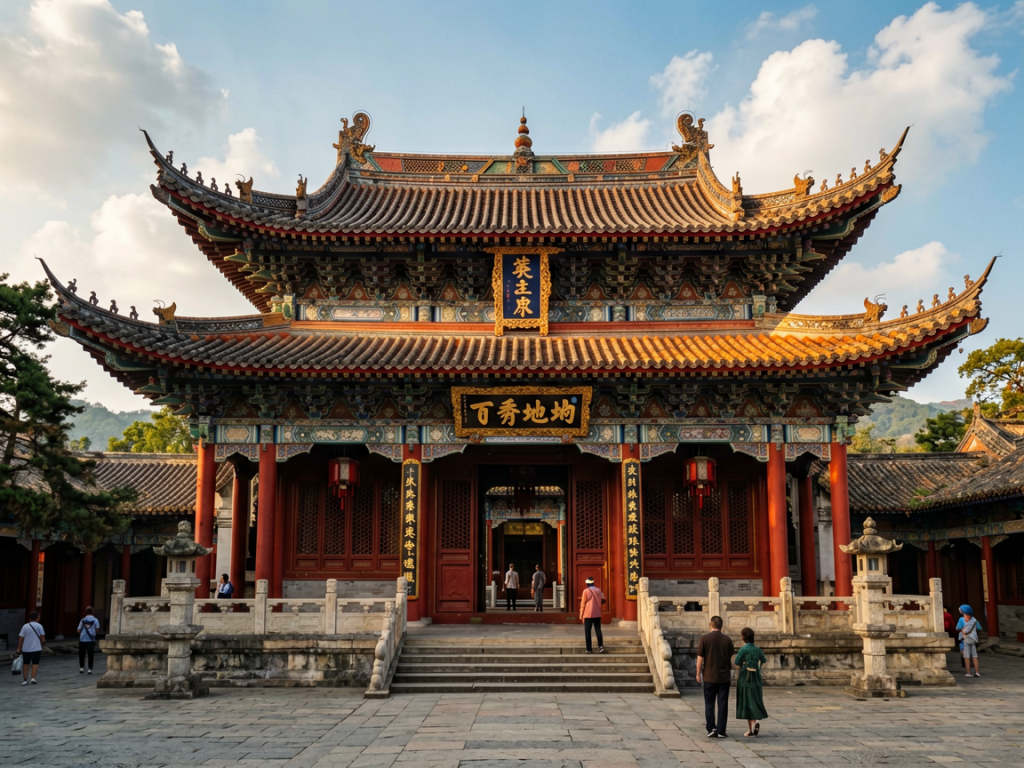
Look, I’ll be honest with you. When I first walked through the gates of the Shaolin Temple in Dengfeng, Henan province, I was expecting a ghost story. I was expecting to see the ruins of a once-great monastery, crumbling under the weight of its own myth. Instead, I found a parking lot full of tour buses and a souvenir shop selling kung fu belts for fifty yuan.
It felt cheap. It felt fake. I felt like an idiot for driving three hours from Zhengzhou to see what I assumed was the biggest tourist trap in Chinese history.
But then, I stopped trying to look at the shiny new buildings. I looked at the stones. I looked at the people. And I realized that the real story of Shaolin isn’t about martial arts. It’s about survival. It’s about a community that has dodged bullets, burned buildings, and political purges for fifteen hundred years. And it’s still standing.
You want to know how? It’s not magic. It’s pragmatism. And it’s messier than any kung fu movie you’ve ever seen.
The Myth of the War Monks
Let’s address the elephant in the room right now. The “War Monks” of Shaolin. You’ve seen the movies. You’ve read the wuxia novels. The idea is that in 621 AD, thirteen monks rode out on horseback, swords blazing, to save Emperor Taizong of the Tang Dynasty. They became national heroes. They became legends.
I’m no historian, but I’ve spent enough time in Chinese archives to know that history is rarely that clean. To be fair, it’s highly likely that some monks did participate. Monks in medieval China were often armed for self-defense, given the chaos of the era. But the narrative that Shaolin was a standing army of warrior-saints? That’s largely propaganda.
The Tang court needed to legitimize their rule. Having a holy monastery support them was good PR. So, the stories were polished. The martial arts were exaggerated. The temple was granted land and tax exemptions. This wasn’t just religious favor; it was a political alliance.
Sound interesting? It gets better. This alliance set a dangerous precedent. It tied the spiritual soul of the temple to the political body of the state. Every time the state changed, the temple had to adapt or die. That’s the first secret to their survival: they never stayed purely spiritual. They stayed relevant.
Burned to the Ground, Rebuilt Twice
If you think your favorite building is old, try being Shaolin. The temple has been destroyed and rebuilt so many times that the original structures from the Northern Wei Dynasty are long gone. We’re talking about total annihilation.
History records at least five major destructions. The most famous one happened during the Qing Dynasty. Local warlords, suspicious of the temple’s growing influence and its secret societies, attacked. They didn’t just steal the gold; they burned the library. They burned the scripts. They burned the history.
I remember sitting in a small courtyard in 2015, watching an old abbot sweep leaves. He told me that when the temple was burned, the monks didn’t fight back with kung fu. They ran. They hid the most important scriptures in the walls of the pagoda. They buried the statues in the rice paddies nearby. They survived by being invisible.
This is a key takeaway. Shaolin survived not because it was the strongest, but because it was the most resilient. They understood that pride kills. Humility preserves. When the winds of political change blew too hard, they bent. They didn’t break.
Think about that. Most institutions in China today are terrified of making waves. Shaolin has been making waves for fifteen centuries. How? By knowing exactly when to stop paddling and float downstream.
The Modern Reinvention
Fast forward to the 1980s. The Cultural Revolution had left Shaolin in ruins. The buildings were shacks. The monks were scattered. The martial arts tradition was on the verge of extinction. Most people thought Shaolin was dead.
Then came the movie The Shaolin Temple in 1982. It was a massive hit. It brought tourists back. And with tourists came money. And with money came power.
This is where the story gets complicated. The modern Shaolin Temple isn’t a monastery in the traditional sense. It’s a brand. It’s a business. And it’s one of the most successful businesses in the history of Chinese religion.
I sat down with a monk named Shi Yan in the tea house near the Dharma Hall. He wasn’t the meditating type. He was the marketing type. He spoke perfect English and showed me the temple’s YouTube channel, which has millions of views. He talked about “Shaolin Culture” as a global export.
“We are not just monks,” he told me, sipping jasmine tea. “We are ambassadors. We teach discipline. We teach health. We teach culture. If we don’t adapt, we disappear. The old ways are gone. The new way is survival.”
I was initially skeptical. I love the idea of a quiet, secluded monastery. I love the image of the hermit. But looking at the hundreds of students practicing in the courtyard, sweating in the summer heat, I realized something. They’re not performing for me. They’re performing for their future.
The temple generates millions of dollars a year. They have schools in Europe, the US, and Brazil. They have a trademark on the word “Shaolin.” This isn’t greed. It’s insurance. It’s ensuring that the next time the political winds change, they have the resources to rebuild. Again.
The People Behind the Porcelain
Here’s the part that movies don’t show you. The real Shaolin isn’t the Abbot or the famous fighters. It’s the people who keep the lights on. It’s the cooks, the cleaners, the ticket sellers, and the young disciples who spend years sweeping floors before they’re allowed to throw a punch.
I spent an afternoon with a group of young students, mostly from rural villages in Henan. They were twelve or thirteen years old. Their hands were rough. Their eyes were tired. But they were proud.
One boy, Li Wei, showed me his calluses. “My master says pain is the teacher,” he said. He wasn’t reciting a script. He meant it. For these kids, Shaolin is a way out. It’s a scholarship. It’s a path to a better life in a country where rural poverty is still a harsh reality.
This human element is what keeps the temple alive. It’s not the gold statues or the ancient scrolls. It’s the hope of the next generation. As long as there are kids like Li Wei willing to sweat for their future, Shaolin will survive.
It’s easier than you’d expect to see the humanity here. Just ignore the main hall. Go to the dining hall at 7 AM. Watch the monks line up. Watch them eat in silence. Watch them wash their own bowls. That’s the real Shaolin. It’s not about killing. It’s about living. Together.
Why It Matters Now
We live in a world that changes fast. Technology disrupts everything. Traditions vanish overnight. We look for anchors. We look for things that last.
Shaolin offers a lesson that has nothing to do with martial arts. It’s about flexibility. It’s about the willingness to change your form while keeping your core intact. The core is the philosophy. The form is the method.
The core is compassion. The method is a kung fu school. The core is history. The method is a viral video.
I used to think that “selling out” was the death of a tradition. I was wrong. Sticking to rigid, outdated rules is the death of a tradition. Shaolin survived 1500 years because it understood that culture is a living thing. It breathes. It adapts. It evolves.
So, the next time you visit, don’t just buy the t-shirt. Don’t just take the photo with the giant bronze statue. Walk around. Talk to the monks. Ask them about their lives, not their punches. You might be surprised by what you find.
You might find that the greatest martial art isn’t the roundhouse kick. It’s the ability to keep going, no matter what the world throws at you. And that’s a lesson I’m taking home with me.
Trust me, it’s worth the drive.