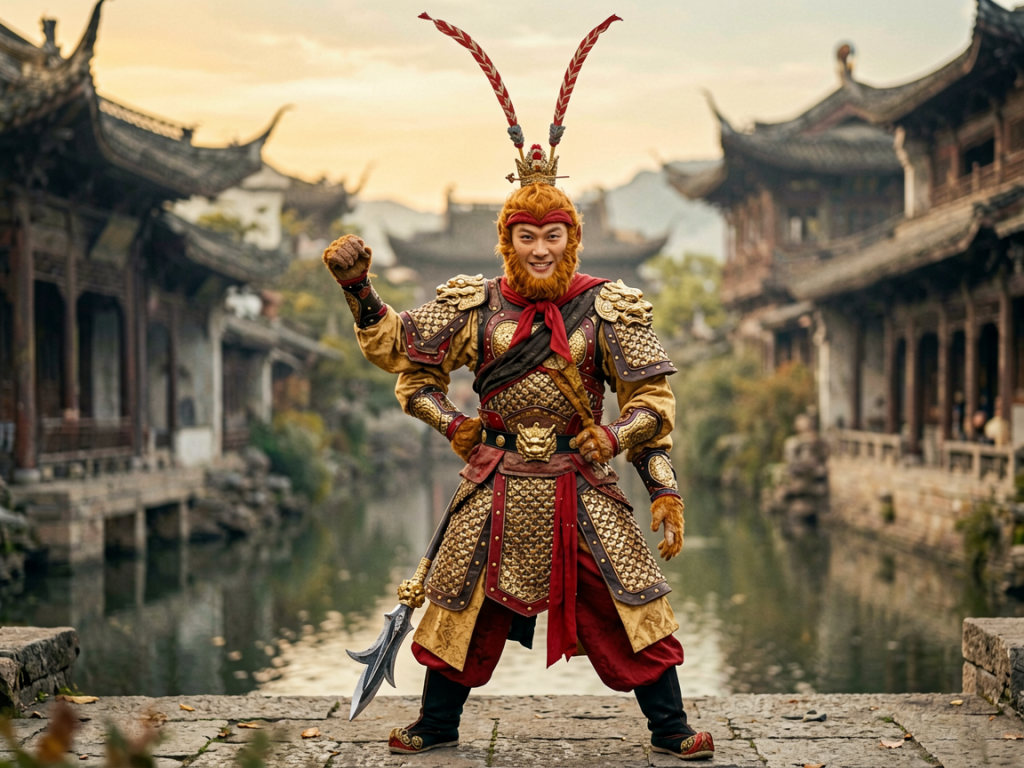
The Monkey Who Broke the Rules
I still remember the first time I truly *saw* Sun Wukong. It wasn’t in a temple or a library. It was in a cramped, steamy hotpot place in Chengdu. I was sitting across from a group of university students, all twenty-something, with that specific kind of exhausted energy you get from studying for the *gaokao* or just surviving the 996 work culture.
One of them, a guy named Wei, started humming a tune. It was the iconic theme from the 1986 TV series *Journey to the West*. But then he started doing hand gestures. Quick, sharp, aggressive movements. He wasn’t just miming; he was acting out the fight.
He looked at me, grinned, and said, “He doesn’t care about your heaven. He cares about his own way.”
It hit me right then. Sun Wukong isn’t just a character in a story. He’s the spiritual ancestor of every young person in China who is tired of being told what to do. The Monkey King is the ultimate rebel. And in 2024, that rebellion is more relevant than ever.
You might think I’m exaggerating. After all, it’s just a myth, right? Wrong. You can’t understand modern Chinese youth culture without understanding the Monkey King. He’s everywhere. From the box office smash *The Legend of Deification* to the indie games like *Black Myth: Wukong*, the icon is evolving. He’s not just a hero anymore. He’s a symbol of friction.
Defying the Bureaucracy of Heaven
Let’s be honest. The original story is basically a workplace comedy about a guy who refuses to follow corporate policy. Sun Wukong starts as a humble stone monkey. He gets power, he gets smart, and then he wants a job.
He goes to the Heavenly Court, the ultimate bureaucracy. He expects respect. He expects a title. Instead, they give him a low-level job managing horses. It’s an insult. It’s humiliating. So, what does he do? He quits. He burns down the stables. He goes back to his mountain and declares himself the “Great Sage Equal to Heaven.”
This resonates deeply with me. I’ve lived in China long enough to see how much the system values hierarchy. It’s in the language. It’s in the offices. It’s in the way your elders speak to you. The concept of *guanxi* (connections) and face is huge. Breaking ranks isn’t just rude; it’s dangerous.
But Wukong? He doesn’t care about face. He doesn’t care about rank. He cares about competence. He’s the best fighter in the universe. Why should he bow to someone who can’t throw a punch?
I’ve seen this attitude in tech startups in Shenzhen. You walk into these offices, and the hierarchy is flattened. The junior developer can challenge the CEO if they have the data. It’s chaotic. It’s messy. But it’s also incredibly efficient. It’s Wukong’s spirit alive in the silicon valley of the East.
These young professionals don’t want to climb the ladder. They want to break the ladder. They’re not trying to join the establishment; they’re trying to outsmart it. They know the rules, but they refuse to play by them. It’s a quiet rebellion. You won’t see them protesting in the streets, but you’ll see them coding their own systems, starting their own brands, and ignoring the traditional path of stability.
It’s not about being difficult. It’s about being free. And that’s what Wukong teaches us. Freedom isn’t given. It’s taken.
The Cost of Freedom
Here’s the thing, though. Wukong’s rebellion comes with a price. You can’t just be the Great Sage forever. Eventually, you have to pay.
In the story, he gets trapped under a mountain for five hundred years. That’s the cost of defying heaven. It’s a long, dark time. He’s alone. He’s trapped. He’s forced to reflect.
I spent a weekend in Hangzhou recently, walking around West Lake. It’s peaceful, sure. But there’s a heaviness in the air. Everyone is moving with purpose. The young people are rushing to interviews, to meetups, to side hustles. There’s a pressure to succeed that feels physical.
Many young Chinese people feel trapped. Not by a mountain, but by expectations. By the need to buy a house. By the pressure to marry. By the fear of falling behind. They’re stuck in a cycle of hard work that doesn’t always feel rewarding.
Wukong’s journey with Tang Sanzang is basically therapy. He’s forced to serve someone who is weak, indecisive, and often wrong. But in doing so, he learns discipline. He learns control. He learns that power without purpose is just chaos.
This is a hard lesson for the modern rebel. Rebellion is easy. Staying the course is hard. It’s easy to quit your job and travel the world. It’s hard to build something meaningful while maintaining your integrity.
I’ve talked to many expats and locals about this. They talk about the “lying flat” (*tang ping*) movement. It’s a way of opting out. But is it really opting out? Or is it just waiting for the right moment to strike again?
Wukong doesn’t lie flat. He waits. He uses his five hundred years of imprisonment to grow stronger. He learns magic. He learns patience. He comes back not just as a fighter, but as a protector.
That’s the nuance we miss. The rebellion isn’t just about saying no. It’s about saying yes to something better. It’s about channeling that anger into creation.
The Mask of the Monkey
There’s another layer to this. The Golden Headband.
Tang Sanzang puts it on Wukong to control him. It hurts when the mantra is chanted. It’s a physical reminder of authority. But here’s the twist: Wukong keeps it on. He wears the mask.
Why? Because he knows that to achieve his goal, he needs to stay in the game. He can’t just smash his way out. He has to play the role of the disciple.
This is a brilliant metaphor for modern life. We all wear masks. At work, we wear the mask of the professional. At home, the mask of the good child. On social media, the mask of the happy traveler.
In China, this is amplified. The concept of *mianzi* (face) dictates how we present ourselves. We hide our struggles to save face for others. We smile when we’re crying. We agree when we’re arguing.
Wukong teaches us that wearing a mask doesn’t mean you’ve lost your soul. It means you’re strategic. You’re playing the long game.
I’ve seen this in the rise of Chinese influencers. They project this image of success, of luxury, of freedom. But behind the scenes, they’re grinding. They’re editing. They’re managing their image with the precision of a soldier.
It’s not fake. It’s performance. And in a culture that values harmony, performance is necessary. But Wukong reminds us that underneath the mask, the monkey is still there. The rebellion is still there. It’s just hidden.
This hidden rebellion is powerful. It allows people to exist within the system while maintaining their inner freedom. They follow the rules publicly, but privately, they’re writing their own stories. They’re supporting indie art. They’re exploring non-traditional careers. They’re questioning traditional values.
It’s a quiet revolution. And it’s happening every day.
Breaking the Myth
So, what does Sun Wukong teach us about modern Chinese rebellion?
He teaches us that rebellion isn’t just about smashing things. It’s about self-discovery. It’s about finding your own power and using it wisely.
He teaches us that authority isn’t always right. Just because someone is in charge doesn’t mean they know better. Competence matters more than rank.
He teaches us that freedom has a cost. But the cost is worth paying if it leads to growth.
And he teaches us that you can wear the mask without losing yourself. You can play the game without becoming the system.
I’m no expert on Chinese philosophy. But I know what I see. I see a generation that is tired of being told who to be. They’re looking for their own path. And they’re finding it in the stories of their ancestors.
Sun Wukong is not just a character from a novel. He’s a mirror. He reflects our own desires for freedom, for respect, for meaning.
Next time you see a reference to the Monkey King, don’t just think of a cartoon character. Think of the spirit of rebellion. Think of the person who refuses to accept the status quo. Think of the part of you that wants to break free.
It’s not about destroying the world. It’s about building a better one. And sometimes, that starts with a monkey on a mountain, staring down the heavens.
That’s the real lesson. Not the magic, not the fights, but the choice. The choice to be yourself, no matter the cost.
That’s why we keep reading the story. That’s why we keep watching the movies. That’s why we keep talking about it.
Because we’re all a little bit like Wukong. And we’re all waiting for our moment to fly.